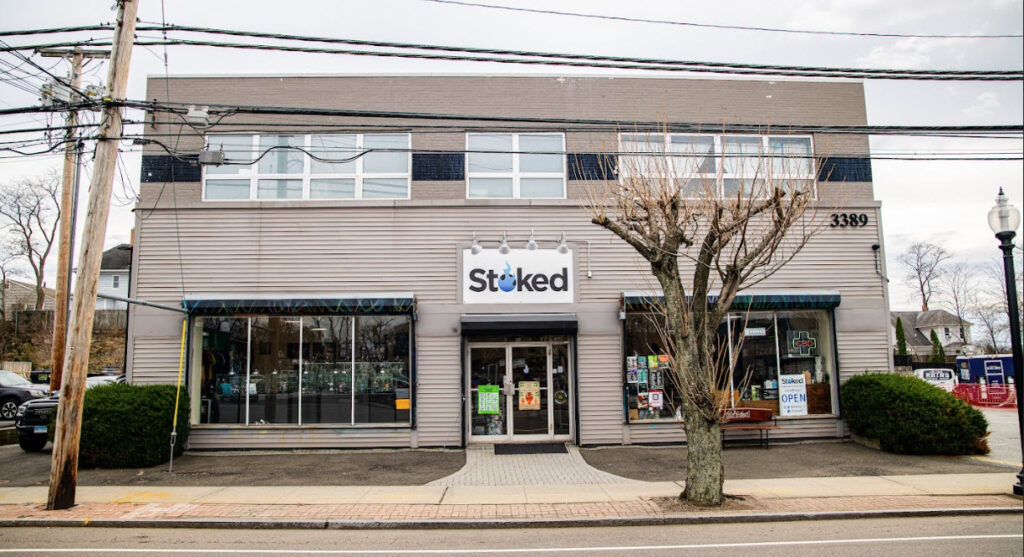
The moment that changed everything happened in a parking lot.
“When we opened, we had a festival next to our building in the parking lot, where we had live glass blowing and vendors,” recalls Charlie Ronemus, owner of Stoked. “I saw such energy in that experience, I recognized we needed to incorporate live glass blowing into the experience.”
His instinct was right. Today, the shop pulses with creative life thanks to its built-in glass studio, where eight resident artists blow glass daily. With live demonstrations, educational programs, and rentable tables for visiting or part-time artists, Stoked has created a community around the art of cannabis.
 “Once [customers] see live glass blowing, the quality of the work and the artistry behind it is easier to understand,” Ronemus says. “They’re more comfortable with the prices. Someone will say ‘Wow, I watched this get made’ or ‘I have a relationship with that guy, I really like their work.’”
Ronemus came to the counterculture space in 2014 as a veteran of the hospitality industry. Tired of the late nights and long hours, he was determined to bring the values and work ethic he had developed in his previous career to the space.
“I have always been a lifelong cannabis enthusiast, and I started investigating the canna scene and identified quickly a lack of hospitality in the industry,” he said. “So I felt I could bring something unique and experiential and artistic and someplace you’d feel comfortable bringing your grandma and friends.”
Now, with a second location up and running on the other side of town, there’s no doubt that Stoked, and its hospitality-based business model, is a success.
Fostering the Art
While the shop’s retail side succeeds because of smart collaborations, a well-maintained website, and a knowledgeable staff, the glass studio upstairs operates on a contractor model.
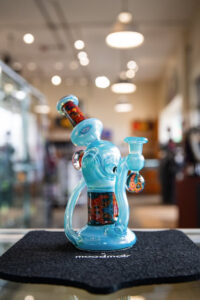 “It’s a little bit like a hair salon. That’s how I explain to people who are unfamiliar with how it works,” Ronemus says. “Not all the work the artists create comes to our shelves. They’re free to sell it to us, or they can sell it to someone else, or give it to their parents as a gift. They can do whatever they want with their work. We provide them with a space to work that has ventilation, all the gases and stuff they need, 24-hour access to the shop—everything to set up a glassblowing booth. Some are full-time glass artists where it’s their only income, and some are hobbyists who come in after their 9 to 5 and show up Saturdays and Sundays to make art.”
For many, it’s a chance to improve a craft typically practiced in isolation.
“Sometimes glass artists set up a table in their garage because that way they don’t have to pay rent somewhere,” Ronemus says. “That’s great, but I find that in our studio, someone will say, ‘Why don’t you try this?’ There’s a sense of camaraderie. There’s teamwork. It’s a forum you can utilize; you can phone a friend.”
A critical mass of artists has a way of transforming physical spaces. At Stoked, it’s led the artists to share tips, the staff to gain insight, and the clientele to become glass aficionados. Visiting artists stop by regularly to host special events, offer advanced lessons, and share their latest creations.
An Unexpected Second Act
In January, Stoked opened a second location. It also doesn’t follow the traditional smoke shop model.
After Connecticut legalized recreational use, a marijuana dispensary approached Ronemus with a proposition. They wanted to rent part of their building to a head shop that could supply customers with all the items they wouldn’t sell: bongs, vaporizers, papers, pipes. The vision was to create a “cannabis superstore” that would house everything a user needed for the best possible experience.
 “We’re like the gift shop at the end of a museum,” he says. “We’re right at the exit of the dispensary, so everybody who walks out their door comes to our front door. It’s very dynamic. We’re seeing lots of growth and have the opportunity to educate people a lot. A lot of dispensary staff aren’t very knowledgeable in our field, so to be able to help people on different vaporizers and pipes and the glass art scene in general is pretty great.”
Because the business serves a different clientele, it needs a different operational plan, Ronemus said.
“With the dispensary clientele, we wanted to diversify and have something for everyone,” he explained. “We’re seeing people who would have never stepped foot in the shop before coming through the door. They’re not going to buy a $200 bong or a marble, but we have a variety of knick-knacks and eye candy and impulse items, like candles or pet products, that they might be interested in.”
The Tao of Charlie
Ronemus operates both locations with the hard-charging work ethic he mastered during his days in hospitality. The philosophy is simple: “You make people feel comfortable when they come, and they come back. It’s about creating positivity and exuding that.”
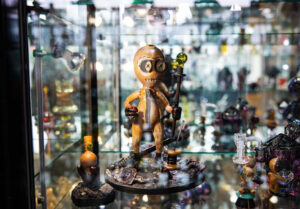 Toward that end, Stoked doesn’t miss a chance to do right by its clients. Its website is updated constantly, its Instagram presence is professional and strategic, and its flagship location regularly hosts engaging events that its customers want to attend.
“We recognized early on that very few people had websites that were updated regularly, so we put effort into ours. We have a good system so that when we intake new work, it gets photographed, cataloged, and updated to the website so it’s available in-store and online. We have unique software that links our store to our website, so if something sells online, we take it off the shelves,” he says. “We have weekly website meetings. We’ve got a long list of things we still want to accomplish. It’s a constant work in progress.”
That kind of effort further separates Stoked from the fly-by-night shops that seem to emerge from nowhere.
“Sometimes, nefarious players are opening for quick money and selling illicit cannabis behind the counter or something. It’s been a struggle because we lost a little bit of margins to that, from nicotine vapes or hand pipes to rolling papers, but I believe people are wizening up, so just staying the course has been our plan,” Ronemus says. “People recognize our quality when they come through. Nobody really needs what we sell, so we’re kinda the first to go when belts get tightened. So being good stewards has been the most beneficial thing we can do.”
Want to see more from Stoked? Check out their Instagram to stay up to date on the latest arrivals, fresh glass pieces, and new releases.
All photos were taken by photographer Luke Ritz, and all were provided courtesy of Stoked.