



“Yeah, it’s weed,” she said, leaning against the side of the food-truck window at a busy corner in Queens.
“Really, like it’ll get me high?” I said.
“Yeah, it’ll get you high.”
“Ok, I’ll take one lollipop.”
“That’ll be ten bucks.”
I handed her a $10 bill and felt elated. That was my first legal cannabis purchase. It was 2018.
I went home and told my girlfriend, who, after Googling the name of the business I bought it from, told me that, yes, it was technically weed. But it was CBD. She started laughing, telling me I had been ripped off.
CBD?
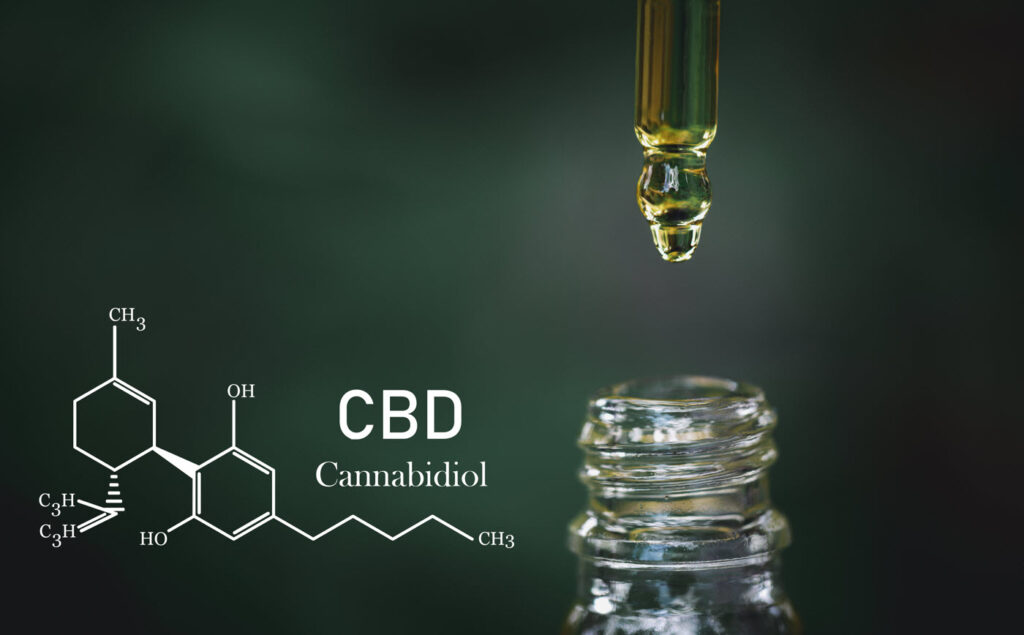
“But she said it was weed!” I said. My girlfriend explained that CBD comes from hemp, which is part of the cannabis plant, but it’s not THC.
Like many of us who knew little to nothing about the marijuana we’d been smoking, 2018 was a watershed year. The Farm Bill, passed by a conservative US Congress with the then-and-now president, legalized hemp products under 0.3% dry weight. This meant that all sorts of clever ways of selling products derived from the cannabis plant were in the offing.
I’d kinda’ sorta’ heard of CBD before, but didn’t pay attention. I’d been to California and seen the legal dispensaries, and even been to a medical one years earlier. But I wasn’t curious about the details. That seemed like a thing for people who were a little too into it. Not me.
 I also kinda’ sorta learned that CBD was a cannabinoid, or whatever. It wasn’t marijuana, but I could feel something from it. I started seeing CBD products everywhere: drinks, gummies, creams, vapes. But I was already over 40 and had a sense that I didn’t need to know that much about it. If everyone was making and buying it in legit-looking stores, it seemed safe enough. So I’d just pick up a CBD thing from a bodega or head shop every now and then. Maybe it’d make me relax. Even if it was a placebo, it felt fun to try.
During the pandemic, I got a job as a writer for a cannabis company. This coincided with THC becoming recreational in New York. Among my tasks at the company, I had to write educational articles and know how cannabis worked.
I was busy promoting many products that mixed THC and CBD. This seemed good, like it was making a healthy, balanced meal. I learned that CBD can mitigate the intense effects of THC while still enjoying its benefits. I finally found out what a cannabinoid was, noting that CBD was part of the cannabis plant, like THC. And lesser-known cannabinoids like CBN, CBG, CBC, and THCV were emerging in new products.
But I still didn’t understand why, with all these products available, why some seemed to work better than others.
I’d been trying CBD drinks for a while, hoping to get a light buzz from them. And maybe I…did? But if I’m asking the question, then I probably wasn’t. What was happening?
I asked a friend of mine, a psychiatrist who runs a neuroscience lab. She told me about something called the first-pass effect.
The first-pass effect is when something you swallow passes through your liver and changes. In most instances, it’s a good thing; it tends to purify foods, drinks, and drugs.
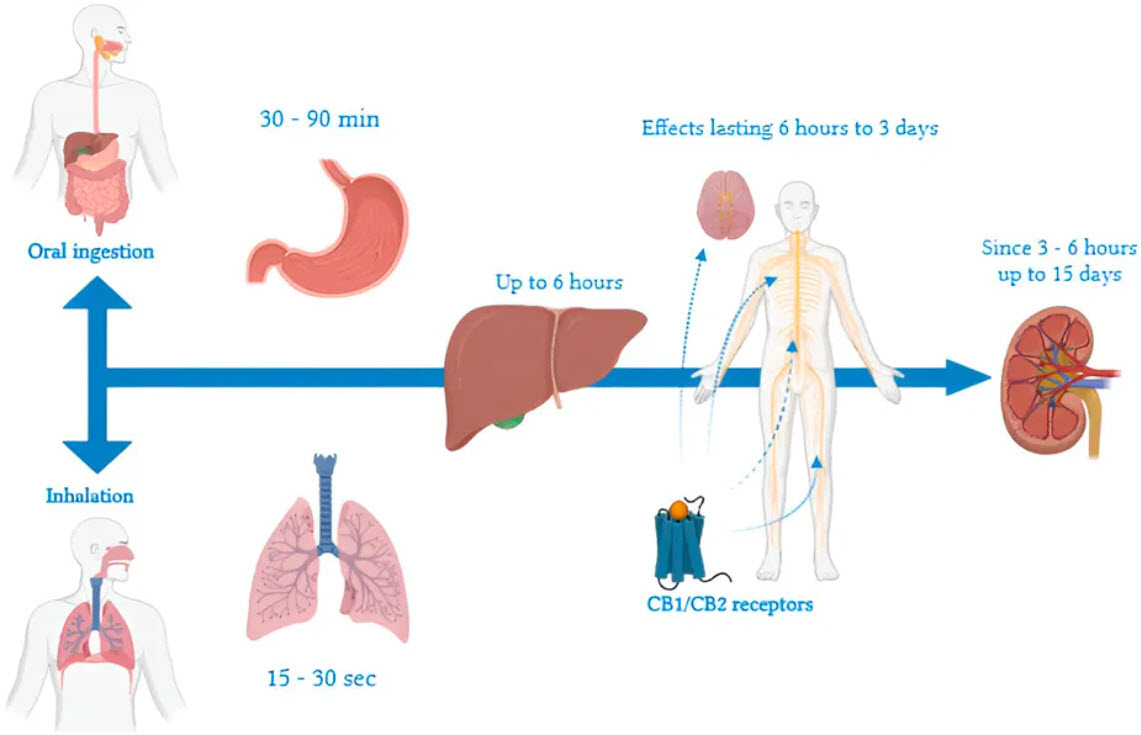
In this case, CBD, when you eat it or drink it, it passes through your liver and becomes weaker. Which means that if you eat a gummy or drink a beverage with CBD, you’re getting a lot less of it in your bloodstream than you think.
On the other hand, if you inhale CBD with flower or a vape, put it under your tongue like with a tincture, or use it on your skin, like with a patch or cream, the absorption is much higher. It doesn’t go through your liver—it goes more right into your bloodstream. You will get more of the effects you were hoping for based on how much you took.
But this is different for other cannabinoids, particularly THC.
Ever notice how stoned you get from gummies, brownies, and other edibles? Yup, that’s THC passing through your liver and becoming more powerful. Which means, as they advise, when exploring edibles, you should start low (dose) and go slow. The THC you swallow tends to lead to a longer, more bang-for-your-dosage-buck high. But if you choose to stick to smoking, vaping, tincturing, or using transdermals, you’ll still get plenty high. The feeling may just come and go more quickly.
I’ve deliberately avoided using any scientific jargon here. You can easily look all this up and go deeper—and I hope you do. It’s interesting stuff. I wanted to give you the gist of what my friend told me, plus what I’ve researched. You’ll also learn that among the different modes of administration (smoking, eating, vaping, etc.), your experience with either CBD or THC can vary based on the product as well as your own body chemistry. When it comes to how cannabis products hit us, we’re all special snowflakes.
Now, when I buy my weed, I know what I’m getting. I look for a nice mix of THC and CBD, or some other cannabinoids I want to try. I’m aware that the balance of each one matters. If it’s edible, the THC will get boosted, and the CBD will be diminished. But with new absorption technologies, some of that is being mitigated as well. I suggest researching products before you try them.
When you do, you will be less likely to just take someone’s word for it. You’ll be in the know. And when you unwrap your new cannabis product, the only surprises should be good ones.
Want to learn more about edibles and how to make your own? Check out this article for more insights on cannabutter and even a THC cookie recipe!











