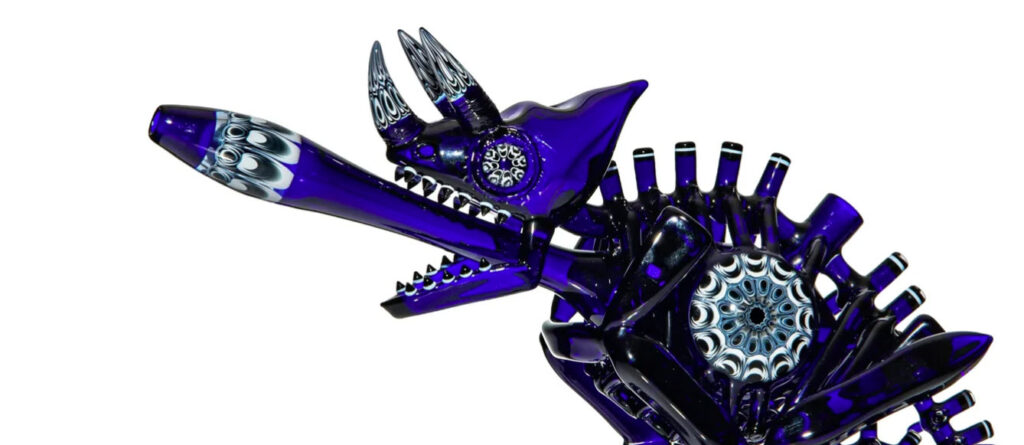
I love (Green) Lucy
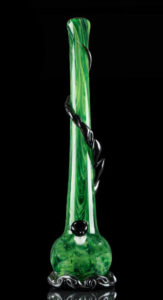
When I was in college, my sophomore year roommate,
who went by Bear, had a two-foot-tall bong with a name. Green Lucy was a gorgeous emerald-colored masterpiece with thick, bulbous glass at the top, comfortable for ripping huge hits. It was a celebrity on our floor of the creative arts co-
op where we lived. People would come from all over the house, and sometimes from other parts of campus, just to hang with Bear and get baked from Green Lucy.
Did smoking from that verdant vertical pipe feel different? It seemed like it. For me, the hue and texture of the glass had a subtle positive effect on the high. Whatever it was (placebo? a cognitive condiment?), the result felt placid, dreamy. Sure, a bong or pipe is just a delivery mechanism, but it feels like when it comes to its aesthetics, there’s something to it.
Despite knowing a few people involved in glass blowing and making pipes, I never plumbed the depths of how they’re created, no less how they get colored. I still thought that glass was made by melting sand. Yup, that’s where I was. And then, all that color in the glass itself. How does the jelly get in the donut?
Fuming with creativity
Ever wonder how glassmakers get all sorts of pretty colors up in there? The kind that are floating around like fruit suspended in Jell-O, or flowing like a lava stream? One way of doing it is fuming.
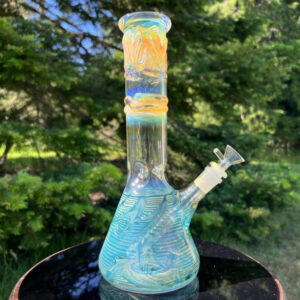 According to Smoke Cartel (SC), “Fumed glass is created through a lampworking technique where artists vaporize precious metals, typically silver, gold, or platinum, in front of their torch flame. The metal releases fumes that travel up the flame and bind to the glass surface, creating an iridescent glass effect that’s completely different from standard colored glass.”
Pretty cool, right? A dragon’s breath of color exhaled into a nascent pipe.
SC continues, explaining it’s like “spray-painting, but at a molecular level. The metal particles settle onto the glass in an ultra-thin layer, thin enough to be translucent but thick enough to interact with light. This is why these pieces are often labeled as ‘color-changing’ because the lustrous, shifting quality is the signature of genuine fumed glass. The process requires precision. Too much heat or too little metal, and the effect fails. Master the technique, and you create pipes that look different every time you pick them up.”
Making it pop with dichroic
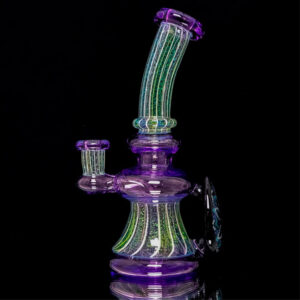 The other exciting type of glass is called dichrotic glass, which has been described as “fireworks in a pipe.” SC says it was originally made by NASA and is created by “layering ultra-thin metallic oxides onto glass in a vacuum chamber. This creates stunning, shimmering effects that shift colors depending on how light hits the surface.”
I started to see how each type of glass does something very special. The fumed ones are more personal, changing over time with use. Dichrotic glass, on the other hand, is more radiant, with bold designs that pop.
Simple Glass Pipe provided this handy chart to help you tell the difference between the features of fumed and dichrotic glass.
|
Feature |
Fumed Glass |
Dichroic Glass |
|
Appearance |
Subtle, evolving colors |
Bright, shimmering, reflective |
|
Color Change |
Deepens with use |
Shifts with light angles |
|
Materials Used |
Gold, silver fuming |
Metallic oxides, NASA tech |
|
Durability |
Good, but fades slightly |
Excellent, long-lasting |
|
Price Range |
Affordable to mid-range |
Mid-range to premium |
|
Uniqueness |
Every piece is unique |
Custom-crafted, dazzling |
|
Best For |
Budget-conscious smokers |
Collectors & art enthusiasts |
|
Cleaning Impact |
Can reset its look after cleaning |
No impact, always stays vivid |
The OG in glass is Snodgrass
In the early 1970s, Bob Snodgrass was a pioneer in creating glass for pipes and bongs. He would eventually go on to become a legend in the counterculture community, and still creates beautiful glass designs to this day.
Speaking about fume pieces in Stoked, he described a particularly brilliant type of glass that captures many colors, creating a “fume fade.” Snodgrass says, “This coloring is achieved by using partitioned sections of color that reflect light differently. The silver creates bluish tones, while vehicle gold creates the orange or gold hues. Then, all of the intermediary sections, containing both silver and gold in different amounts, are what create the more green and yellow hues in glasswork. By strategically placing these different sections on a piece, the possibilities are almost, quite literally, endless.”
Promoting your premium products
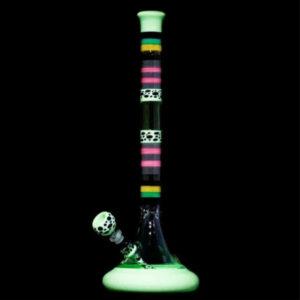 As I’ve been awakened to the complex and beautiful chemistry of glassmaking, I can now see how purveyors of pipes and bongs can capitalize on their construction.
While there are a variety of ways to make glass, it’s become obvious to me that the most elegant choices lie in the use of fumed glass or dicrotic glass. I’d suggest not only making these products your top offerings, but also making sure you and your salespeople are educated in the differences in quality of glass. Consider even putting out screens that show videos of how these types of glass are made, distinguishing them from other, less high-quality products.
Back when I was enjoying taking puffs from Green Lucy, I had no idea what could have gone into its construction. As I noted earlier, it felt good for some reason I couldn’t quite capture at the time. But isn’t that often the case with better things?
I’ll never know what Green Lucy was made of, but maybe, back then, if Bear had bought it from someone who had told him why it was such a premium piece of art, it would have been part of our sesh stories.
Learn the differences among glass and how they’re colored, and share these explanations with your customers so they can make the tale part of their journeys.
For more on the artistry behind the glass, check out our article on Stoked Progressive Smoke Shop & Glass Gallery.
References
https://simpleglasspipe.com/blogs/guides-infos/what-are-fumed-and-dichroic-glass-pipes
https://www.smokecartel.com/blogs/guides/fumed-glass-how-color-changing-pipes-work
https://www.elev8glassgallery.com/blog/how-and-why-do-pipes-change-color/
https://stokedct.com/blogs/all-posts/what-the-fume-a-glass-blower-s-take-on-fuming-and-bob-snodgrass