



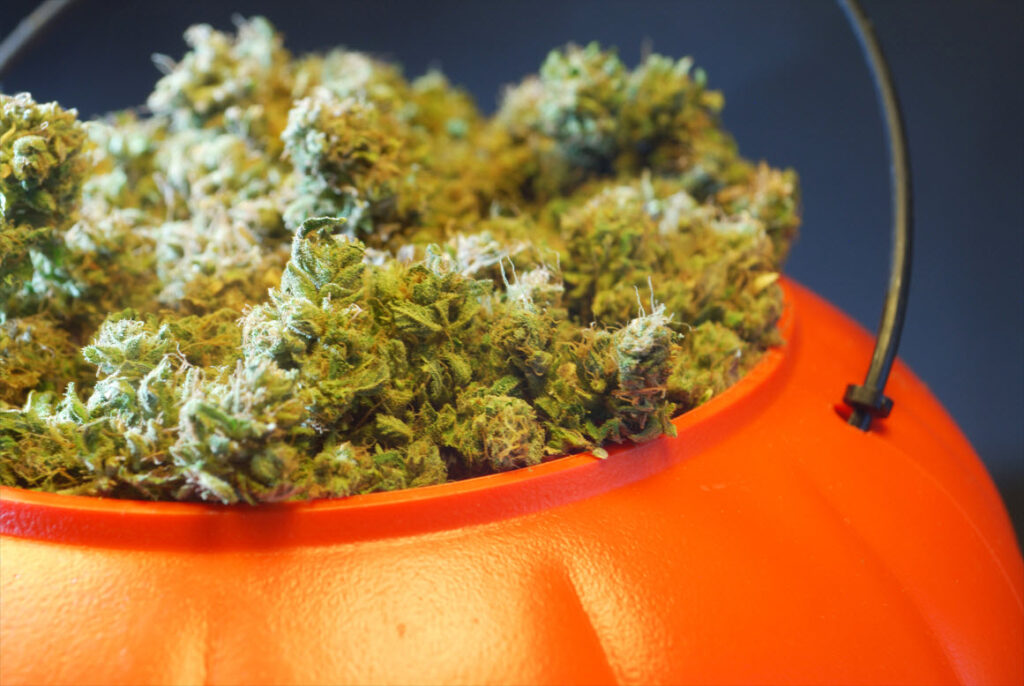
With Halloweentime upon us, ghosts and goblins all around the world are gearing up for the annual celebration of the macabre. Between dressing up in fun costumes and making caramel apples to taking our kids trick-or-treating around the neighborhood, there’s no shortage of things to do at the end of October; but did you know that some of the earliest traditions revolved around the use of incense and other herbal blends?
Smoke Cleansing
 People have been setting fire to herbs for centuries. Ancient civilizations certainly enjoyed smoking various herbal blends for recreation, but many also used them as key components in rituals, traditions, and celebrations. Ancient Hindu texts, many of which are written in Sanskrit, even mention the use of incense as a healing and wellness tool.
The Minoans and Mycenaeans were known for burning saffron, the ancient Romans regularly burned cinnamon at funerals, and the ancient Egyptians were known for using kyphi, a popular form of incense, as a part of their ceremonial worship. Even the Holy Bible provides an incense recipe that features a blend of frankincense, onycha, galbanum, and storax.
Smudging
A practice that is still very much in use today, smudging uses dried sage leaves to create a heavy smoke that smells vaguely similar to pine. With roots dating back to the sacred traditions of early Native American and First Nations tribes, sage smudging has become somewhat commercialized in recent years. Nonetheless, it’s still used in much the same manner as it always has been—to cleanse people, locations, and objects of any perceived negative energy or evil spirits.
Fire Saining
While it’s fairly similar, both in concept and practice, fire saining is more like a large-scale version of smudging. Instead of setting fire to small bundles or single leaves of sage, fire saining is usually achieved through seasonal bonfires—including one to mark Samhain, the historical predecessor of Halloween. Fire saining is traceable all the way back to ancient Scottish and Gaelic folk traditions, where it was used to provide blessings, protection, and purification to anything or anyone that needed it.
Autumnal Traditions
 History offers many examples of different cultures that use smoke as part of their autumnal traditions. A variety of herbal blends can be used in this manner, since ancient civilizations were generally limited by what was available in their region, and different herbs were often used to mark different seasonal traditions.
Regional harvest festivals are often celebrated with incense. Common ingredients include sandalwood, myrrh, and any local herbs that may be available. Not only are these celebrations meant to express the community’s gratitude for a bountiful harvest, but they’re also meant to rid the land of any stagnant, leftover energy from the summer months. In some civilizations, the smoke of the incense is meant to carry prayers upward to their deities and ancestors.
- Samhain: If Halloween is based on any one ancient tradition, it would be the Gaelic festival known as Samhain. Meant to bridge the gap between final harvest and winter, Samhain is still practiced today by many cultures and individuals around the world. (Traditional scents: mugwort, rosemary, sage)
- Día de los Muertos: Translated in English to Day of the Dead, this Latin American celebration is a time to remember deceased friends and family members. (Traditional scents: Cinnamon basil, Mexican mint marigold, copal resin)
- Chuseok: Although the exact date depends on the lunar calendar, this three-day celebration is generally held throughout South Korea in mid- to late-autumn. (Traditional scents: mugwort, pine, ginseng)
Additional cultural celebrations during this time include India’s Diwali, Greece’s Ohi Day, Costa Rica’s Día Nacional de la Mascarada Costarricense, and many others.
Smoke in Other Settings
The use of incense and scented herbs isn’t limited to smudging, fire saining, or autumnal traditions. In fact, many modern civilizations still burn incense and other herbs to honor the dead or to celebrate various events throughout the year.
Honoring the Dead
 Regardless of the time of year, incense and other herbs are commonly used at various funerals and other celebrations of life. Christian and Catholic churches, for example, often use natural tree resins like frankincense and myrrh. Certain incense blends might also incorporate benzoin, storax, and even sandalwood.
Incense is also a key component of Hindu funerals, where camphor, sandalwood, and other tree resins are used throughout corpse preparation, during the funeral procession, and at the funeral pyre or crematorium. While Islamic tradition does incorporate incense during the ritual washing and shrouding of the body, it is actually prohibited from funeral processions and gravesites.
Celebratory Cleansing
In some cases, the smoke from incense and other herbs is used as a cleanser. It can be used to cleanse the body, the soul, a certain location, or a specific object. Some cultures believe that “bathing” the target in heavy smoke can purify the soul or keep evil spirits at bay. Much like smudging and saining, this act of celebratory cleansing has remained a popular practice amongst various civilizations for thousands of years.
Using Smoke for Celebration, Remembrance, and Recreation
It doesn’t matter if you want to smudge the smoke shop, burn some incense in your bedroom, or hold one last bonfire before winter, the end of October is a great time to do it—and you don’t even have to be a religious or spiritual person. Whether you want to honor a lost loved one, cleanse an area of negative energy, or just enjoy a pleasant scent, there are plenty of options available that go great with the fall vibe.
From autumn bonfires to harvest celebrations, seasonal traditions have long brought people together. Today, some travelers are heading to festivals and hemp farms for a different kind of harvest experience. Explore the growing world of hemp tourism in another of our recent articles – The Quiet Rise of Hemp Agritourism.











