



It’s time to sell yourself on advertising. Not only does it drum up sales and increase customer retention, but it may also cost less than you think. Thanks to recent changes at the IRS, nearly every dollar your business spends toward promotion is 100% deductible from your tax base.
Here’s a quick primer on what’s legal and what’s effective when it comes to adverts.
What Can I Write Off?
The IRS looks on ads with kindness, but not every media buy qualifies for the three-figure percentage write-off. To understand what likely qualifies, it helps to know the basic rules.
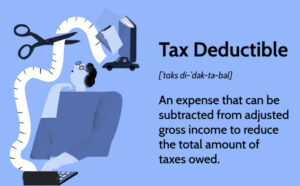 First, the simple one: If you pay for ads that advertise your business, you can deduct 100% of the costs from your taxable income. For example, if your business brings in $100,000 and spends $5,000 on advertising, it will only be taxed on $95,000.
The second rule pertains to what the government calls “goodwill” advertising. That includes both event sponsorship and charitable promotions. If you want to support a local fun run, rodeo, or battle of the bands, you can write them off—provided that your logo or business name appears somewhere. The same holds true if you want to partner with an NGO or nonprofit.
Things start to go wonky at the third rule. Uncle Sam wags his finger at political advertisements. Attaching your business’s name to anything that advocates for or against policies, positions, or lawmakers can’t be deducted.
Fourth rule: All signs can be deducted in year one. The One Big Beautiful Bill changed depreciation rules to make virtually all signage, including permanent exterior signage, deductible. The only signs that don’t qualify are the non-advertising pieces built into your building, like exit signs and room numbers.
And finally, the fifth rule: Business only. The IRS rates advertisements on a “primary purpose” scale. You can’t write off your wedding invitation even if you include a company logo because it’s primarily a wedding invite. To be deductible, an advertisement has to be most pertinent to a business.
Luckily, these rules leave a lot of breathing space for savvy marketers. Print ads are highly persuasive pieces, but business cards also qualify for the deduction. Even websites qualify. Web maintenance and hosting fees have always been deductible, but the Big Beautiful Bill made website development deductible, too.
The Tricky Bits
Unfortunately, not every piece of the Tax Code is as forgiving. When it comes to client relationships, entertainment, and gifts, the IRS swings a heavy hand.
 Food deductions have become stingier under the latest changes. While catering for employee events and company-wide parties remains 100% deductible, Big Beautiful ended write-offs for office snacks and, unforgivingly, coffee. Meals with clients, vendors, business partners, and those eaten while traveling remain 50% deductible. Most of the time, that is.
If you buy food as part of a package for a game or concert, the IRS counts it as an entertainment expense, something it views as mere frivolity. Like all such expenses, those can’t shrink your tax bill. When you take a client out to the ballgame, buy the peanuts and Cracker Jack separately to qualify for the 50% write-off.
Vehicle wraps are another odd case. Plastering your logo on a company car is 100% deductible. However, if you wrap the car you use for grocery runs or visiting family, you can only deduct a portion of it. For example, if the car is used 80% for business and 20% for personal reasons, you can deduct 80% of the wrap cost. One more caveat: the wrap itself must be primarily business-related. Simply changing the color and slapping on a business name in small font won’t qualify.
The IRS also limits the amount that can be deducted as gifts. Swag items that cost less than $4 per unit, such as store-branded pens, mugs, and keychains, can be fully written off. However, more substantial gifts to clients, like a fruit basket around the holidays or T-shirts, are only deductible up to $25 per customer.
Recruiting ads can be fully deducted. However, they qualify as a hiring expense rather than an advertising expense, so be sure to file correctly if you want the discount.
Why Advertise at All?
A certain species of small business owner bemoans advertising. They believe stores that pull in steady customers will stay afloat by inertia alone. Many go further, believing that advertising doesn’t work.
But that’s ridiculous.
American businesses spent more than $550 billion on advertising last year, and they’re not suckers. Madison Avenue pays cognitive scientists big money to unlock the most elegant ways to manipulate human behavior. Today’s ad men possess a sophisticated understanding of what drives buying behavior.
What they’ve found is worth knowing. Advertising doesn’t work as Don Draper wishes. While ads typically showcase practical information, their true purpose is to prey on emotions. The most effective ad is the one that runs in the background of your mind. The biggest return on advertising doesn’t come from a single ad, but persistent campaigns. Researchers call it the “mere exposure” effect. It’s why Coke and Pepsi pony up millions for 30 seconds of Super Bowl airtime. Once those brands fall out of your head, it takes a lot of effort to get back in.
What’s more, believing you’re immune is no protection. Studies show that we develop positive relationships towards brands whose ads we see repeatedly, and those feelings can predict what items ultimately make it into our carts.
SIDEBAR:
Advertising Write-Offs at a Glance
What’s 100% Deductible:
Print Ads
Website Maintenance and Hosting fees
Business Cards
Event Sponsorships
Billboards
Online Ads
Product Packaging Design Costs
Display Racks
Samples to Give Away*
Radio and TV ads
Vehicle Wraps*
Web Development*
Hiring Notices/Staff Recruiting Ads*
Raffle Prizes
Charitable Advertising*
What Isn’t:
Personal Ads
Political Lobbying/Issue Awareness Campaigns
Large gifts
Entertainment expenses
*Some restrictions apply; see full article for details