Here’s a conundrum: Every shop claims to do things differently, but most feel so similar they could have been generated from the same AI prompt.
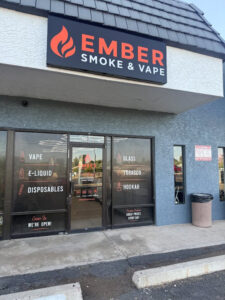
But Ember Smoke & Vape in Mesa, Arizona, is actually trying a different approach.
Ember is a smoke shop the way Tesla is a car company or Cost Plus is a pharmacy. It applies a Silicon Valley mindset to a traditional business in the fervent belief that new efficiencies and constant algorithmic learning produce a better store.
Its owner, whose day job is overseeing operations for a company many times Ember’s size, refuses to provide his name. That’s tellingly different from the traditional route many owners take toward smoke shop success. For them, building a solid customer base requires a certain amount of face-to-face familiarity with the clientele. Ember hopes to learn through data.
“I frequent the smoke shops myself, and I see them all over the place and think to myself, ‘Hey, this is a relatively straightforward business. You have inventory, you have a point-of-sales system, you have staff,’” the owner said. “In the business that I am in now, I currently manage well over 650 employees and do just under a $1 billion in revenue management. So, my operations background, it was really what inspired me to say, ‘Hey, I think this is something that I can do. I think I can raise the standard. I can raise the customer experience.’”
It’s an unusual gambit, to be sure, but it’s not clearly wrong. A more precise term is iconoclastic. Many of the most successful shops profiled in this magazine stay ahead of their competition by embracing the old-school vibe of headshops of yesterday. Ember’s inspiration is the Apple Store.
That explains the substantial investment. Industry guides put the total cost of opening between $50,000 and $120,000. Ember poured six figures into the physical space alone.
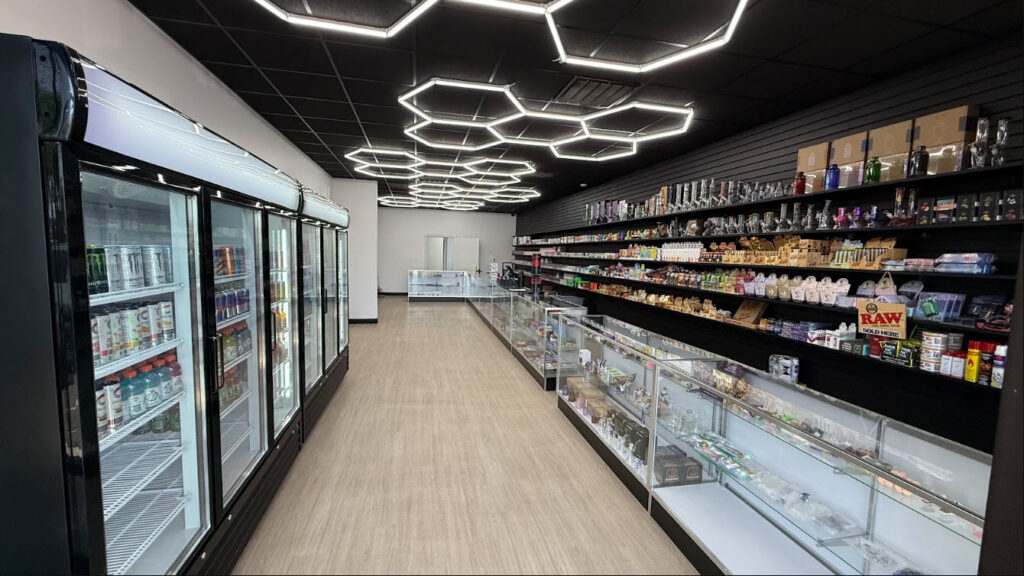
 “We put in brand new premium light fixtures, new paint, new flooring, new electrical, new slatwall, and then premium fixtures inside the store, like display cases,” the owner said. “We have two commercial refrigerators for refreshments and are looking into a Series 10 license for beer and wine sales for consumption off-site. We have a humidor inside the store as well.”
The total price is closer to what a franchise drops on a new location. But because second stores have a proven record of profitability, owners face less risk. They can also secure better terms for startup loans. Ember’s owner put his money on a sophisticated approach, which required a modern feel. Look the part, be the part.
“I do think that if we do a good enough job providing the customer with an experience where they feel welcome, they feel clean, organized, they feel respected, and they feel like, ‘Hey, my shopping experience was transparent. It was easy. It was simple. My questions were answered. I wasn’t upsold, I was just educated, and I was able to make my own decision,’” the owner said. “I think that providing that kind of environment will somewhat create a moat or shield you from the guy down the street that just opened up or is trying to open a shop or has been there a while.”
Filling in the Gaps
Ember’s owner has no firsthand experience in the space. But once again, he went with the modern tech-inspired approach to overcoming obstacles: he simply bought it.
“The people that I hired have over 20 years of experience on both the retail and the wholesale side of the smoke shop business. Nothing related to cannabis, all related to the early days of vape devices, all the way through working in shops, opening shops, running them, and then also working on the distribution side on the wholesale side. So, when it comes to, say, like a Geek Bar disposable, a very common product, very big name in the business, they can tell you the difference in liquid and what the flavor combination is and what the battery coils are, how long they’re going to last, the different modes on the product,” the owner said.
Bringing on high-level talent required ownership to reach deeper into its pockets, he said. But it also meant customers never have to deal with an unschooled staff, or one trained at a bare minimum by an already-busy entrepreneur.
“I’m paying well above the market standard for well above average talent and a lot of their incentive is also driven by customer experience, customer reviews, not necessarily sales,” the owner said. “Their comp is going to be related to the customer’s experience. Are they willing to leave us a 5-star review? Are they willing to fill out surveys, things of that nature, in order for them to make more money? It’s not just a, ‘Hey, I’m here to punch in, punch out, transactional, this is my job. And yeah, hey, this is what we got’. It’s more that they’re invested in the experience for the consumer to provide that better experience because it also benefits them as the employee.”
The Book of Jobs
Just before Apple opened its first physical space in May of 2001, BusinessWeek predicted its demise with the headline: “Sorry, Steve: Here’s Why Apple Stores Won’t Work.” The piece claimed that a “posh” store staffed by “well-trained salespeople” wouldn’t be enough to convince computer users to swap their PCs for a Mac.
It reads as silly now, but Steve Jobs took a shellacking in the press for embracing upscale stores at a time when many futurists saw malls were dying off.
Ember’s owner sees his store in the same way. And hopes to recreate the Apple Store’s success amid a similar sea of critics. He believes a good smoke shop should balance style and substance.
“One of the things that I’ve found in being a consumer is that there’s a lot of inconsistency between shops as far as product offerings, pricing,” the owner said. “I mean, I’ve even gone into the same shop at 10 in the morning, and it’s one price, and then later the same day with a different staff member and things are a different price.”
“What we’re trying to do differently is big on transparency, so we’ve invested in technology on the point-of-sales side where everything in the store is priced and also barcoded and itemized on your receipt,” he added. “So, when you’re looking, and you’re shopping in the store, you know, ‘Hey, if I’m looking at this bong or I’m looking at this disposable or I’m looking at this vape kit, here’s what the price says. This is what it is on my receipt.’ Those kinds of things have also been inconsistent for me. Sometimes I don’t get a receipt, sometimes the price that I’ve seen on the wall and then what rings up on the system is two different things, and then the employee behind the counter’s like, ‘Hey, man, I just work here.’”
Ember is betting that a better-looking shop can help build a better customer experience. What is your space saying to shoppers? From lighting to layout, explore how your store’s surroundings can work harder for your business in this recent article!