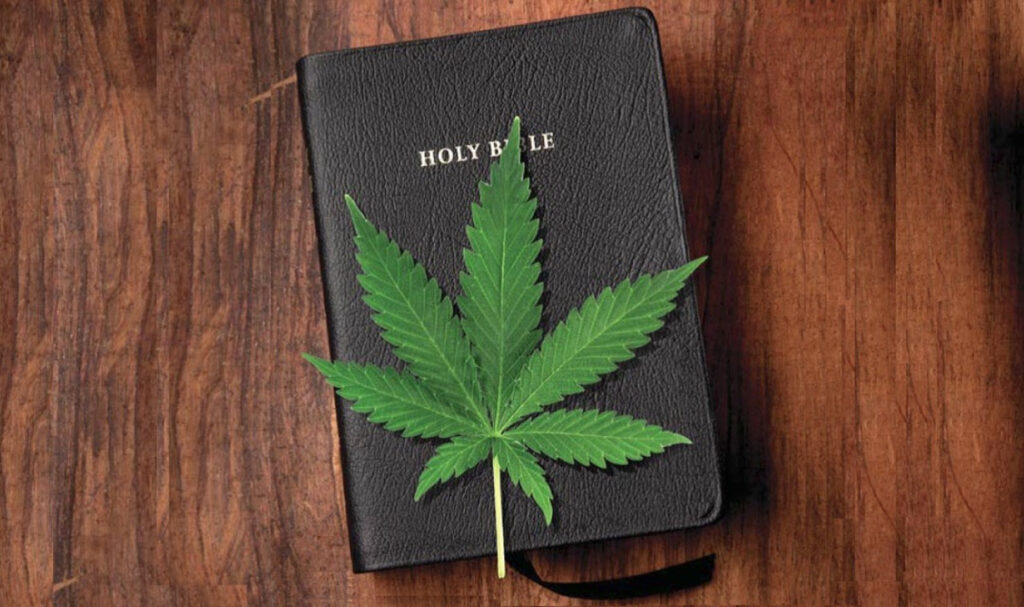
Born Sara Benetowa in Warsaw, Poland, in 1903, Sula Benet may not be an immediately recognizable name in cannabis spaces today, but she should be. While she primarily studied Polish folk customs, Benet became known for her graduate thesis at the University of Warsaw, titled Hashish in Folk Customs and Beliefs. In the paper, she claims that the plant kaneh bosm—which is referenced throughout the Old Testament and Torah and often translated as “calamus”—actually refers to hemp. Benet’s theory remains both significant and highly controversial today, especially as various religious and evangelical groups continue to demonize the plant.
The word kaneh bosm appears five times in the Old Testament in the books of Exodus, the Song of Songs, Isaiah, Jeremiah, and Ezekiel. Notably, in Exodus 30:23, God instructs Moses to collect “myrrh, cinnamon, and kaneh bosm” to make a sacred anointing oil. Still, Benet points out that, as a lower-value fragrant reed, calamus would not have a place in that concoction and wouldn’t make sense. Cannabis, however, would.
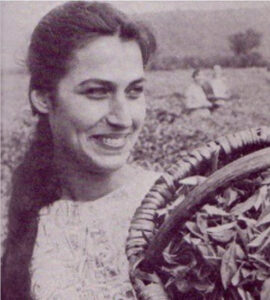 In 1936, the Warsaw Society of Sciences published Hashish in Folk Customs and Beliefs, which became hotly debated among other religious scholars, lexicographers, and botanists alike. While some found Benet’s logic convincing, others claimed that the kaneh dispute was predicated on false cognates in other languages like Sanskrit, Farsi, and Arabic. However, Benet argues that in many ancient languages, including Hebrew, the root word kan could mean either “hemp” or “reed”, which would explain the differing translations. The old Judaic religious requirement that the dead be buried in “kaneh skirts” is yet more evidence that kaneh was hemp before it was replaced by linen in garments and textiles.
Throughout the Old Testament and the Torah, the original Hebrew text talks about kaneh bosm as both an incense and an intoxicant, both important parts of religious ceremonies and celebrations. Along with the kaneh bosm debate, Benet’s research includes detailed ethnographies of Polish peasants and farmers, focusing on the different ways they used hemp for everything from food and clothing to collective rituals and psychotropics.
Hashish in Folk Customs and Beliefs earned Benet a post-doctoral scholarship to Columbia University in New York, and she moved to the United States in 1936 following the untimely and tragic death of her husband, Samuel Benet. The rest of her immediate family was killed by the Nazis in World War II.
Dr. Benet received her Ph.D. from Columbia in 1943, after which time she went on to teach at Columbia, Hunter College, Fairleigh Dickinson University, and the Pratt Institute. For a time during World War II, Benet served as a consultant to the U.S. State Department for her expertise in Eastern Europe—she was fluent in Russian, Polish, and Ukrainian, as well as English.
Benet continued this line of study for the rest of her life. Decades later, in 1975, Benet published her paper called Early Diffusion and Folk Uses of Hemp, saying that even as the body of literature concerning hemp began to grow rapidly in the 1960s and 1970s, “the historical routes of its diffusion remain obscure, and there is barely any reference to the role it played in the life of the European peasantry”. Benet continued to believe these studies would illuminate the different uses of hemp in both ancient and contemporary “folk ritual, magic, and medicinal practices”. Benet also conducted research in Abkhazia and published the book How to Live to be 100: The Lifestyle of the People of the Caucasus. Not quite 100 years old herself, Benet died in New York City in 1982 at the age of 79.
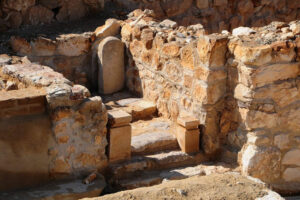
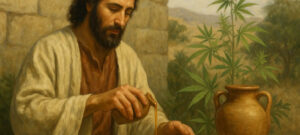 Benet’s research faced a recent resurgence in 2020 after Israeli archaeologists discovered cannabis residue on artifacts from an ancient temple, indicating the plant was likely used in historic Judaic ceremonies. While the temple site and the artifacts in question were discovered in the 1960s, scientists only recently determined that the black organic matter found on the shrine’s limestone altars contained THC (the other residue present was from frankincense). The altars and the residues on them were shockingly well preserved, thanks to a combination of the arid desert climate and their burial.
Moreover, some religious scholars argue that the presence of cannabis indicates that ancient Jews used psychoactive materials intentionally in their worship and ceremonies. The cannabis resin also contained traces of animal dung, which helps to facilitate evaporation and promote the plant’s psychoactive properties. This particular temple at Tel Arad in the Negev Desert dates back to the eighth century BC, making it over 2,800 years old. In the paper Cannabis and Frankincense at the Judahite Shrine of Arad, authors Eran Arie, Baruch Rosen, and Dvory Namdar agree that the use of cannabis here “had a deliberate psychoactive role”, citing that many ancient cultures frequently used plant-based hallucinogens in religious and cult ceremonies. These recent findings corroborate Benet’s earlier theories, proving that cannabis was not only present in this part of the world at that time but that it was used intentionally in religious rituals.
 Whether or not kaneh bosm does in fact refer to hemp or calamus or aromatic cane or another plant entirely, Benet’s research spotlights the ancient history of plant medicine. It makes a case for cannabis having roots in various ancient rituals and civilizations. After all, in Genesis 1:29, God promises that “every seed-bearing plant on the face of the whole earth and every tree that has fruit with seed in it, they will be yours for food.” Why wouldn’t that include cannabis?
Do you know a powerhouse woman making waves in the cannabis industry? Whether she’s leading, innovating, advocating, or inspiring, we want to hear her story! Our Women in Cannabis spotlight celebrates the trailblazers, changemakers, and unsung heroes shaping the future of the industry. Nominate someone who deserves the recognition—because their work deserves to be seen! Submit your nomination here.
Sources
https://www.smithsonianmag.com/smart-news/cannabis-found-altar-ancient-israeli-shrine-180975016/
https://www.tandfonline.com/doi/full/10.1080/03344355.2020.1732046