The use of cannabis in professional sports has always been a controversial subject. While some are firm believers that all substances should be banned from professional sports altogether, most people aren’t thinking about cannabis when they’re discussing performance-enhancing drugs (PEDs). In fact, there have been countless cannabis users in the world of professional sports throughout the years; some of whom are more open about their love for the plant than others.
Kevin Durant
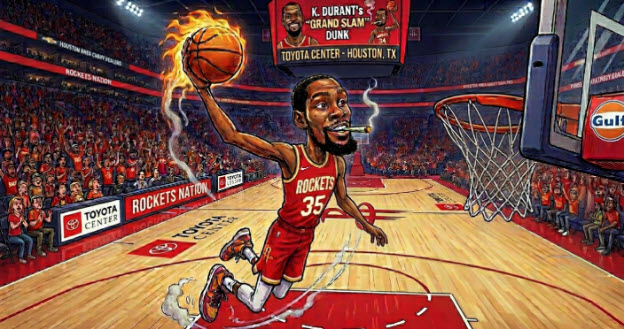 Drafted by the Seattle SuperSonics in 2007 and currently playing for the Houston Rockets, Kevin Durant is a 16-time NBA All-Star player, four-time NBA scoring champion, two-time NBA Champion, and a self-admitted cannabis connoisseur. He has a list of accomplishments longer than he is tall and, at 6’11”, that’s really saying something.
Kevin Durant can be open about his love of cannabis, even as an active player in the NBA, due to a 2023 agreement between the NBA and the National Basketball Players Association that effectively removed the plant from the league’s list of banned substances. However, the NBA had already taken a hands-off approach to cannabis as a whole since they stopped testing athletes during the 2019-2020 offseason.
“It’s the NBA, man. Everybody does it, to be honest. It’s like wine at this point,” Durant said at a 2023 sports and business conference in Los Angeles. “I just enjoy the plant. It’s as simple as that.”
Johnny Manziel
In one of the most extreme cases of an athlete choosing the counterculture over their athletic career, Johnny Manziel’s story is a cautionary tale more than anything else. Also known as Johnny Football, this is an athlete who already had a clear road laid out ahead of him—all he had to do was keep his head down and walk a straight path.
But Manziel never left his college partying days behind him. Not only has he admitted to smoking cannabis during his NFL career, but he was also a regular user of alcohol, cocaine, and prescription drugs during that time.
These habits, alongside a domestic violence allegation that was eventually dismissed, ultimately cut his time in the NFL to a mere two years and, as such, Johnny Football will likely never achieve the fame and fortune that he would have attained if he could have just avoided some of the heavier substances and stuck to cannabis.
David Ortiz
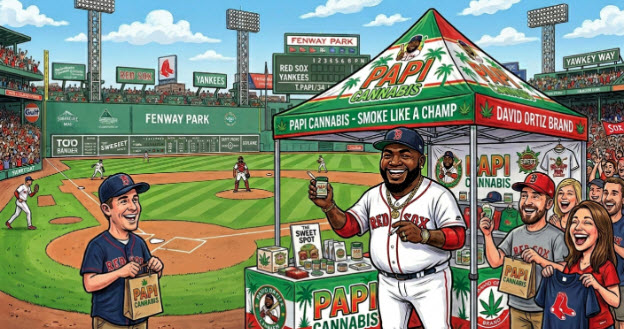 What do you do if you’re a Hall of Fame baseball player with 541 home runs, 2,472 hits, and a lifetime batting average of .286? If your name is David Ortiz, the natural next step is to start your own cannabis brand.
Known as Papi Cannabis (an offshoot of Ortiz’s nickname, Big Papi), the brand currently offers cannabis flower, edibles, pre-rolled blunts—known as Sweet Sluggers—and a line of Moonshot vape cartridges. Since Ortiz spent most of his major league career with the Boston Red Sox, it’s no surprise that his products are widely available throughout the New England region.
“Once I embraced the flow of the flower, everything changed,” Ortiz told Boston 25 News shortly after launching the brand. “Cannabis has helped me relax, sleep better, manage stress, and heal physically after a lifetime of playing ball, and I look forward to sharing Papi Cannabis and my personal journey to help people understand its benefits.”
Brittney Griner
One of the most skilled athletes to ever compete in the Women’s National Basketball Association (WNBA), Brittney Griner made headlines for all the wrong reasons in 2022. That’s when Russian authorities arrested her for possessing less than a gram of hash oil that was found in her luggage. Making the matter even worse was the fact that Griner is a licensed medical cannabis user within the United States.
Griner, for her part, insists that she didn’t intentionally bring the cartridges into the country. Nonetheless, she pleaded guilty and was sentenced to nine years in a Russian penal colony. She was eventually released during a controversial prison exchange in late 2022, which saw the U.S. giving up a notorious Russian arms dealer for the WNBA star.
Nick & Nate Diaz
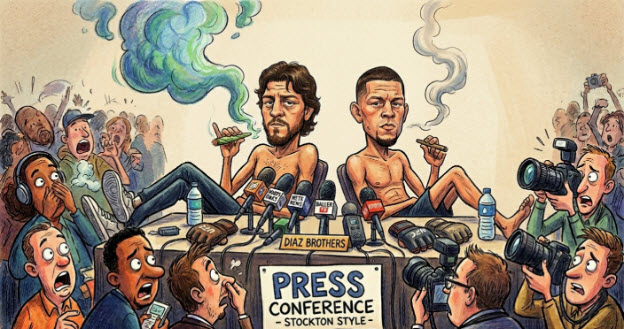 Often ranked amongst the top bad boys of MMA, brothers Nick and Nate Diaz have been making headlines in and out of the cage for well over 20 years. Despite their similar physical stature and a two-year age gap, the Diaz brothers have never fought each other—instead preferring to take on opponents outside their bloodline.
But the similarities don’t stop there. Nick and Nate Diaz are also known for their love of cannabis, having launched their own line of pre-rolls and, more recently, partnering up to launch their own CBD company, GAME UP Nutrition.
The brothers have also had their share of controversy throughout their respective careers, with Nick famously being fined and suspended by the Nevada State Athletic Commission after testing positive for cannabis on two separate occasions: once in 2007 and again in 2015.
Using Cannabis to Protect the Health of Today’s Athletes
Unlike steroids, cannabis isn’t banned from sports because of its performance-enhancing effects. Instead, many organizations choose to ban cannabis because of its legal status. Not only is this unfair to those who want to use cannabis as an alternative to opioids for pain management, but regular cannabis testing and monitoring can actually take resources away from fighting PEDs like anabolic steroids, human growth hormone, and stimulants—all substances which can be extremely harmful to the health of today’s athletes.