Image attribution: CC BY-SA 3.0 (http://creativecommons.org/licenses/by-sa/3.0/), via Wikimedia Commons
It’s amazing how much fuss can be made over a tea leaf.
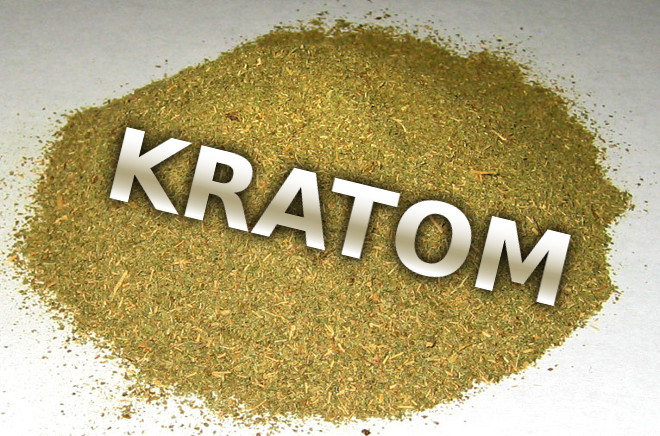
Sometimes, it can even be easy to forget that that is all that kratom is. It’s not a designer drug, nor is it really an opioid, at least in the purest sense of the term. It’s just a leaf from a tree that grows in Southeast Asia, a leaf that has been picked by the region’s inhabitants for centuries and either chewed on the spot or brewed into a tea, hailed for its abilities to soothe the body and calm the mind. However, in today’s pharma-controlled culture, it’s also disruptive. And much like Uber, Lyft or AirBnB, the captains of the industry it’s disrupting aren’t happy about its growing popularity.
Monopolies don’t die quietly. Just consider the ruckus we’ve seen over the aforementioned web-based services. From the horror stories circulated about Uber, you’d think every one of their drivers was an ax-wielding serial killer salivating over the thought of another victim climbing into their vehicle. Thank you, Taxi industry, for that healthy helping of fanciful fear-mongering. But the taxi industry doesn’t hold a fraction of the power wielded by the pharmaceutical industry. What did you think would happen?
As we all know, they tried to get kratom banned once already via the DEA. But, after the literal avalanche of outrage from the public, the agency backed down. Since then, it’s been the FDA that’s been on the warpath, releasing memo after memo of hysterical and arguably inaccurate reports on the supposed dangers of the plant. If you pay attention, it’s easy to sniff out bullshit. Often, though, the difficult part is explaining how you know it’s bullshit—and if we’re going to win this struggle, we need to be able to do that. To help us more effectively navigate the misinformation being disseminated on the topic, we reached out to a veteran of the kratom industry who was happy to assist, but preferred to remain anonymous. But while we our honor-bound to keep his name out of the article, we can tell you that he’s been deeply involved with the plant for ten years and is very likely the reason you have it on your shelf. Let’s call him “Jim.” With Jim’s help, we’re going to walk you throw a handful of the most common arguments against kratom and give you a few pointers on how to navigate them.
44 People Have Died From Kratom!
Really? All of 44? An average of 50 people die from being struck by lightening every year. What’s your point?
Let’s just pretend that 44 deaths (not in a year, but since they started looking into kratom) is cause for concern. Even within that framework, the FDA’s assertion here unravels quickly under the lightest scrutiny.

“One of my best buddies is a medical doctor,” Jim begins. “He’s one of those science nerd medical doctors . . . He’s set up hospitals in Sudan and travelled the world . . . he’s legit. I sent him the link to the 44 deaths claim and he read through them as a medical doctor. ‘Realistically,’ he told me, ‘there is not one death there could be logically attributed to kratom. Not one. No question.”
You don’t really have to be a doctor to see through the statistic, though. “There was one death where it was a gun shot wound to the chest and they called it kratom-related,” Jim continues. “There was another where a guy fell out of a window and had eight other substances in his system . . . every case was a polysubstance case. There was not one where kratom was the only substance found in the person’s system.” Translation: pure bullshit.
We’ve Found The Lethal Dose of Kratom and it’s Almost the Same as Heroin
This is one of the latest scare tactic currently storming the internet. According to Inverse.com, “a team of researchers tested mitragynine and 7-hydroxymitragynine, the two main active molecules in kratom, on mice to establish their LD50 — a measure of lethal dosage.” From the study, they concluded that the average lethal dose of pure mitragynine (the primary active alkaloid in kratom) was 27.8mg per kg of body weight, while 7-hydroxymitragynine (the secondary active alkaloid in kratom) came in at 24.7mg/kg. To drive the point home, they then compared these measurements to that of heroin, which is lethal at 23.7mg/kg. Meanwhile, when taken orally, the lethal dose for mitragynine is 547mg/kg. On the surface, it doesn’t look good for kratom.
But as Jim points out, this study is suspect from the beginning, based on the motives of the group that conducted it. “They said they weren’t intending to find negative results,” he explains, “yet at the same time, they acknowledged their ulterior motive. They set out to develop a mitragynine test for law enforcement. They’re like, ‘Oh, we weren’t attempting to prove that kratom is dangerous. That’s just our findings. By the way, we also developed this test kit.’ It’s obvious. They did it for the money.”
Also acknowledged within the article is the fact that the study runs counter to most of the findings on kratom thus far, which have concluded that as a mere partial agonist of the opioid receptors, the plant does not pose the same threat of overdose through asphyxiation as other opioids. Jim puts it in simple terms for us. “Kratom doesn’t work the same way,” he says. “It doesn’t activate the protein pathways that normal opiates or opioids do. That’s why the overdose problems aren’t there. That’s why the respiratory problems aren’t there. I’ve said it a thousand times; the only way you can die from kratom is if you have a metric ton of the stuff fall on you and crush you to death.”
But let’s again assume there’s merit to their assertion, bias or no. First, no one’s injecting the stuff. The process of extracting pure mitragynine and/or 7-hydroxymitragynine is incredibly difficult and expensive; definitely not something a junkie can handle with a spoon and a torch. “It’s just not happening,” Jim asserts. “The cost and complication of trying to access that much mitragynine and then figuring out how to get it all into a soluble form would be ridiculous,” he later adds, “but based off the products I deal with, I’d say that a lethal ‘dose’ would cost anywhere from $7,000 to $10,000—if you could even get it.”
So, let’s move on to the lethal dose for ingesting kratom (547mg/kg.) If you do the math, their conclusion means that someone who weighs 150lbs would need to ingest a little over 2 kilograms in one sitting, which anyone who has tried kratom knows, is impossible to do. You’ll puke before you’re even a quarter of the way there.
Fun fact: The lethal does of caffeine is estimated to be 192mg/kg. So, does that mean that kratom is 2.8 times safer than coffee? Hmmm…
It’s Not Regulated, so It’s Not Safe.
This is the failsafe, the ‘yeah, but’ that’s used once all of the other arguments have been picked apart limb from limb. This is the point where they’ll bring up the recent panic over salmonella poisonings from tainted kratom products. First, yes, salmonella is dangerous. It’s no less dangerous when it’s found on kale, spinach, pasta salad, chicken or Kellog’s Honey Smacks, all of which have been linked to recent outbreaks of the deadly pathogen. Using salmonella as a reason to ban kratom is a classic baby/bathwater scenario, laughable at best. But should it be regulated?
Arguably yes, but that answer ultimately depends on your philosophy on the role of government. In any case, the problem isn’t with the majority of kratom manufacturers, but with the system itself. We basically have two possible classifications. It could be a drug, in which case, the approval process requires millions of dollars in fees and is therefore a financial black hole for a product that can’t be patented (as kratom is). Or, it can be sold as a dietary supplement, a designation in which there is little to no oversight beyond the FDA’s monitoring of production facilities and marketing claims. It’s a no-win situation; either bad business or bad press.
If you’re worried about lack of oversight from under-regulation, the solution is simple. Buy from legitimate suppliers. Don’t order it in bulk from random Indonesians on Facebook who are scraping it off the factory floors. It’s that simple.
“You want to solve a lot of the health problems?” Jim asks rhetorically. “Fucking regulate sugar . . . Stop letting people sell it to kids . . . If you have a look at the human brain under an MRI when it’s exposed to cocaine and then have a look at the human brain when it’s exposed to sugar, you’ll see that the same exact areas light up. So I fail to see how [the FDA]’s computer controlled model can conclude that kratom’s an opioid if they’re not going to apply the same thing to sugar, which is actually doing real damage to the human body and society.” He has a solid point.
The bottom line is, no matter how many alarmist news reports or fear-mongering FDA memos get released, kratom is a relatively safe plant to consume. It’s been used for hundreds of years, if not thousands with not a single death legitimately associated with it. It’s being targeted only because it poses a threat to the pharmaceutical monopoly on pain and addiction management. Criminalizing yet another healing plant wouldn’t be just foolish; it would be a travesty of justice.
“Are we going to be the same stupid people and make the same stupid mistake that we made 75 years ago with cannabis?” Jim asks. “Are we that stupid?”
Hopefully, not.