There’s no holiday more prone to mythmaking than Christmas. Across our TVs, stories enshrine ridiculous origins to modern traditions, cartoon characters regularly save the holiday from the forces of grinchdom, and modern love flourishes for career women stuck in small towns. But these yuletide concoctions aren’t merely dessert; they’re flavoring added to medicine. Our stories cover up an uncomfortable truth: many of our holiday traditions stem from pagan revelry that included everything from psychedelics to orgies.
Not that this is new. Since Christmas was first celebrated, people have told others they’re doing it wrong. Puritan communities cast out neighbors who trimmed trees or hung wreaths. Early American settlers saw the holiday as Catholic excess, more informed by idol worship than the Bible. George Washington may have cut down a cherry tree, but he stopped short of felling a Douglas fir up to stand beside the fireplace at Mount Vernon. Even in Europe, many Protestants preferred not to celebrate Christ’s Mass at all. For them, the beauty of religion was self-denial; the hedonistic feasting and general joie de vivre of Christmas was as repellent as women showing their ankles or owning property.
There was no problem with Christianity; paganism’s winter celebrations were just more fun.
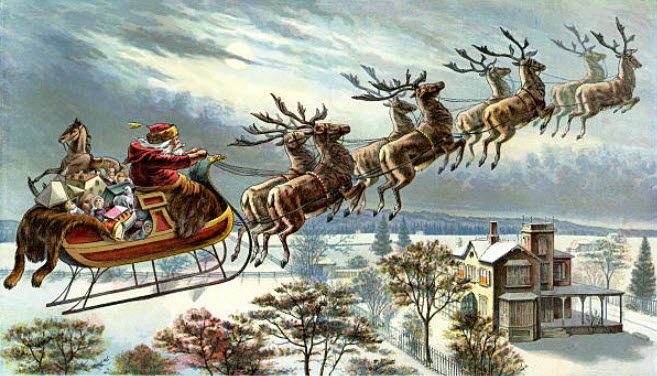
It wasn’t until the fourth century that Christians began celebrating their savior’s birth at all. It didn’t rise to the status of Easter or Epiphany until a papal committee selected December 25 as the official birth date of the messiah. The date just happened to coincide with popular pagan celebrations, such as the Saturnalia and Yule, which have provided us with some of our most cherished Christmas traditions.
The Spores of Santa
As early Catholics realized, there has always been a bit of tension between religion and Christmas traditions. Many parents struggle to explain how Santa fits into the story of Jesus. The concepts don’t quite work together because they began as different stories that served different purposes.
The Santa story took root in ancient Siberian and Norse practices, where important religious or cultural rituals happened in the depths of midwinter. Shamans would follow herds of caribou on long treks through the frostbitten tundra until they stopped to eat red-and-white capped mushrooms. After scaring off the deer and pocketing the fungi, they would return to the smoky halls to deliver the goodies. In return, shamans received prime seats at the feasting table and special baked goods.
When travelers visited these communities, they returned with stories to share. Over time, observer accounts morphed into tales that resemble modern Christmas fables: Shamans appear out of the smoke (now chimneys), dressed in the red and white colors of shrooms, bringing special gifts for families. These magical beings came from cold climates (the North Pole) and were always preceded by reindeer, who led them toward the houses of the deserving. Instead of providing them with grain and salted meat, however, we leave them the goodies of more modern culture: milk and cookies.
It’s a seductively intuitive hypothesis that explains the central metaphor of Santa Claus. And while many scholars are quick to puncture holes in the theory (most take issue with the red-and-white clothing), serious holiday historians don’t fully discount the theory. Several books trace the exact origins to tribes both in Siberia and in Scandinavia, where tribes like the Sámi people have long used magic mushrooms and traveled by horse-pulled sleighs.
But Santa Claus, the Shroom Shaman, never sat well with Christians. And as Christmas continued to pick up detritus left over from pagan converts, the Puritanical impulse twinged. Nineteenth-century Christians needed a figure that could explain away all the pagan rituals while still instilling a holy reason for the season. In the poem that begins “‘Twas the night before Christmas,” they found their man.
The work was based on a sleigh-driven shopping trip the author took to buy gifts for his family. He lived in New York, where Dutch immigrants celebrated the tradition of giving gifts on Saint Nicholas Day. The real Saint Nicholas was a fluffily bearded Greek bishop whose storied acts of charity (especially gift-giving) made him a regular feature in children’s stories. Seeing a chance to insert a Catholic icon into pagan-coded traditions, the poem’s author turned the ancient shaman into St. Nick, the jolly old elf, and the modern Santa Claus was born.
The Rise of Revelry
The festivals that merged into Christmas started as a way for ancient peoples to deal with the idle days of chilly weather. It served as a reminder of good times, often depicted by boughs of evergreen trees that symbolized rebirth, the return of the sun, or eternal life, depending on where you were.
In Rome, a weeklong celebration of Saturnalia provided an otherwise boring late December with the mother of all holidays. People feasted, danced, gambled, and indulged in carnal recreation with abandon. There was little order, and less judgment. Roman society inverted itself: masters waited on slaves, citizens shrugged off formal togas in favor of colorful clothing, and the rich gave away money instead of hoarding it.
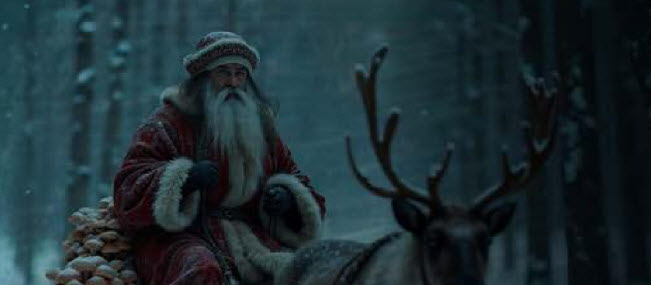
The tribes of pre-Christianized Europe celebrated Yule, which marked the late December solstice. Germanic peoples celebrated with wine, drink, the slaughtering of a boar, a ghostly night hunt, and burning a giant felled tree known as the yule log. In fact, contemporary Germans clung to these traditions so tightly that it was only their mass arrival in the New World that destigmatized Christmas decorations in America. None other than Martin Luther first added candle decorations to evergreen trees to symbolize the light of Christ, allowing the pagan tradition a welcome role in Protestant Christianity.
Those people weren’t alone. From ancient Babylon to early tribes of Pakistan and Peru, cultures across the globe have long marked deep winter with celebrations. And the stories we tell ourselves about why we celebrate continue to develop. As church attendance dwindles and society moves away from the monoculture, holiday stories have become both less religious and less unifying. The last time a genuine Christmas movie led the box office was 2003’s “Elf.” Modern filmgoers prefer superheroes, Star Wars, and cartoons over Santa. Today’s Christmas tales aren’t targeted at mass audiences with ideals of living a wonderful life or dealing with kooky family members. They exist in niche form, celebrated through genres like horror, comedy, horror-comedy, LGBT, and straight-up religious. Even at home, made-for-TV movies don’t deal in Claymation reindeer; they center on romantic love in small-town America.
But that’s how it goes. Humanity’s greatest Christmas tradition isn’t trimming the tree or decking the halls; it’s changing the celebration to suit our needs. As our conception of family changes, so must our way of surviving the dark months without seasonal affective disorder. Thinking differently would just be telling yourself a convenient story.