




Despite the fact that Michiganders have been enjoying medical and recreational cannabis within the state for quite some time now, Michigan’s cannabis industry saw a 16% decline in revenue from December 2025 to January 2026. But why the sudden decrease?
As it turns out, several factors are driving the loss of revenue throughout the state—including an increased wholesale tax, rising prices across the board, and a rough winter (even by Michigan’s standards).
The Increasing Cost of Doing Business
For many, the new year is often a time of self-reflection, change, and optimism. In Michigan, however, the start of 2026 also marked the introduction of a new 24% wholesale cannabis tax. While analysts suggest the new tax could bring in upwards of $400 million within the first year alone, many cannabis users don’t share their enthusiasm.
 While businesses are technically responsible for paying the new tax, the increased product cost is ultimately passed down to the consumer. But now that the numbers are starting to trickle in, we can see that consumers are hesitant to pay increased prices at the counter. Revenue for Michigan’s cannabis industry fell drastically from $269.2 million in December 2025 to $226.4 million in January 2026. However, the industry as a whole is still raking in millions, a decrease of 16% from one month to the next cannot be ignored.
This decrease in revenue is already resulting in widespread dispensary layoffs and, in extreme cases, permanent business closures. Although some of this activity could be chalked up to overcrowding, as there has been a large number of dispensaries opening up across the state within a few short years, it’s easy to see how such a sharp decrease in revenue could be a concern for shops that are already competing amongst each other for their share of the local customer base.
But Michigan’s 24% wholesale cannabis tax isn’t the only factor behind the sudden decline in revenue. Some of it is a result of overall decreased consumer spending.
Consumers Are Feeling the Pinch
Dispensaries and head shops aren’t the only businesses seeing below-average revenue, and Michigan isn’t the only state that’s experiencing a reduction in consumer spending. According to the latest studies, spending growth in the U.S. has dropped to 0.8%, the lowest rate since the COVID pandemic in 2020.
Much of this is a direct result of inflation driven by exorbitant energy costs, surging fuel prices, and rising food costs. When you consider that the inflation rate is continuing to climb in early 2026, rising from 2.4% in February to 3.3% in March, it’s safe to say these trends will continue for some time.
Unfortunately, luxury and recreational budgets are often the first to get cut when consumers start to feel the pinch. And with many dispensaries in the state already raising their prices, the choice to cut back is made that much easier for casual customers.
Instead of quitting outright, however, some users will undoubtedly migrate back to the streets and their black-market connections. While dispensaries are subject to numerous fees and taxes, including the new wholesale cannabis tax, black-market dealers operate without such strict regulations.
Purchasing cannabis from a street-level dealer includes some inherent risks of its own, of course, including the potential for contaminants, misleading potency, and other safety hazards. Still, it’s a risk that some might be willing to take to save a few bucks on their favorite recreational activity.
Land of the Ice and Snow
The 2025-2026 winter season was exceptionally rough for many areas in Michigan. Some cities, particularly those in Michigan’s Upper Peninsula, saw up to 90 inches of extra snow on top of their normal 100 to 180 inches. While many cities in the southernmost Lower Peninsula maintained average snowfall totals, some regions in mid-Michigan saw 12 to 24 extra inches of snow.
Although most Michiganders are perfectly capable of driving in a little bit of ice and snow, the 2025-2026 winter season was enough to keep even the most seasoned drivers at home. Since many were reduced to traveling only when necessary, those weekly or monthly trips to the local dispensary were often postponed. Not only did this leave many cannabis users going without, but it also meant that local dispensaries saw fewer customers during this time.
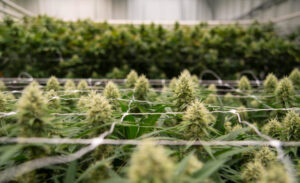 Combine that with rising prices, both from Michigan’s new wholesale cannabis tax and from increased inflation across the board, and it’s easy to see how the state’s residents were spending less on recreational activities—including recreational cannabis—during the 2025-2026 winter season.
Now that winter is behind us, however, Michiganders will certainly be enjoying more time outdoors. Whether this leads customers back to their local dispensaries remains to be seen. Still, if it does, the inclement weather may have had an even bigger impact on Michigan’s declining cannabis revenue than we first thought.
A Trifecta of Misfortune
It’s easy to blame the decreasing revenue on the state’s new wholesale cannabis tax. Still, it was only one of several factors that combined to create a trifecta of misfortune for Michigan residents during the 2025-2026 winter season. The summer months will be the true test of Michigan’s new wholesale cannabis tax. Still, if dispensaries don’t start to recoup their losses quickly, it might be time to re-evaluate the wholesale cannabis tax and its long-term effect on Michigan’s cannabis market.











