



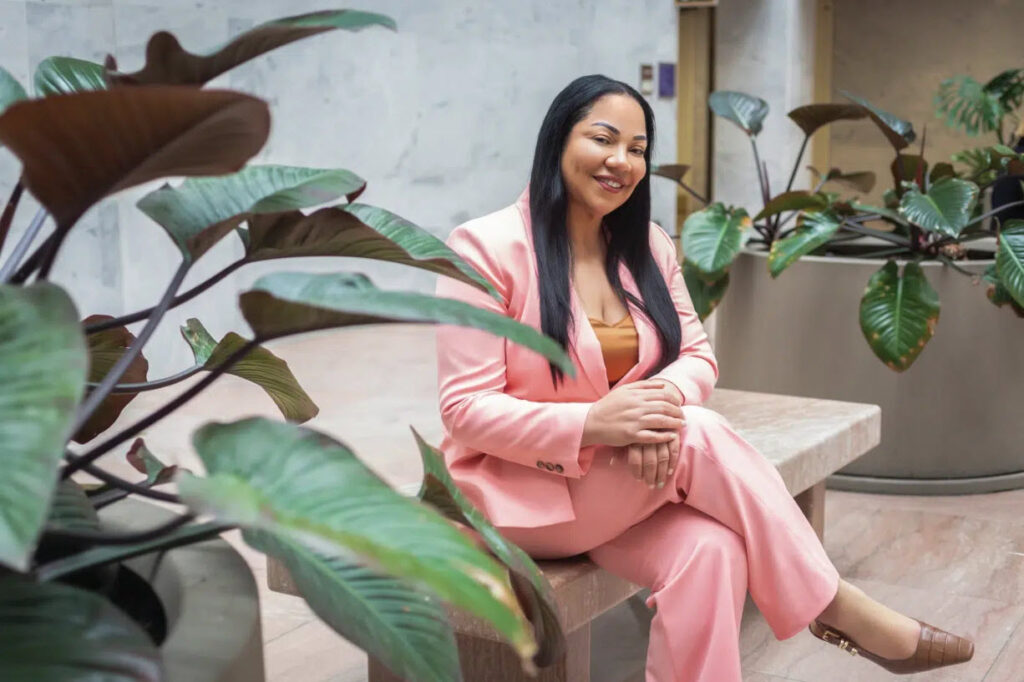
Dr. Macias first fell in love with science while studying at Howard University, where she completed her undergraduate studies and later earned her PhD in cellular and molecular biology. While at Howard, she became especially interested in cancer research due to personal ties. Growing up in a Creole family and predominantly Black community in Louisiana, Dr. Macias watched many women around her battle breast cancer, so at Howard, she decided to focus her research on the BRCA1 gene. As she began conducting scientific research, she was also in conversation with many loved ones in Louisiana, which helped her begin to see clear connections between cancer treatment and cannabis use.
At the time, medical marijuana was still illegal in her home state and, therefore, quite difficult to access (cannabis wasn’t legalized and more widely available in Louisiana until 2015). However, Dr. Macias saw her community relying on the plant to treat their cancer symptoms specifically, and it was helping. As she learned more about the scientific and medicinal benefits of the plant, she became a staunch advocate for legalization, seeing the unnecessary danger and risk in the lack of access and regulation.
While at Howard, Dr. Macias also witnessed the paradoxes of legalization discussions firsthand. Even though scientific studies increasingly showed the medicinal value and potential of cannabis, the social and systemic stigma surrounding the plant continued to reinforce its criminalization. Despite her near-constant efforts, Dr. Macias struggled to research and work with the plant in Washington, D.C., until the District legalized medical use in 2010 and began issuing dispensary licenses in 2012. As soon as that happened, she knew that’s what she wanted to do.
Opening her medical dispensary continued to be an uphill battle for several years. Because the plant was still so stigmatized, it was difficult to sign a lease to open her business—she ended up selling her house and moving her family into a small city apartment so she could rent a basement in Dupont Circle. This small basement in the heart of D.C. would become the flagship location of National Holistic Healing Center in 2015. At first, she had only 13 patients and could afford to stock only a single strain from a local Black grower. However, because of her genuine care and compassionate, patient-centered education, she steadily grew her customer base. Eventually, she had hundreds of patients, and with National Holistic Healing Center, Dr. Macias became the first Black woman to own and operate a medical dispensary on the East Coast.
Educating patients has always been a core value for Dr. Macias, who prioritizes building trust and meaningful relationships in all aspects of her life. She even has a whole YouTube channel of educational videos on her business’ website, covering everything from differences among strains to the endocannabinoid system to legalization efforts across the country and around the world. Highlighting her patient-first approach, she also has videos geared toward people who are afraid to use cannabis for the first time, parents who want to know how to talk to their kids about cannabis use, and medical patients who have questions about specific medical conditions or how cannabis use could affect their employment.
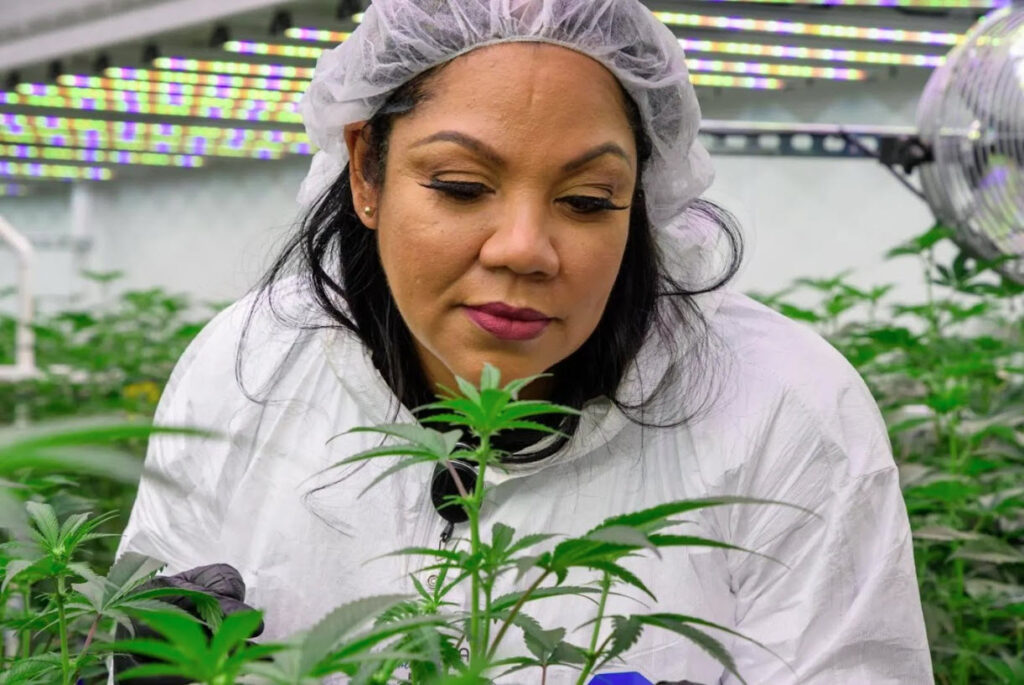 As a Black woman in the cannabis space, Dr. Macias has always advocated for and uplifted other women and people of color in the industry. In case she didn’t have enough on her plate while opening NHHC back in D.C., she also co-founded Ilera Holistic Healthcare back in Louisiana. Just as NHHC made history in D.C., Ilera made history in Louisiana by becoming the first licensed cultivator and processor in the state. Dr. Macias’ work at Ilera and their partnership with Southern University—her sister’s alma mater—became an important outlet for her to support her Louisiana roots and educate her community about safe cannabis use.
Now back in D.C., Dr. Macias continues to be a fierce advocate for patients’ rights in the healthcare space, especially for women. Since 2018, she has served as the Executive Director and Board Chair at Women Grow, a nonpartisan organization dedicated to empowering women across industries, with a special focus on healthcare, science, and entrepreneurship, and to supporting their pursuit of leadership roles in the cannabis industry. Only 3% of women in the cannabis industry receive private funding, and in 2023, only 39% of executives in the industry were women. Dr. Macias believes in the power of sisterhood, camaraderie, and lifting each other up. She also refuses to stay silent. “The door is not necessarily open to us, but we are pushing through it,” she told MG Magazine in an interview last year. In the past decade, Women Grow has worked with over 50,000 businesswomen and patients.
National Holistic Healing Center sits only a few miles from Capitol Hill, a proximity that allows Dr. Macias to visit legislators in person and work to convince them to add more women’s conditions to the list of those eligible for medical marijuana treatment. Medical conditions like menopause, fibromyalgia, endometriosis, and, of course, breast cancer, are often excluded from the specifications, making it much more difficult for women to access medical cannabis treatment and care. In this policy work, too, Dr. Macias remains committed to intersectionality. Lately, NHHC and Women Grow have been working to offer more Spanish-language educational resources to better support Latine populations better.
For Dr. Macias, the ultimate goal is global cannabis legalization, which she acknowledges likely won’t happen in her lifetime, but with her decades of experience and expertise across cannabis, healthcare, education, and policy, she might just be the person to make it happen.
Do you know a powerhouse woman making waves in the cannabis industry? Whether she’s leading, innovating, advocating, or inspiring, we want to hear her story! Our Women in Cannabis spotlight celebrates the trailblazers, changemakers, and unsung heroes shaping the future of the industry. Nominate someone who deserves the recognition—because their work deserves to be seen! Submit your nomination here.











