POTLUCK Laurie Wolf
Laurie Wolf has been a trained chef, food stylist, food editor, recipe developer and cookbook author for over thirty years. The New Yorker magazine called her the Martha Stewart of Marijuana Edibles.
Wolf made her first pan of marijuana brownies in college. Years later, after successfully managing her own epilepsy with cannabis, she founded Laurie + MaryJane to serve the medical community in her home state of Oregon. She has also published four cannabis cookbooks: HERB, Cooking with Cannabis, Marijuana Edibles, and The Medical Marijuana Dispensary.
“The goal is to let people control marijuana that they consume and the way they consume it,” Wolf says. “I’m not focusing on the ‘stoner,’ but rather people who are looking at cannabis like boutique wine.”
Hate isn’t too strong of a word for how Wolf feels about the distinct taste of cannabis. That’s why her recipes complement and downplay the flavor of the herb so that each appetizer, entrée, and dessert can be enjoyed to the fullest. From full-spectrum CBD granola to infused pasta sauce and organic, fair-trade chocolate, you can taste the quality of ingredients in every bite.
Cannabis critics agree that Wolf has got the recipe right. Among her recent honors are Dope Cup winner for Best Savory and Sweet Edibles and Oregon Cannabis Cup champion for best ingestible.
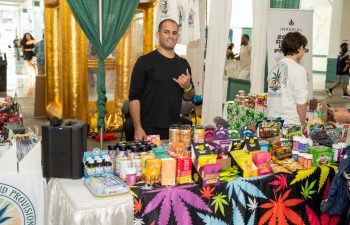
Handcrafted and rigorously tested to ensure consistency in potency and flavor, Laurie + MaryJane small-batch cannabis-infused products are available in 200+ Oregon dispensaries.
Laurie + MaryJane products, which range from Brownie and Almond Truffle Bites to the spicy and savory Cheese Crisp Crackers, start with premium sun grown cannabis infused it directly into certified organic, non-GMO coconut oil. This full-spectrum infusion technique is not only clean and solvent-free, it produces edibles that create a more robust experience and results in what is commonly referred to as the “The Entourage Effect,” where the whole is greater than the sum of its parts.
Wolf’s recipes are suitable for all levels of culinary skills, from budding chefs to cannabis culinarians. She starts with step-by-step instructions (with photos) for making canna-butter and canna-oil which are the foundation of cooking with cannabis. There are even tips for storing and freezing and using cannabis as a seasoning. Her recipes range from sweet to savory with a variety of gluten-free and vegan options.
When it comes to dosing, Wolf is of the mindset that less is more.
“If I do a dinner party, I always have extras, like infused croutons and sauces, available for people to make the high more intense,” Wolf says.
“If you make an infused cake, be sure and save some for later,” she adds. “I’ve never met a strain of cannabis that hasn’t made me want to eat a cake two hours later.”
laurieandmaryjane.com


Bucatini with Garlic and Oil
Serves 1
Bucatini is a thick spaghetti-like pasta that is extremely satisfying. If it’s not your cup of tea feel free to use any other shape. In summer time an angel hair would be delightful. The ingredients can be changed to suit your taste.
2 tablespoons olive oil
1 teaspoon canna-olive oil
2 garlic cloves, peeled and sliced
4 cherry tomatoes, halved if large
1 cup fresh spinach, packed
Pinch crushed red pepper
salt and pepper, to taste
3 ounces bucatini pasta
*Parmesan, optional
In a small skillet over medium-low heat, heat the oils. Add the garlic and cherry tomatoes and sauté for 3-4 minutes.
Add the spinach and sauté until wilted, 3-4 minutes. Stir in the crushed pepper, and add salt and pepper to taste.
Bring a large pot of water to a boil. Cook the pasta according to the package directions. When tender, drain and place in a bowl.
Add the sauce to the pasta and sprinkle with freshly grated Parmesan.
*Instead of Parmesan, add a couple of tablespoons of goat cheese and some fresh or frozen peas. Awesome flavor combination.