



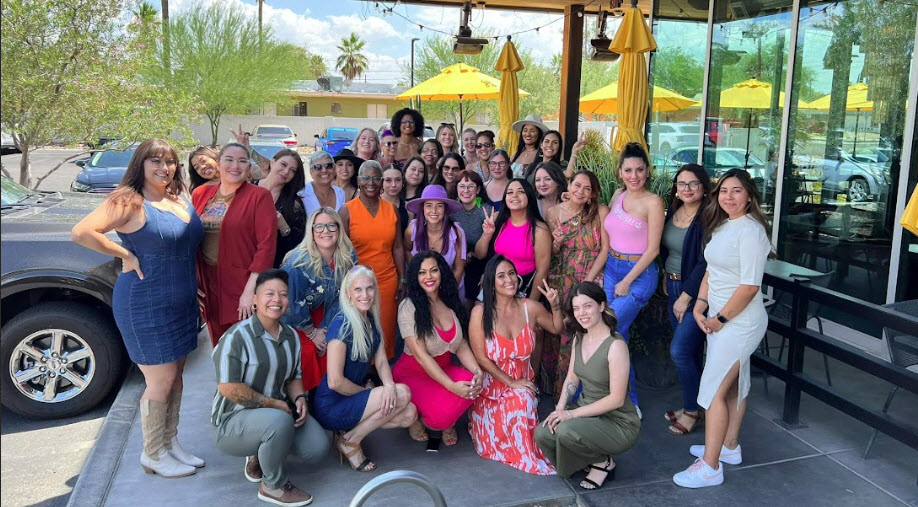
When Adelia Carrillo (Fakhri) and Parisa Rad first sat down for brunch in Phoenix, AZ, with a few other women in the cannabis industry, they had no idea how that moment would change the trajectory of their lives. “The energy in that room was transformative,” Adelia says. Four years later, that initial gathering has blossomed into Blunt Brunch, which Adelia describes as a “national movement rooted in authenticity, collaboration, and women building alongside one another.” They’ve hosted hundreds of events across the United States, including the recent Blunt Brunch Nationals at MJBizCon, which have brought together over 15,000 women and allies over the years.
 Before starting Blunt Brunch with Parisa, Adelia founded the Direct Cannabis Network (DCN) and later EventHi, where she remains active in the cannabis industry through events, experiences, and community connection. However, before that, cannabis was not part of her world at all. “My dad was a sheriff, and my mom worked in the district attorney’s office,” she says. After “climbing the corporate ladder and checking all the boxes”, Adelia’s personal health journey and reckoning with her own mortality forced her to reevaluate her life. “It opened the door to exploring cannabis for my own healing,” she says. “It completely shifted my understanding of what this plant could offer.
Neither Adelia nor Parisa imagined cannabis would become such a cornerstone of their personal and professional lives. Still, both women found help and healing in the plant—Adelia after a nearly fatal ectopic pregnancy and Parisa through her disabled daughter. “I came from a very traditional Persian family where cannabis was definitely not dinner table conversation,” Parisa says. “But life had other plans.”
When asked about their experiences as women in the cannabis industry, Parisa says it’s equal parts inspiring and exhausting. “We’ve had to fight for our seat at the table and sometimes even build the table ourselves,” she says, noting that many of the gender-based challenges she’s experienced are prevalent across many industries too—specifically “being underestimated, overworked, and overlooked,” Adelia adds that the most significant challenges are often around access, sustainability, and visibility without losing authenticity. “But I’ve learned that strength doesn’t always come from fighting,” Adelia says. “Sometimes it comes from collaboration and presence. By showing up authentically, staying consistent, and supporting other women along the way, I’ve built lifelong relationships that have shaped my journey.”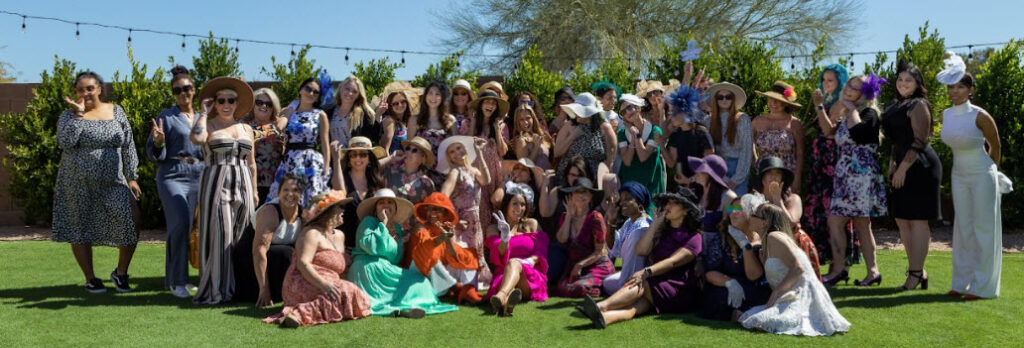
This camaraderie and community make all the hard work worth it. “There’s a genuine sense of community among women in this industry who lead with purpose,” Adelia says. “We may all be building different things, but we share the same mission.” By connecting with and supporting fellow women in cannabis, “we’re rewriting what leadership looks like in cannabis,” Parisa says. “It’s nurturing, powerful, and unapologetically feminine.”
Unsurprisingly, Blunt Brunch attracts and resonates with other leaders and brands who place intention, authenticity, and community at the heart of their work. “Companies like Kikoko, Kiva, Kanha, and Yummi Karma continue to impress me with their commitment to quality, innovation, and creating products that truly resonate with women,” Adelia says. Other cannabis communities she admires include the International Cannabis Business Women’s Association (ICBWA), Project Sister Dope, and Freedom Grow, as well as Mskindness B. Ramirez of Club Kindness and Whitney Beatty of Josephine & Billies. “They’re the kind of women who not only build their own paths but also open doors for others along the way,” Adelia says. “I’ll always champion women-led brands who are carving their own lane,” Parisa adds. “Companies like Pinks, PRETTYHIGH, and EventHi blend culture, advocacy, and style so effortlessly.” 
Both women are also quick to celebrate each other, and their gratitude for their collaboration and partnership is palpable. As they come off their latest event, “Pearled Up & Powerful” Blunt Brunch Nationals in Las Vegas, Adelia and Parisa have plans to expand Blunt Brunch’s virtual community to give women more ways to connect and collaborate. They’re also facilitating private events and experiences for other brands and businesses who want to connect more deeply with their audiences, as well as expanding their event offerings on the East Coast. Through industry partnerships with NECANN and MJBizCon, Blunt Brunch hopes to continue to grow authentically, elevating and uniting women at major industry events and beyond.
That’s why Blunt Brunch exists—to unite, celebrate, and empower women in the cannabis industry through connection, education, and leadership. “It’s been wild watching this sisterhood grow into a real movement,” Adelia says. Both women want to see this beautiful community create ripple effects in the cannabis industry as a whole. “I want to see this industry mature into something more compassionate and inclusive,” Parisa says. “Less bro culture, more impact. Cannabis is medicine, it’s culture, it’s community, and the future should reflect that.”
Adelia agrees, adding that she wants to see the industry move beyond tokenism and representation to allow women and BIPOC entrepreneurs to not just survive but thrive in these spaces. “We’ve built the foundation,” she says. “Now it’s time to elevate the next generation of leaders who are bringing heart, innovation, and integrity to this space. I believe the future of cannabis will be shaped by those who prioritize community over competition and impact over ego.” And fellow women in cannabis have an open invite to Blunt Brunch. “Whether you’re a brand, a woman in the industry, or just someone curious about this space, there’s always a seat for you at our table,” Parisa says.











