For years, we’ve been told that this industry is the Wild West: a place where the only law amounts to whatever the guy with the gun says. But over the last 12 months, state governments have passed a spate of new regulations that promise to swap the relative lawlessness of poor enforcement of vague rules with real law and order. Their stated goal: to close the loopholes opened by the 2018 Farm Bill.
 The new laws reflect the stern attitude of new sheriffs riding into town, vowing to clean up the mess by enforcing a new code of morality. Today’s lawmen want to protect the kids, ban the fake stuff, and cap the active ingredients to ensure that nobody has too much fun.
Taken together, the regulations function like taut reins on a runaway stagecoach: an attempt to force the industry back on the straight and narrow before it careens off a cliff. Thirty states have already stamped out smoke shops’ ability to peddle alt-cannabinoids, and the remaining 20 begrudgingly grant them various shades of legality.
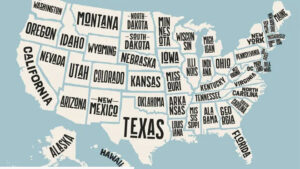
To understand where you stand, here’s where every state currently stands, and what it means for smoke shops.
Alabama: Last year, Alabama passed the nation’s most restrictive laws short of a full ban. The new regulations outlaw synthetic cannabinoids as well as smokable hemp products. They also promise that violators could face Class C felony charges. Thankfully, the state permits selling alt-cannabinoid beverages and edibles to adults over 21. All shops must be fully licensed by the state’s ABC Board to sell hemp products, and hemp-derived THC sales are limited to 10mg of THC per serving, with an edible limit of 40mg per container and a beverage cap of four 12oz-cans per pack.
As of press time, a state house committee member introduced a bill to classify all psychoactive products as controlled substances, limit CBD sales to pharmacies, and require all products to use hemp grown in-state. It may not bear fruit, however. Bills in committee typically undergo extensive review between introduction and passage, if they make it at all.
California: Not to be outdone, California has strict regulations of its own. The state bans smokable hemp outright and requires that edibles and beverages adhere to a strict “no detectable THC” rule. The Golden State also bans tobacco retailers from selling cannabinoid products and limits sales to those 21 and up. Further, it doesn’t allow synthetic cannabinoids, Delta 8, THCA, and Delta 10.
Florida: State law requires that all hemp-derived products must be sold in child-resistant packaging and cannot resemble products made for children (in either shape or color). It also began implementing “total THC” testing, which effectively makes THCA illegal (but technically permits flower with 0.3% THC or less).
Legislative watchdogs expect multiple bills aimed at restricting hemp sales to come to the floor this year. Lawmakers are currently debating laws that would add potency caps to beverages and ban synthetic cannabinoids.
Georgia: Residents of the Peach State can purchase every naturally occurring cannabinoid, as long as they’re 21. Its most recent laws closed its THCA loophole (banning anything above 0.3) and require that all vendors obtain licenses before hawking hemp products. Georgia allows smoke shops to sell edibles, vapes, and beverages. However, fully synthetic cannabinoids, such as THCO, are illegal.
Illinois: A surprisingly lenient attitude means Illinois bears no statewide ban. It permits all federally permissible cannabinoids.
Indiana: 2025 saw residents of Indiana brace for new laws governing age restrictions, child-proof requirements, and 10mg limits on THC dosage. However, none passed! Hoosiers face no special restrictions.
Kansas: The state permits hemp-derived products so long as its 0.3% or less Delta 9 threshold is met. THCA flower can be found, although legal interpretations of state laws can be inconsistent.
Kentucky: All hemp-derived cannabinoids are legal for those 21 and up. However, flower is effectively illegal. Hemp beverages are restricted until July while legislators mull over new regulations. Experts are split over what the new regulations will entail. Some believe Kentuckians will face a ban, while others cite the state’s strong hemp-growing market as a reason to believe that beverages will be back on shelves this summer.
Louisiana: Adults of drinking age can buy edibles and beverages with up to 5mg of THC per serving (with a 40mg per pack maximum). That cap limit makes most flower and vapes illegal, although some still make it to market. The state completely nixed sales of synthetic cannabinoids and requires that all retailers be licensed to sell hemp products.
Maine: Sales were restricted to those 21+ in 2025, but edibles, flower, vapes, beverages, and synthetic cannabinoids are permitted.
Minnesota: The state puts hard limits on the amount of THC per product. Single doses are capped at 5mg THC per serving (and 50 mg per package) for flower, edibles, and vape products. Beverages are allowed to have up to 10 mg of Delta 9 per single container. THCP, THCO, and HHC are explicitly banned. Sellers must be licensed by the state and can only sell to adults 21 and over.
Missouri: All hemp products must follow federal rules. No state laws restrict access, except for restricting sales to those who are at least 21.
Nebraska: No statewide bans or special regulations. Buyers must be 21.
New York: With some of the most muscular laws in the nation, New York has a long list of regulations. It requires all retailers to be licensed through its Office of Cannabis Management. It caps THC at 1 mg of Delta 9 per serving and 10mg per package. It requires a 15:1 CBD-to-THC ratio. The state does not allow inhalable products. Delta 8, Delta 10, and THC-O are illegal; oddly, THCA flower is fine. If that’s not enough, buyers must be 21 years old.
North Carolina: No special laws restrict cannabinoid sales, although several bills have been proposed in the legislature.
Pennsylvania: All federally permitted cannabinoids are legal. The state doesn’t even require buyers to be 21.
Tennessee: The state currently operates under two parallel regulatory systems while it transitions to new laws. Businesses with licenses issued before 2026 can continue selling THCA flower, vapes, and other products until their licenses expire on June 30. As of July 1, all businesses must be licensed by the ABC Board and sell only products that adhere to a strict 0.3% THC cap (that includes THCA). The new laws specifically ban synthetic cannabinoids and THCp.
Texas: Texas feels like it’s been messed with, which is something it’s warned us not to do. As of press time, a case concerning the legality of Delta 8 THC was pending at the state’s Supreme Court. While residents await the ruling, Delta-8 remains legal, as does THCA. While the state has banned cannabinoid vapes and synthetics, edibles and beverages are permitted. Buyers must be 21 years old.
The state is mulling further restrictions that would ban THCA and further regulate packaging to avoid appealing to kids. The proposed rules would also greatly increase fines.
South Carolina: It’s all good down here—no special restrictions, y’all.
Wyoming: No special rules. Now, enjoy that view.