



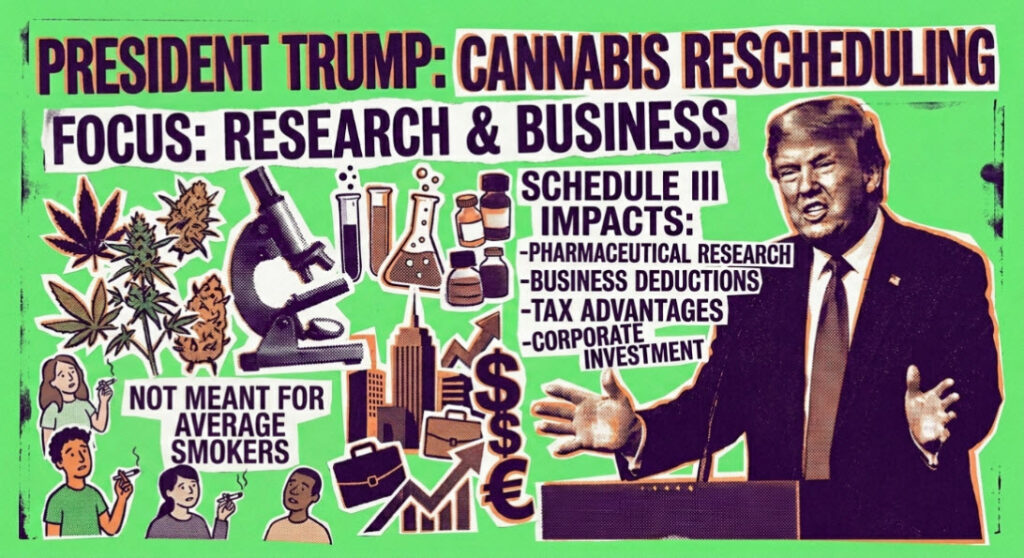
It’s been several months since President Donald Trump signed an executive order to reschedule cannabis from Schedule I to Schedule III within the Controlled Substances Act (CSA). On paper, the recent executive order, entitled “Increasing Medical Marijuana and Cannabidiol Research,” is a huge step in the right direction for cannabis smokers across the country.
However, now that cannabis has been a Schedule III drug for several months, what exactly has changed? For the average smoker, not much. Cannabis is still illegal on a federal level, and individual states are still free to make up their own rules and regulations regarding the sale, possession, and usage of cannabis. In fact, the recent executive order isn’t even an original idea of the current administration; it merely accelerates a process that the DEA began in 2024 under President Joe Biden.
This article covers everything you need to know about President Trump’s recent executive order, how it affects businesses operating within the cannabis industry, and how it might impact the future of cannabis legalization within the United States.
Providing Tax Relief for Businesses
One of the most significant changes in the executive order revolves around potential tax benefits for businesses in the cannabis industry. Under the current laws, including Internal Revenue Code Section 280E, cannabis dispensaries are prohibited from deducting standard business expenses on their federal tax returns.
 Proponents of the executive order are hopeful that this will change in the near future. Some are so optimistic that they’ve even begun filing amended tax returns to try to reclaim their lost funds. However, the IRS has issued a reminder that the laws haven’t actually changed. Until a final ruling is made, cannabis dispensaries are still unable to claim the standard deductions that are typically available to other businesses in the U.S.
And there’s still the issue of some banks refusing to work with cannabis dispensaries. While President Trump’s executive order doesn’t directly address that problem, some believe that rescheduling cannabis to Schedule III could help ease some of these restrictions, too. Others, however, aren’t convinced.
It’s currently unclear exactly when, or if, the IRS will begin allowing business deductions for those operating in the cannabis industry. Even if they are, some experts believe that the government will just find other ways to try and recoup the missing tax revenue—whether it’s from businesses or the consumers themselves.
Supporting Medical Research
President Trump’s recent executive order also has the potential to expedite medical research into cannabis and CBD. While it doesn’t actually loosen the majority of guidelines regarding cannabis research, it could ease some DEA requirements that are currently making it difficult to study the plant.
 This alone might be enough to foster increased interest in medical cannabis research from labs across the nation, which could open up more opportunities for those who are interested in participating in studies involving cannabis or CBD.
A press release issued after the signing of the executive order reads, in part: “The Federal Government’s long delay in recognizing the medical use of marijuana does not serve the Americans who report health benefits from the medical use of marijuana to ease chronic pain and other various medically recognized ailments.”
It’s certainly a nice sentiment, but the archaic use of the slang “marijuana” is an immediate red flag for many who are doing business in the cannabis industry today. While it could simply be mimicking language seen in other governmental documents and policies, such as the CSA, it could also be taken as a sign that the current administration isn’t taking the rescheduling of cannabis as seriously as they want you to believe.
Paving the Way for Cannabis Legalization
Some argue that POTUS’ recent executive order is a significant stepping stone in the path to full-blown cannabis legalization within the United States. Others suggest that the move is nothing more than a performative act meant to drum up some new support for a struggling administration.
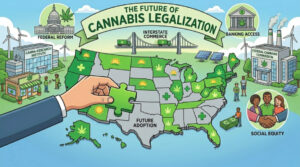 In the event that cannabis is eventually legalized, there are still some other legal barriers that may apply. For example, regulations from the U.S. Food and Drug Administration (FDA) could make it difficult for individual states to uphold their own laws—some of which were established all the way back in the early and mid 2000s. Other complications could stem from interstate commerce restrictions, market saturation, and stringent industry regulations.
Moreover, President Trump’s executive order doesn’t mention the black market at all. If these changes ultimately cause dispensaries to increase their prices, consumers might go back to the old connections they had before the days of state-sanctioned medical and recreational cannabis programs. If that’s the case, then the recent executive order could actually be harmful to the progress we’ve made over the past few decades.
The More Things Change, The More They Stay the Same
For the average smoker, the rescheduling of cannabis doesn’t really change much of anything, at least not right away. The tax implications for businesses in the cannabis industry are great for dispensaries around the country, with some states already increasing local taxes; it’s difficult to say how much business owners will actually save in the long run.
The focus on medical research certainly has potential for a much bigger impact in the future, but these studies would need to be completely neutral and non-biased to be of any real value to the general public. If not, then it really was just a performative act all along.











