How Retailers Can Adapt to New Shopping Norms  

The coronavirus has been a catalyst for big changes in the way consumers spend and pay. Contactless payments are a growing trend, and so is the move towards “buying online and picking up in-store”. This service is now a ‘must have,’ and the pandemic has accelerated what was likely already going to happen. According to Invesp, 67% of shoppers in the US have used Buy Online Pick Up In Store (BOPIS) in the past six months, and 10% of all sales will be fulfilled by Click and Collect by 2025. 

Curbside pickup has become popular with retailers, restaurants, and grocery stores. And it’s easy to see why this happening – the option is convenient for shoppers, limits congestion in stores, and minimizes person to person interaction. 


Glympse (glympse.com) provides “The Last Mile Automation” for curbside pickup, giving shoppers the ability to track the real time status of a grocery delivery or “drive up & go order” through a merchant’s e-commerce platform. When a shopper places an online order, the local retailer fulfills the order and the shopper receives an alert when the purchase is ready. Shoppers can then use the Glympse platform to share their location when they’re on the way, and a geofence trigger alerts the retailer’s staff when the customer is about to arrive. It also enables 2-way communication between the shopper and the business to fine tune the contactless curbside experience. 

Worrisome retailers might understandably express concern that curbside pickup will create a drop in impulse purchasing and opportunities for sales teams to upsell while talking to customers in-store. Rather than give in to this idea, use this new norm to create new opportunities for sales. 

Glympse suggests sending a notification to your customer as they arrive for their pickup and make it easy for them to add to their order with a click of the button.  


Have your staff connect with customers using personalized messaging via SMS or email to check in on past orders and ask if they would be interested in new products. Even if your customers don’t make a purchase, maintaining a positive relationship with your brand will create loyalty. 


Once restrictions begin to lift, embrace the new digital, but encourage your customers to buy online and pickup in-store, where possible. BOPIS was a popular way to shop before the pandemic, and with the right offers, retailers can invite their customers back in store. Be sure and communicate the safety measures you are taking so they will feel comfortable coming inside. 


The fact that demand for curbside pickup has continued to increase since the cessation of shelter-in-place orders suggests that consumers have more fully adapted to this new shopping paradigm. Data suggests strong growth in demand for curbside pickup will continue throughout 2020, as some states are now issuing a second shelter-in-place order for the year. Retailers are also realizing that curbside pickup presents an opportunity for their businesses to remain viable and operational, despite the current situation.  



Recent Articles

Dr. Macias first fell in love with science while studying at Howard University, where she completed her undergraduate studies and later earned her PhD in cellular and molecular biology. While at Howard, she became especially interested in cancer research due to personal ties. Growing up in a Creole family and predominantly Black community in Louisiana, Dr. Macias watched many women around her battle breast cancer, so at Howard, she decided to focus her research on the BRCA1 gene.
It’s almost amazing that the same institutions that brought us the 2008 financial crisis have a problem with selling glass pipes. Almost. The truth is that an industry's past sins are only held against it when the money isn’t right. Big banks were willing to risk cratering the U.S. housing market because the profits were too good to ignore. But the cannabis industry rolls a different kind of paper, so instead of a slap on the wrist, it gets a surcharge.
Smokeshop and counterculture enthusiasts enjoy discovery as part of the experience. Customers enjoy browsing. When they walk into a shop, they don't simply grab a product and leave. They look for something new. This is the main reason flyers and posters still work. Smokeshops and dispensaries are highly visual environments. You want to see bold artwork, psychedelic graphics, and street-style posters that naturally capture attention.
The use of cannabis in professional sports has always been a controversial subject. While some are firm believers that all substances should be banned from professional sports altogether, most people aren’t thinking about cannabis when they’re discussing performance-enhancing drugs (PEDs). In fact, there have been countless cannabis users in the world of professional sports throughout the years; some of whom are more open about their love for the plant than others.
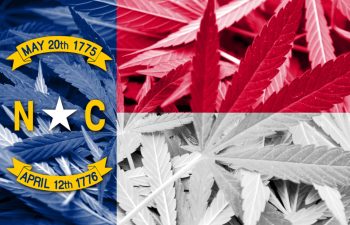
North Carolina might save us all. A new state bill may be the industry’s best option to save itself from demise when new federal cannabinoid bans take effect in November. And it could use your support.
Hemp is often considered for the things that it is not. It is not intoxicating, it is not illegal, and it is not marijuana. However, now we are seeing a focus back to what it can be. The plant is moving into the level of wine and chocolate and becoming a movement and a culture.
It’s been several months since President Donald Trump signed an executive order to reschedule cannabis from Schedule I to Schedule III within the Controlled Substances Act (CSA). On paper, the recent executive order, entitled “Increasing Medical Marijuana and Cannabidiol Research,” is a huge step in the right direction for cannabis smokers across the country.
For years, we’ve been told that this industry is the Wild West: a place where the only law amounts to whatever the guy with the gun says. But over the last 12 months, state governments have passed a spate of new regulations that promise to swap the relative lawlessness of poor enforcement of vague rules with real law and order.