If the United States were ever a country based on strict adherence to the law, those days are long past. The modern game lies in devising methods to circumvent laws. It’s how the rich avoid taxes, the powerful avoid jail, and industries of all kinds bypass regulations.
The paradox is that, despite its ubiquity, it’s not easy to stay beyond the reach of the long arm of the law. Well-moneyed, influential organizations still sometimes misjudge the political and legal playing field and have to pay up. The Sacklers (the family behind Purdue Pharma) eventually were bankrupted by the courts for their role in the opioid epidemic, and officials hit Meta with a $5 billion fine over privacy concerns.
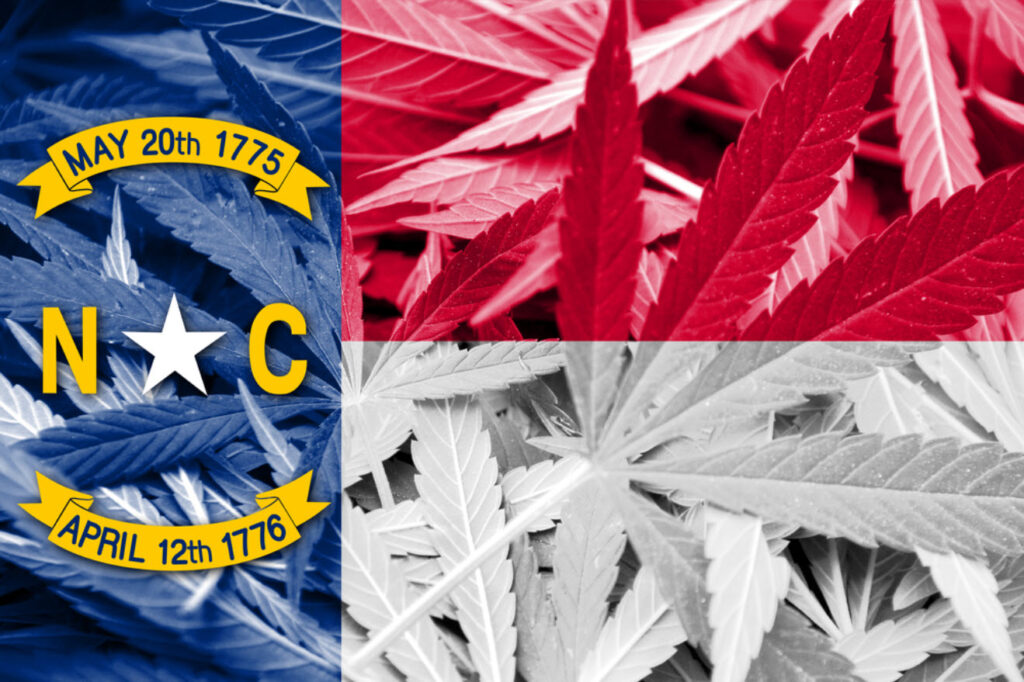
So how can the counterculture industry, which lacks the political clout and economic power of the elite, skirt the rules? North Carolina has a plan. Senate Bill 265 might hold the answer to how smoke shops continue to operate despite the federal countdown to perma-banning cannabinoids at the end of the month.
If successful, the bill could be a model for the 30 other states without a well-regulated cannabinoid policy, essentially salvaging the nation’s smoke shops and keeping medical costs down for users who rely on cannabinoids for sleep, pain, or anxiety. It could also be a bright spot in another lackluster economy. Last year, cannabinoids were responsible for $4.4 billion in economic impact in North Carolina, according to Whitney Economics.
What’s left to discover is whether lawmakers in the Tar Heel State will allow the full Senate to vote on the bill or if they’d prefer to stay still until the feds swing the hammer.
A Short History of Nearly Everything
This problem started when President Trump signed a bill in November 2025 that ended the shutdown. One of its provisions, snuck by Sen. Mitch McConnell (R-KY), was a measure designed to close the so-called loophole in the 2018 Farm Bill that “accidentally” legalized the sales of cannabinoids like Delta 8, Delta 10, and THCA flower.
 Kentucky’s other Republican senator, Rand Paul, fought hard against the inclusion, but ultimately caved after ensuring that the ban wouldn’t take effect for one year, giving states a chance to prepare.
But, at true political speed, many states have waited until the last minute to mount a defense.
Under the ban, which is set to go into effect Nov. 12, such cannabinoids will be declared illegal at the federal level. The move will devastate the industry, deny over-the-counter pain medicine to millions, and crash through small-town economies like a wrecking ball.
Unless, of course, states like North Carolina move to stop it.
The North Carolina Answer
The brilliance behind North Carolina’s SB 265, also known as the Protecting Our Community Act, lies in its practical approach to problem-solving. If it sails through the state legislature and bypasses a veto, it will take advantage of a kind of legal gentleman’s agreement that has long governed how the feds respond to state-regulated industries.
While national regulations are meant to override state laws, U.S. regulators tend to relax their oversight when it conflicts with specific state regulations. In other words, when states make their own rules, the feds leave them alone. It’s how we currently deal with marijuana and raw milk, which are both illegal nationally but can be bought and sold in states that have what the feds believe is sufficient regulatory structure in place. When states step up, the feds respect it.
Importantly, the ban will only apply to states like North Carolina that don’t have robust regulations in place. Other states, such as California and Colorado, probably won’t be affected by the ban’s implementation.
But Will it Pass?
The Protecting Our Community Act has a lot going for it. For one, it was introduced with bipartisan support. Eight senators co-sponsored the bill, five Republicans and three Democrats. For another, there has so far been no meaningful public resistance to it. What’s most impressive, however, is how smartly the bill operates.
While the phrase “common sense” often gets bandied about in political circles, it’s usually a disguise for partisan thinking. SB 265, however, earns the description.
 If passed, the bill would ensure every cannabis product undergoes independent third-party testing, raise the purchasing age to 21, mandate that products adhere to clear labeling standards, and require all sellers, growers, and distributors of cannabis to obtain state-issued licenses. Effectively, the bill would make cannabis products safer to use, harder for teens to obtain, and more difficult for gas stations and fly-by-night operations to sell. In other words, it would professionalize the state’s industry.
The only meaningful holdup has come from a nefarious action that, unfortunately, has the power to crater the entire thing. The bill has stalled in the Senate’s Rules and Operations Committee. Before it can go to the Senate floor for a vote, it must get out of committee, but its chair, Bill Rabon, has so far refused to schedule a committee vote, even though he’s been a champion of medical marijuana. It’s likely Rabon won’t schedule a vote until Republican Senate leadership OK’s the move.
What’s holding that up? It’s anyone’s guess.
Far-Reaching Implications
We often think of history as something that occurs slowly over many years, but it actually happens quickly, through specific moments. The 2018 Farm Bill was one history-making moment. This federal cannabinoid ban is another.
If the bill saves North Carolina smoke shops, it will be good. But if it inspires copycat legislation in other states, it will be great. Similar responses are occurring in Georgia, Indiana, and Kentucky, while other states, such as Missouri, Virginia, and Washington state, are considering decidedly less cannabis-friendly approaches. Every bill needs help and support to push through political roadblocks. And even if they succeed, success isn’t fully guaranteed (just likely).
For an industry that doesn’t benefit from old money or a long-respected history, handling this moment correctly matters. If the federal ban lands, millions of Americans will lose a lot more than access to Delta 8.