Joe Krzeminski remembers hanging around his aunt Kathy’s store as a small child, marveling at its macramé art, homemade clothing, and glass pipes in his hometown of Grand Rapids, Michigan. This was the 70s. Things were simpler. All a store needed to succeed was an owner with a big personality, well-priced goods, and some righteous advertising.
“I was fascinated by that gift shop,” Krzeminski recalls. “It was a blend of clothing, hippie stuff, peace and love, and a little bit of Jesus. That was my inspiration. That and, in 1989, I started touring with the Grateful Dead.”
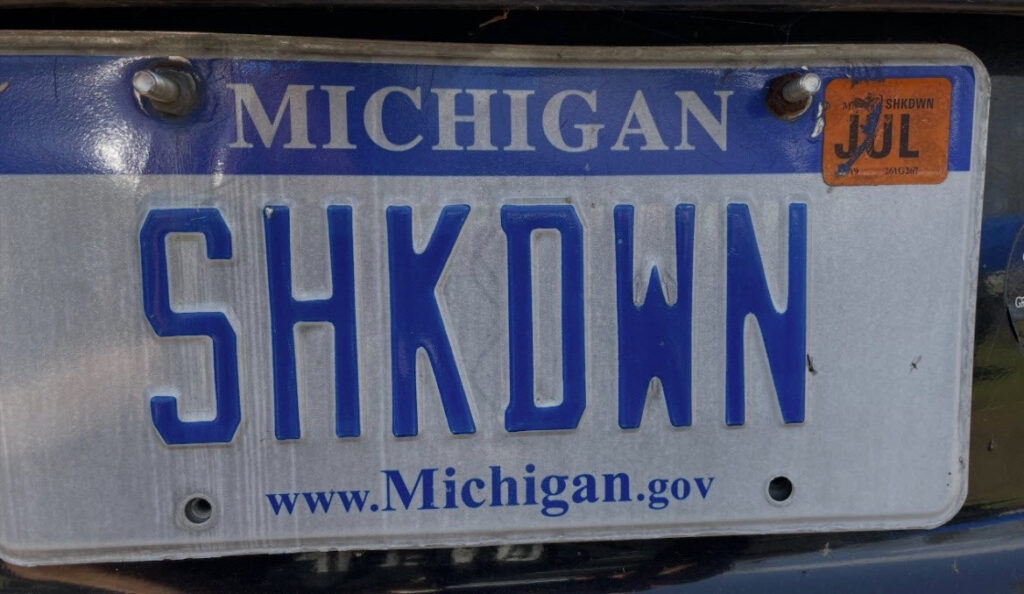
Now in his 60s, Krzeminski is no longer affiliated with the store. His ex-wife and daughter run it. But for decades, Deadheads and counterculture diehards across the country could recognize “Joe Shakedown” on sight and traveled across the country to visit the store he founded.
Taking a cue from the breezy hippie vibe of show parking lots, Krzeminski built Shakedown Street around his own quirks. He invested heavily in advertising, scripting, and recording his own commercials, and kept up with the trends by touring relentlessly with big-name bands as a stage hand. Through the decades, he hoisted lights and wrangled knobs for acts like Bob Seger, B.B. King, Slayer, and Billy Idol.
Like the bands he toured with, Krzeminski’s store attracted notice. It epitomized the quintessential head shop to such an extent that, when Jerry Garcia died in 1995, the Wall Street Journal called Krzeminski for a quote. It made the front page.
 “I don’t know why it got so famous. But people knew us coast to coast. They would ask me about it on tour,” Krzeminski says. “Word just got around, and it was all over. I knew distributors everywhere, and folks would come in from everywhere just to see it.”
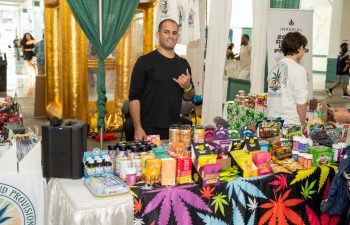
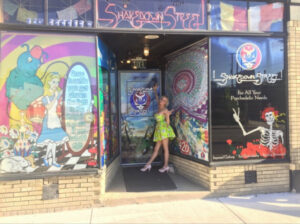
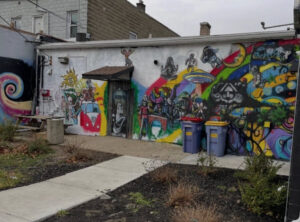
True to its origins, the 2,000-square-foot location was stuffed with groovy memorabilia. Krzeminski and his wife, Rhonda, tie-dyed tees, tapestries, pipes, jewelry, and jam band merchandise. Its award-winning window displays pulled in passersby on Leonard Avenue.
But the real draw behind Shakedown Street was its singularity. It was a blend of competing ideas, rival interests, and disparate tastes that somehow appealed to everyone.
You Gotta Have Faith
Mixed in among the baubles and bubblers was a little bit of ministry. Krzeminski, who still serves as a deacon at Trinity Croton Bible Church, just up the road from Grand Rapids, brought his lifelong Christian beliefs to the store.
“You got to be careful with that, you know what I mean? I didn’t want to scare the rock n’ roll crowd away, you know. Some people don’t want that. They say, ‘Don’t put Jesus
in my face’ and I thought, ‘Okay, I won’t.’ But when you’re looking through my sterling silver cases, there’s a vintage rosary in there. It’s made out of crystal. There’s another one on the corner. There are beautiful wooden crosses in with my music boxes and my puzzle boxes. And in my books, I’d have marijuana grow books and books about the Grateful Dead, and then I’d put in an interesting one on Proverbs.”
Faith was a fundamental part of the shop’s success, he insists. It drew in people who may otherwise have felt that cannabis and Christianity aren’t made by the same creator.
“That’s one of the reasons why people loved it,” says former customer Breanna Holmes. “There was a nice, calm, loving atmosphere. He engaged with his customers, with everybody.”
Krzeminski’s faith led him to be involved with prison ministry and several organizations that address issues like substance abuse recovery, sex trafficking, and canine rescue.
“A lot of his former employees were people whom he helped out that way, and he actually saved a lot of their lives,” Holmes says. “A lot of people don’t realize that helping people in recovery is one of the hardest things you can do.”
Krzeminski says his past experiences with the rock n’ roll lifestyle, combined with his faith, give him a unique ability to talk with, relate to, and help others.
 “I’m not a finger pointer. I’m not an innocent. I’ve done more cocaine—I could draw a line from here to California,” he says. “But that was in the past. Once I got the store, I would bring people in who were having a hard time or needing something.
“I always work with Project Red. I had a lot of different projects that I worked with, and Shakedown was an outreach for everybody,” he added. “We had hookers on our street. We had drug addicts and [all] that. They all knew they could get Narcan from me. They all knew if they were in trouble, they could come in there. Even the crossing guards with the kids knew about us, and they’d tell their kids, ‘If you’re ever in trouble, go right in that store.’ Kind of weird for a head shop, you would think. But I had that kind of rapport with my community.”
Still Truckin’
While Krzeminski’s days at Shakedown are over, the memories remain among his most loyal customers.
“There was nothing better than walking through that back door, turning that handle, and feeling the vibe and the smell of being in there,” says Jennifer Rebecca Parker, who was a regular at the store 35 years ago. “The feeling that you would be getting walking in there was like no other place. I mean, it brought you back in time and brought your soul back. It took you out of this ugly world. I would go into the store at least twice a week just to even walk around and to be around the vibe of the store. It was like no other store in Grand Rapids. Nobody else could touch Shakedown Street.”
These days, Krzeminski hopes to bring the same purpose and feeling to a new venture just up the road in Croton, Michigan. He plans to open a B&B called The Grateful Bed and Breakfast.
“I bought this vintage old boarding house, and I’m putting everything together. I cook really well,” he says. “Plus, I just like to take care of people.”
For another side of the story, revisit our 2017 Shop of the Month feature on Shakedown Street, told from Rhonda’s perspective HERE. Or, explore our satirical take on the unexpected parallels between the Grateful Dead vs. the Third Reich.