
“It’s not always about money.”
Dave Glowacki isn’t trying to set himself up as hero of conscience when he says this. It comes out as practically an afterthought, an offhand comment expressing his frustration with a particular distributor he once considered close. But the statement reflects far more than mere dismay at the actions of any one person in or out of his circle. It’s practically his ethos and is arguably the core value that guided him through more than four decades of hard-fought success. It’s why he’s created not just a business, but a legacy.
Let’s put it this way: If we had a Mt. Rushmore for the head shop industry, there’d be more than a few players vying for our protagonist to have a slot next to Snodgrass.
Dave opened the original Head Shed in Toledo in 1974. For perspective, that’s only five years after Woodstock; only eight since the very first head shop opened in the Haight Ashbury district of San Francisco.(1) From the industry’s current vantage point, we’re practically dealing in pre-historic lore. Most of us barely remember an industry before CHAMPS, let alone a quarter-century before the show existed.
It began simply enough. Dave, a Vietnam veteran and disgruntled ironworker, had grown weary of watching his toils line the pockets of others and was looking for a way out.
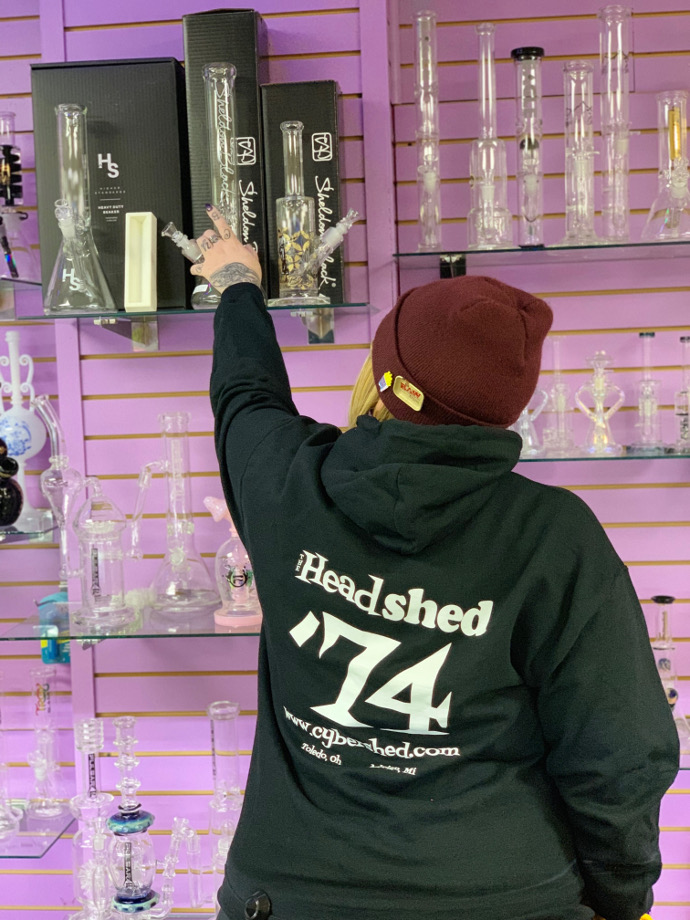
“I had a friend who was in the record business. He told me, ‘They have these new things called water pipes,’” he recalls.
Now 45 years in business, the Head Shed is still dominating and not slowing down, with four locations in the greater Toledo area and a fifth coming soon. The secret sauce to their success is two-fold.
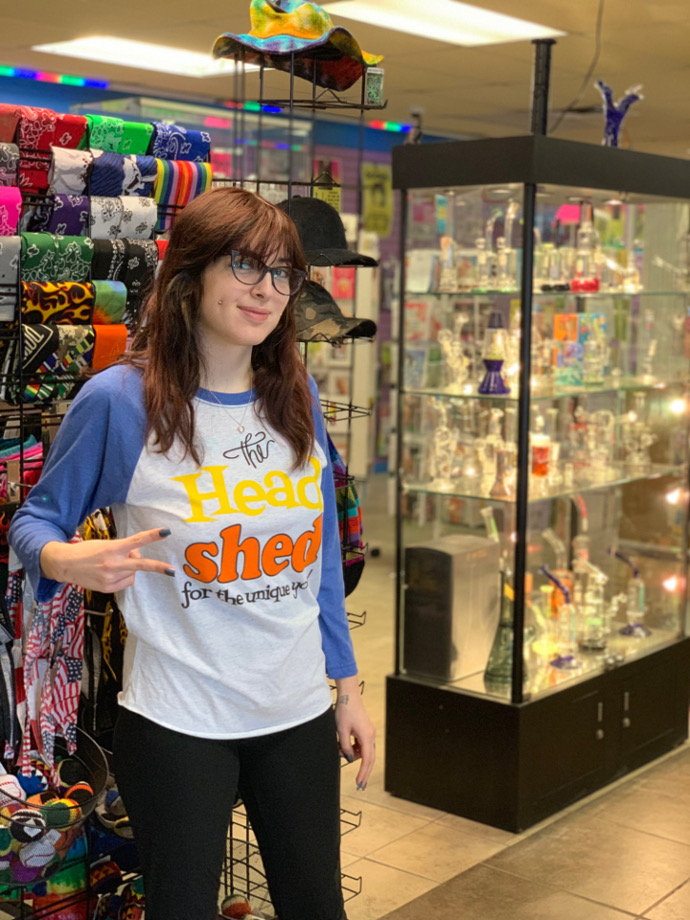
First, there’s the nuts and bolts; the acute attention to detail and general savviness required for any business to survive. This is where Jen comes in, his general manager and “right-hand man.” She’s in charge of the day to day operation, still strictly enforcing their long-held rules that keep them on the right side of the law while simultaneously bending and shifting to move with the evolving landscape. That goes not only for the changing laws, but the rapidly developing technology that’s taken this industry by storm. That’s a lot of homework, but Jen’s happy to do it.
“I will sit and do heavy, heavy research before I pick up any company,” she says. “I’ll even print out text message conversations between my reps and me and pass it out to all of my stores. That way they see exactly what they’re saying without me being the middle man.”
“Don’t you just love her?!” Dave beams with pride.
From here, conversation unfurls in a non-linear cascade of memories and anecdotes, all connecting to the deeper truth behind their sustained success, ingredient number two in the secret sauc: Dave’s unwavering tenacity in the face of world seemingly bent against him. Each snippet connects to industry players long-since forgotten, and nearly all of them are capped off with, “they shut down after they were raided by the feds.” Indeed, trouble with the authorities wasn’t a nagging skirmish on the peripheral back then; it was the 800lb gorilla on the back of anyone who operated in the space, anyone who dared to open a business that challenged the social norms of the day. It was the price they paid to play. Dave was no exception.
“Things were a lot different back then,” Dave muses more than a few times, almost as a refrain to a ballad of continual struggle yet to be written. Knowing when to fight and when to pivot was as essential to his survival as knowing what to carry, and more often than not, the two intersected.
His first decision to pivot was on the name. The local authorities asked him to ditch the “Head” part of the moniker and he politely acquiesced, albeit with quiet resentment.
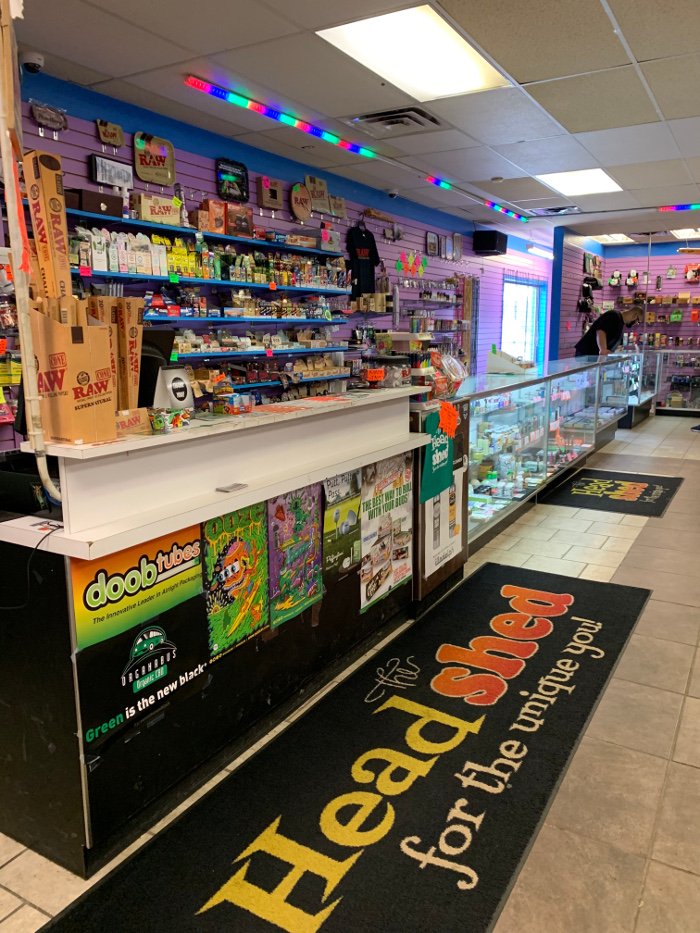
“It always pissed me off that we couldn’t use our real name, that we couldn’t be the Head Shed,” he laments in retrospect. “I always felt like I’d made a mistake by not stepping up a little more for the industry, but I had my own battles and the name change made it a lot easier.”
“They’re the ones who look stupid for making us take away something so minor,” Jen interjects. “But with everything Dave’s been through, all the people who had something to say . . . I feel like the deep down, he knew he was going to bring the Head back,” she adds. Her gut feeling proved correct, and he pivoted back to the original name just a few years ago, obviously in response to the shifting tide in public opinion.
It’s not always about ducking and dodging, though. Sometimes, it’s better to put the gloves up and fight back, as was the case in 1997, when Dave caught the inevitable paraphernalia charge. It must have been tempting to follow the lead of his colleagues who were also charged and pleading out for lesser penalties, but throwing in the towel just wasn’t an option for him.
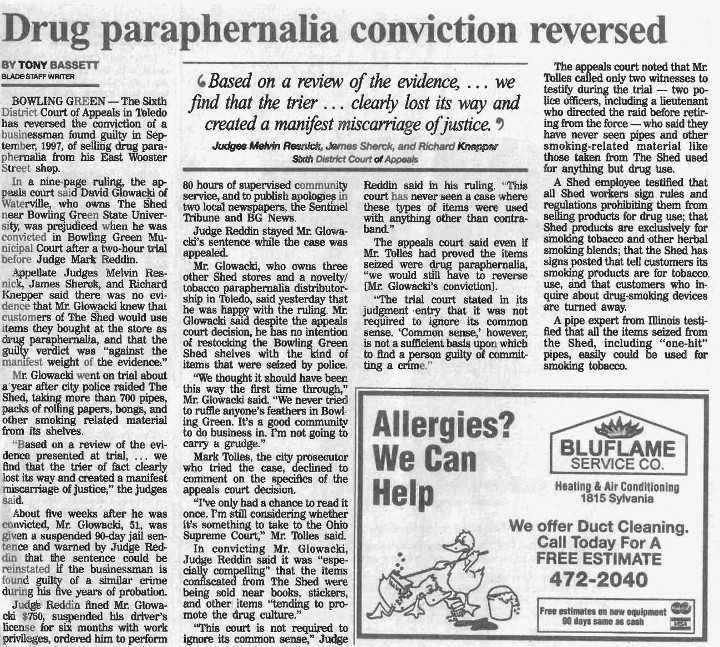
“It was a really tough year,” he recalls. “I was found guilty and sentenced to 90 days in jail with a $750 fine and 80 hours of community service.” But he wasn’t done fighting. “We got this guy named Jeff Gamso from Toledo, one of the better lawyers in the country. He got the ruling overturned for me. It set a precedent throughout the United States for these kinds of cases.”
“We fought the law,” he continues with an air of satisfaction, “and we won.” I can almost hear the playful smirk through the phone—and he’s not done.
“Wanna know how much it cost me for that guy to overturn the court’s ruling?” He asks.
“Two T-shirts. Two Head Shed T-shirts.”
Not what you were expecting? Well, it’s not always about the money.
Twitter: @head_shed