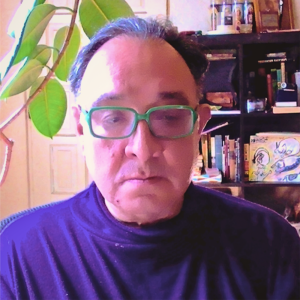
Rebecca Abraham is yet another extraordinary human facing another heroic task. A nurse by trade—and more importantly, by inclination —Abraham is working to convince the relatively conservative American medical community that cannabis does indeed have a role to play in clinical practice. She believes that including the plant’s use as part of the healing process in hospital and home settings would benefit many, including those who suffer from chronic pain, inflammation, or cancer; in other words, those who are in the most need of a nurse’s (and the cannabis plant’s) healing touch.
The American story is filled with such stories of everyday heroes. If you read closely, you’ll see that many of these storied individuals are themselves invested in the health and well-being of those around them. Sometimes they’re even first responders. And if you read between those mythic lines, you may also notice that many among that cadre of heroes are women who heal.
Abraham is one of those, or all of the above, if you prefer. No matter how you spell it out or categorize it, Nurse Abraham is a healer. We had a sit down with the founder of Plesio Health to learn more about the learned practitioner’s philosophy, current work, and background in the health sciences—all very important aspects of a soul whose mission rests on at least three foundations of modern medical practices: science, compassion and quality of life.
Abraham’s story has its roots in her youthful work in a traditional hospital setting. But the tale really began to grow, revealing strong branches that reach outward when she left that setting.
As she looks back on that departure, her words are poignant.
“When I think about what led me to leave a very stable, traditional career in the health sciences in order to venture into a relatively new area in health care—and then to gamble everything on that venture—I’m reminded of what a friend of mine, an epidemiologist once said: ‘I truly believe that plant medicine and cannabis are as game-changing for symptom control in medicine as were antibiotics for infection control.’”

Now, that may seem like a heady statement, and certainly, it’s been argued before. But maybe not with the outright compassion, determination, commitment to patients, and sense of revolutionary action that Abraham uses to drive her vision and her enterprise forward, planting seeds as she goes.
“I think we’re witnessing profound changes in healthcare,” she continues. “This is one of the biggest changes we’ve seen in 100 years, and I’m like a shark; I keep swimming, and I’m very motivated to keep up with that sea change.”
Abraham was certified in cannabis nursing at the beginning of her hero’s journey. “I’ve been presenting and lecturing on cannabis and its medical efficacy since nursing school, way before it was fashionable. Then I got certified, and some doctors [that I worked with] were like, ‘That’s a business because you really can’t do that sort of work in a hospital.’ They implied that although they wanted to help patients, they weren’t comfortable sending them to a retail dispensary. But they could, it turns out, send them to a nurse for medical guidance. That’s how the idea began and where we began to establish ourselves, as it were, in the soil of the patient community.”
The resulting relationship between business and client was mutually beneficial. It turns out that, as Abraham’s vision blossomed, what she thought would be a smallish boutique business grew into a much-needed, service-oriented organization capable of providing patients with healing powers discovered by the latest in medical science and its ongoing investigation into cannabis.
“It grew naturally and with the community it serves, as patients determined that cannabis should be part of their medical regimen. I’d be out talking to people about what we do at Plesio, and patients would come forward and say, ‘I really need that’ or ‘My mom needs that,’ so there was a lot of connecting with the community. The result was that our little boutique business became a nationally recognized start-up.”
When asked if patients are referred to Plesio only after traditional clinicians run out of effective treatments for significant medical issues like pain management, Abraham was upfront and optimistic about the medical milieu: “It’s not necessarily that doctors don’t believe in it. About fifty percent don’t know the science. The fifty percent who do know about the science—and agree with it—aren’t officially taught about it in med school. The end result is that they don’t feel comfortable making any recommendations. Additionally, the dosing that we do often requires fine-tuning over time. Most physicians don’t fit that sort of procedure . . . into the traditional appointment time, complicating matters. So, we’ve become a much-needed extension of the traditional system, much like nurse educators, diabetes nurses, home health care nurses. We’re absolutely needed and absolutely changing the perception of how cannabis benefits certain patients.”
Plesio Health basically provides a bridge between traditional treatments and outcomes and a personal medical model of the future where patient needs and the latest cannabis science are on the frontline of treatment efforts. “For a pretty low price, around $300, patients get a personalized plan that includes one-on-one dosing sessions with one of our nurse practitioners; the plan includes three appointments,” Abraham explains, outlining their process. “First, we do a medical assessment. Then, we go through the resulting care plan, what to buy, and what range of cannabis to use. Then, we discuss other non-pharmacological interventions that will stimulate the endocannabinoid system, as well as diet and exercise. And we follow up closely. About fifty percent of our patients do great after those three appointments; some will book more appointments. Our medical director is really passionate about connecting with our patients’ care teams.”
Getting her vision of the world to sync with the views and practices of a very traditional professional culture hasn’t always been easy for Abraham, but she remains optimistic and, most importantly, maintains a sense of heroism about the journey she’s on.

“Having worked in academic medicine myself, as a bedside nurse, at one of the best medical centers in the country—which means that there are a lot of high-performing, over-achieving professionals in that setting—I realize I had this thought the whole time: How do I convince doctors, who are not inclined to listen to an RN, that cannabis works for their patients? Eventually, I figured I would do it like I did anything else in my life, using science, determination, and compassion. We have a hypothesis we can prove. We test, and we publish our results. We’ve been published a couple of times now for our case studies at Plesio Health. I’d like to think I was a very good nurse, but more importantly, that I am doing what works and what is safe for patients. That’s what makes us different from many cannabis-ancillary companies; some of them are moving away from traditional medicine and established scientific norms, whereas we dove right in.”