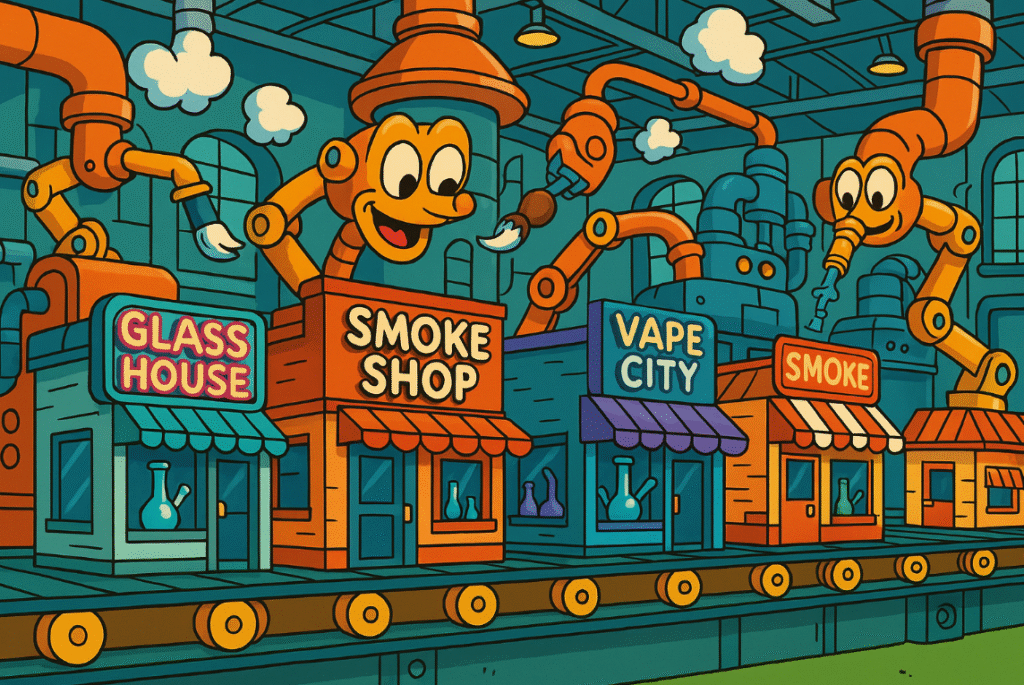
Since 2020, the growth of head shops has exploded, especially in states that are riding the wave of cannabis legalization. In some cities, head shops now outnumber gas stations, creating a surreal new retail landscape. This is in addition to the high number of gas stations and convenience stores that now carry headshop products. Albuquerque, for example, has seen such an influx that locals on Reddit compare smoke shops to fast food joints in ubiquity and repetition.
So what’s driving this saturation?
Legalization. The more cannabis is legalized, the more adjacent retail demand grows–or at least, the more newcomers see a potentially profitable business venture.
Lower barrier to entry. It often requires less capital and regulation than a dispensary.
The post-pandemic era Hustle. The rise of self-employment during COVID led many to open quick-turn storefronts.
The Farm Bill. The loopholes in hemp legislation allow shops to sling potent hemp THC and alt-cannabinoid products with high profit margins.
This surge feels less like organic growth and more like a retail land rush. According to The Atlantic, many vape and head shops are struggling to differentiate, while others are quietly shuttering as foot traffic declines. As one Quora user put it: “They all sell the same stuff—and they’re all empty.”
The question is no longer “why the boom?” It’s “what happens after?”
Where the Market’s Tapped Out
Not all head shop growth is good growth. Cities like Los Angeles, Denver, Houston, Miami, and Phoenix are now emblematic of oversaturated head shop zones, where competition has outpaced demand.
As of May 2025, Texas leads the U.S. with over 2,600 shops slinging countercultural wares and accessories. The majority of these are clustered in Houston. Florida follows closely with more than 1,270, a large portion of which are concentrated in the Miami metro area.
California, home to Los Angeles, houses over 1,240 shops, and Arizona (with Phoenix at the center) and Colorado (anchored by Denver) both have around 130 each.
Retailers in these zones report price wars, shrinking margins, and a customer base numbed by endless promos and indistinguishable products. “When a new shop opens within a block of mine,” says one Denver head shop owner, “they’re just splitting our same traffic five ways.”
These cities serve as cautionary tales. Expansion without strategy doesn’t guarantee success; it guarantees saturation. And in these markets, we may have already hit the ceiling.
Where There’s Still Room to Grow
While major metros are hitting the wall, a quieter trend is taking shape in places most brands overlook. In states like Iowa, Nebraska, Pennsylvania, and Ohio, Emerging Head Shop Opportunity Zones are beginning to stand out. This is not the result of hype, but because of need.
Cities like Des Moines and Omaha have a mix of underserved customers, relatively low retail competition, and fewer local restrictions on vape or cannabinoid sales.
There is a quiet growth in sales volume in the Southeast, areas such as Fayetteville, NC, and Warner Robins, GA. The proximity to military bases, a fast-growing population, and a less restrictive regulatory climate are driving this growth. Even parts of Pennsylvania and Ohio, despite their conservative leanings, are seeing sustained demand due to legal gray areas and limited big-chain saturation.
These zones haven’t hit critical mass yet, and that’s the point. There is an upside for operators willing to think beyond the coasts and lean into regional nuance. The growth of head shops doesn’t have to be chaotic; it can be strategic. And in these zones, a smart bet could still pay off.
What Saturation Feels Like in the Shop
For those on the ground, saturation has become a daily grind. In oversaturated zones, the pressure isn’t just external. It seeps into every part of the business model.
A smoke shop owner from California says, “Smoke shops are over-saturated now, and if you only have 1 location, it’s hard to survive.” This indicates a big challenge. He continues to add, “Most owners have 10+ locations, and most locations make less than $10k a month.”
Customers are becoming more price-sensitive, walking in with promo codes from competitors, or waiting for sales. Loyalty has shrunk to a transaction-by-transaction basis. To stay relevant, retailers are forced to rotate inventory faster, swapping out SKUs monthly just to hold attention.
Meanwhile, the new shops are chasing the same foot traffic, as well as actively poaching staff and wholesale deals. This is also affecting long-standing relationships with distributors. These are now fractured by undercutting offers and flash-in-the-pan newcomers promising unrealistic volumes.
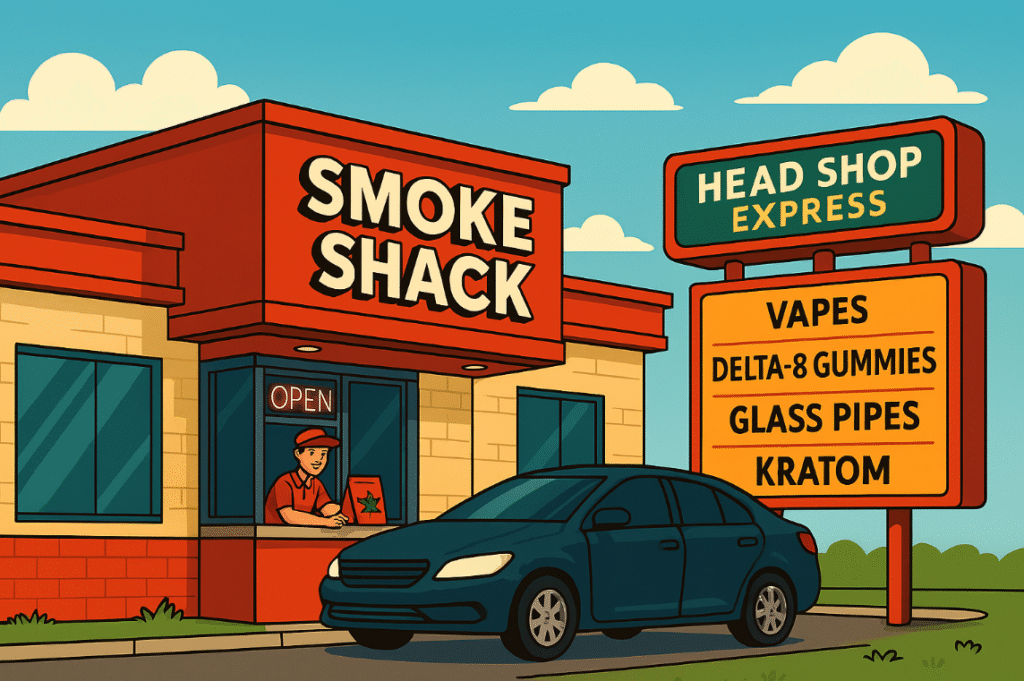
In this kind of market, survival depends on more than selection or vibe. It requires strategic agility, airtight branding, and local loyalty built over time. Head shop saturation is a macroeconomic trend that can be felt in the empty Tuesday afternoons, the nervous glances at sales reports, and the mental math of how much longer margins can hold.
How Can You Survive a Crowded Market?
In oversaturated head shop zones, the shops that survive have more than just the best products; they’re the ones with the sharpest strategies. This strategy starts with differentiation. Differentiation becomes a lifeline when everyone’s selling the same vapes, glass, and gummies.
A proven tactic is focusing on creating experience and not just transactions. Shops that host events, offer rolling or terpene workshops, and create community spaces build brand loyalty. When you focus on an education-driven business, you become a trusted resource in a noisy space.
Secondly, while discounts might bring in quick sales, branding beats price wars in the long game. Developing a strong identity, whether through store aesthetic, in-house content, or niche cultural alignment, helps you stand out when your neighbors are all offering “10% off everything.”
Private label products and exclusive vendor deals are also becoming survival tools. They reduce direct comparability, boost margins, and create product storytelling opportunities.
Finally, ditch the outdated punch card. A real CRM-powered loyalty program gives you data for smarter decisions, retention, and marketing leverage that your competitors probably aren’t using.
In short: be less like a corner shop, and more like a destination. That’s how headshops evolve beyond survival.