

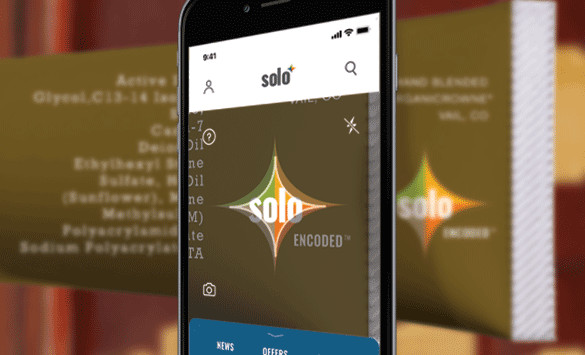
Authentication System “Weeds Out” Counterfeit Cannabis

Is it cannabis or oregano? A company called Solo Sciences  has launched what it claims is the world’s first cryptographically-secure cannabis product authentication system, enabling distributors to verify the origin of their merchandise and consumers to verify the authenticity of products. 

As with goods in all consumer industries, the cannabis market is saturated with counterfeit products that can easily pass as the real thing to the unwitting customer, and the consequences of purchasing and consuming knock-off cannabis products can be fatal. With solo sciences’ research showing that up to 80% of all packaged cannabis products on the US market are counterfeit, both legal and illicit, it’s more important than ever for consumers to know what they’re getting when walking into a dispensary. As regulations around cannabis continue to be unpredictable, solo* provides consumers with trust and transparency, by offering a comprehensive solution that verifies the legitimacy of a product.

“We’re proud to be a launch partner for solo*CODE™,” said J. Smoke Wallin Vertical Wellness CEO. “We demand the highest standards in terms of product safety and excellence. We want the distributors in our network to know that our brands and CBD products they’re selling in stores or online are the real thing. Through the solo*CODE™, consumers can get a download of exactly what’s going into their bodies, in real-time through the mobile app. This builds trust and transparency and should be the industry standard across the industry”

“The world of cannabis is murky, unpredictable, and often not safe,” said Ashesh (Alex) Shah, CEO and founder of solo sciences. “As brands and governments are struggling to fight the illicit market, we created solo* to solve that problem by creating transparency into what cannabis providers are actually selling to consumers. Solo is designed to keep people out of the dark when it comes to what they’re consuming and putting into their bodies, so they feel secure and knowledgeable about the products they’re purchasing.” 

To date, Solo Sciences has partnerships with 53 cannabis brands and is expected to ship more than 9 million encoded units over the next 12 to 24 months. Over the next year, the company plans to expand its reach, partnerships and packaging operations to become the new standard for cannabis authentication.


Recent Articles

You’ve chosen to work in a gray area. You sell products that contain cannabis or cannabis-adjacent substances as well as accessories that can be used to consume it. And while that area has become less gray—you can see rays of sunlight peeking through—the skies are still cloudy. THC remains a Schedule 1 substance, even as medical marijuana has migrated to Schedule 3.
Running a cannabis business is notoriously complicated. For dispensaries, complex compliance burdens permeate every facet of the business, from zoning and licensing to marketing and payments. Whether you’ve been in the cannabis space for mere months or multiple decades, you’ve likely run into drawn-out approval processes, supply chain headaches, or constantly changing regulation that makes compliance challenging, not to mention the other micro and macroeconomic factors that plague all small business owners.
Blending traditional values with modernized, energetic branding, Not Ya Son’s Weed falls somewhere between the cannabis days of yore and today’s recreational cannabis boom. Not Ya Son’s Weed offers a variety of products—including pre-rolls, exotic flower, and gummies—that provide much-needed relief without being too overbearing.
The officials came for Lance Alyas once before. In 2023, they caught him in a sting, seized his merchandise, and tossed him in jail. But just seven days later, after he invoked Hawaii's version of a Freedom of Information Act request, the whole case fell apart. Alyas was released without bail, allowed to simply walk out the door. Now, he’s advocating for freedom from Hawaii’s state officials once again. Only this time, it’s not just his own freedom. As the owner of Oahu’s top-rated smoke shops, he’s fighting for everyone’s right to sell hemp products in the Aloha State.
Born Sara Benetowa in Warsaw, Poland, in 1903, Sula Benet may not be an immediately recognizable name in cannabis spaces today, but she should be. While she primarily studied Polish folk customs, Benet became known for her graduate thesis at the University of Warsaw, titled Hashish in Folk Customs and Beliefs. In the paper, she claims that the plant kaneh bosm—which is referenced throughout the Old Testament and Torah and often translated as “calamus”—actually refers to hemp. Benet’s theory remains both significant and highly controversial today, especially as various religious and evangelical groups continue to demonize the plant.
If the United States were ever a country based on strict adherence to the law, those days are long past. The modern game lies in devising methods to circumvent laws. It’s how the rich avoid taxes, the powerful avoid jail, and industries of all kinds bypass regulations. The paradox is that, despite its ubiquity, it’s not easy to stay beyond the reach of the long arm of the law. Well-moneyed, influential organizations still sometimes misjudge the political and legal playing field and have to pay up. The Sacklers (the family behind Purdue Pharma) eventually were bankrupted by the courts for their role in the opioid epidemic, and officials hit Meta with a $5 billion fine over privacy concerns.
When you walk into a smoke shop today, you might notice the glass cases that once held rolling papers and blunt wraps now display CBD tinctures, functional mushroom capsules, kava elixirs, and hemp-infused sparkling water. The staff might talk to you about terpene profiles, cortisol levels, and a new vape line.
I went home and told my girlfriend, who, after Googling the name of the business I bought it from, told me that, yes, it was technically weed. But it was CBD. She started laughing, telling me I had been ripped off.








