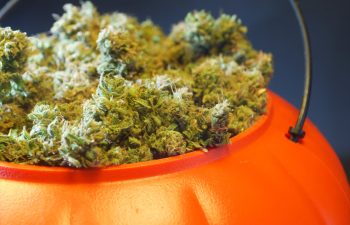
Cannabis consumers will pay more for clean, green and pure products

Cannabis consumers are deeply concerned with the use of chemical pesticides and fertilization and the environmental impact resulting from the cultivation process, and are calling for new product standards to ensure safety, freshness and efficacy, a new study in legalized states shows.

Canivate Growing Systems Ltd. (www.thecanivateway.com), conducted a U.S. nationwide survey of more than 600 cannabis consumers in states where adult cannabis purchase is legal. The survey found consumers overwhelmingly support establishing both environmental standards (79% supporting) and quality certifications (77%) for adult recreational cannabis products.

Respondents indicated that they are willing to pay more for cannabis that is grown in an eco-friendly, organic manner, with 64% of respondents agreeing. But when asked about specific cultivation methods, that support increased dramatically. Consumers strongly favor paying more for cannabis that is:

  • grown free from chemical pesticides (92%),
  • without chemical fertilizers (88%),
  • hasn’t been irradiated for pathogens (85%),
  • is grown in a low carbon footprint environment (82.5%), and
  • cultivated in a manner that conserves water (86%).

“The research suggests that consumers are more sophisticated and discerning in their brand trust than was previously thought,” said Troy McCellan, CEO of Canivate. “We believe new approaches to cultivation and testing are needed to preserve trust in this new market. The more educated consumers become, the more they will demand products that are environmentally friendly and certifiably proven to be free of chemical toxins, pathogens and decontamination treatments.”

Cannabis consumer buying patterns

When purchasing products, it was no surprise that the potency, health and other effects of cannabis is the #1 factor in their decision (with 96% saying it’s extremely to slightly important). Surprisingly, a cultivation method free of pesticides was ranked nearly the same in terms of importance (95%), outpacing environmental issues like having a low carbon footprint (84%).

About 33% of respondents believe that cannabis production uses more pesticides and fungicides than conventional agricultural practices, with about half believing it uses the same or less.

Brand reputation is becoming an important criterion for cannabis consumers as well, the survey found. More than 75% of respondents said that seeking out specific brands is important to their shopping choices.


Recent Articles

Dr. Macias first fell in love with science while studying at Howard University, where she completed her undergraduate studies and later earned her PhD in cellular and molecular biology. While at Howard, she became especially interested in cancer research due to personal ties. Growing up in a Creole family and predominantly Black community in Louisiana, Dr. Macias watched many women around her battle breast cancer, so at Howard, she decided to focus her research on the BRCA1 gene.
It’s almost amazing that the same institutions that brought us the 2008 financial crisis have a problem with selling glass pipes. Almost. The truth is that an industry's past sins are only held against it when the money isn’t right. Big banks were willing to risk cratering the U.S. housing market because the profits were too good to ignore. But the cannabis industry rolls a different kind of paper, so instead of a slap on the wrist, it gets a surcharge.
Smokeshop and counterculture enthusiasts enjoy discovery as part of the experience. Customers enjoy browsing. When they walk into a shop, they don't simply grab a product and leave. They look for something new. This is the main reason flyers and posters still work. Smokeshops and dispensaries are highly visual environments. You want to see bold artwork, psychedelic graphics, and street-style posters that naturally capture attention.
The use of cannabis in professional sports has always been a controversial subject. While some are firm believers that all substances should be banned from professional sports altogether, most people aren’t thinking about cannabis when they’re discussing performance-enhancing drugs (PEDs). In fact, there have been countless cannabis users in the world of professional sports throughout the years; some of whom are more open about their love for the plant than others.
North Carolina might save us all. A new state bill may be the industry’s best option to save itself from demise when new federal cannabinoid bans take effect in November. And it could use your support.
Hemp is often considered for the things that it is not. It is not intoxicating, it is not illegal, and it is not marijuana. However, now we are seeing a focus back to what it can be. The plant is moving into the level of wine and chocolate and becoming a movement and a culture.
It’s been several months since President Donald Trump signed an executive order to reschedule cannabis from Schedule I to Schedule III within the Controlled Substances Act (CSA). On paper, the recent executive order, entitled “Increasing Medical Marijuana and Cannabidiol Research,” is a huge step in the right direction for cannabis smokers across the country.
For years, we’ve been told that this industry is the Wild West: a place where the only law amounts to whatever the guy with the gun says. But over the last 12 months, state governments have passed a spate of new regulations that promise to swap the relative lawlessness of poor enforcement of vague rules with real law and order.