







instagram.com/blossom_glass
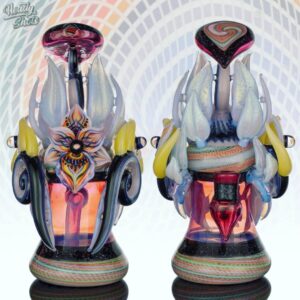
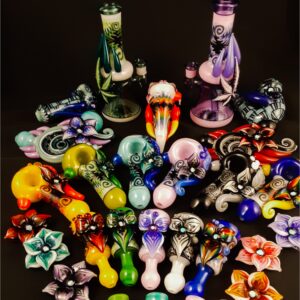
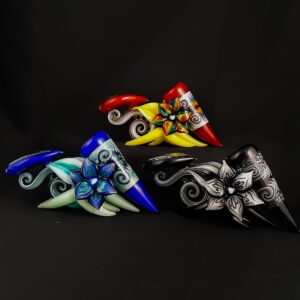
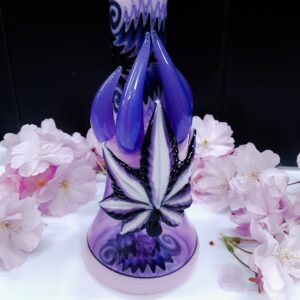
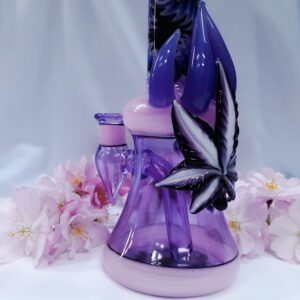
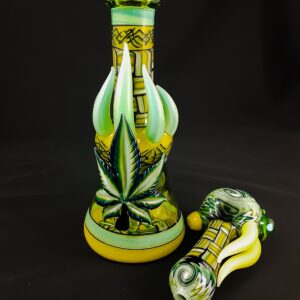
It’s only fitting that an artist named Blossom would create functional glass pieces embellished with flowers.
“A lot of times, art isn’t necessarily feminine or masculine, it is just a cool shape. The nature theme is awesome, and I definitely try to make my pieces as pretty as possible. A lot of people buy my work to have some beautiful springtime energy around,” says the Portland, Oregon-based flameworker. “When I take my dog for a walk around the block, I will see vibrant flowers in 10 different shapes and colors on any given day. It is crazy how lush it is here, even in the winter, and it is very inspiring. There is so much uniqueness in flowers that there’s endless room to make each piece different.”
Blossom, whose actual given name is Blossom Sky Night, grew up traveling with her family who sold handmade goods and jewelry at craft fairs and renaissance festivals, and that’s where she was first exposed to glass blowing.
“I used to sit there and watch candle makers, metal smiths, and glass workers When I was probably about 17 or 18, I met Gordon Key, an old school carnival glass artist who would make glass dragons, and some friends and I worked for him making fairy dust bottles and pendants,” Blossom says. “In my twenties, I worked for a distributor in Ann Arbor, Michigan who sold raw materials and wholesale pipes. They would have a lot of different artists that would come in, so I got exposed to a lot of cool art.”
It wasn’t long before Blossom built a studio with her then boyfriend and began making her own glass pieces — mostly one-hitters, full-color linework spoons, and pendants and selling them directly to stores. The flowers began as a way to recycle leftover materials from when she would make chip stacks out of little squares cut from flat ribbon cane.
In her unique approach, Blossom shapes each individual leaf and melts them together enough, so the sculpture keeps its definition, yet still makes it through the annealing process without cracking.
“It takes a lot of practice to make it good,” she says. “You end up with a lot of trial and error, but when you can pull off a successful piece again and again, that’s, you know, that’s when you’ve got something.”
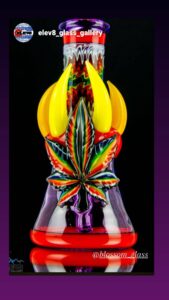
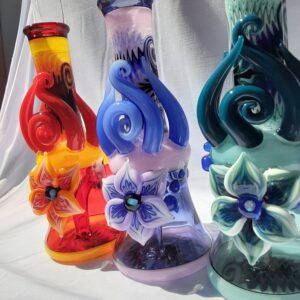
Wrapping organically around the main body of the pipes, the flowers and vines, expressed in vibrant colors, pop like an Alice in Wonderland garden.
“Doing it every day for so many years, you pretty much try every color combination,” Blossom says. “You need some contrast so it easy for the eyes to see, but it is also good to have colors that complement each other. People who order my pieces tend to like the cool colors, which are blues, greens and purples, or the hotter colors like reds, oranges, and yellows.”
“Art is a reflection of what you see around you,” she adds. “When you combine imagination with what really exists in this world, you can make some fascinating stuff.”