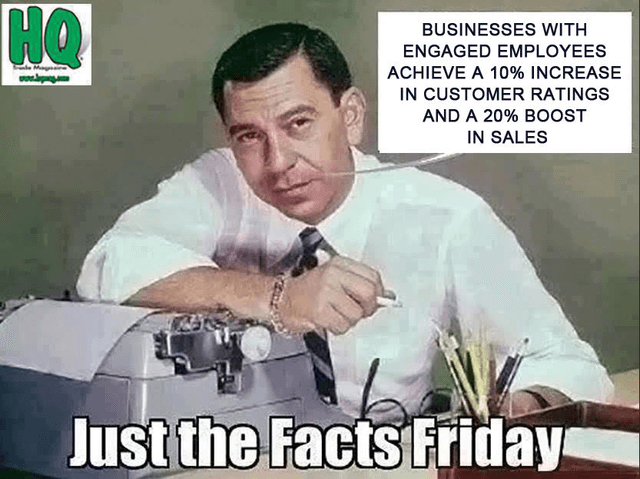
How many times have you gone into a smoke shop and the person behind the counter is so involved with playing a game on their phone that they barely look up to say hello. It’s a pretty safe bet that store isn’t making very many sales and very few people come back for a second visit.
This guy, like the majority of the U.S. workforce (51%) is not engaged with his job, according to Gallup’s State of the American Workplace report. These employees are indifferent and neither like nor dislike their job.
Showing up and staying: Engaged employees make it a point to show up to work and do more work — highly engaged business units realize a 41% reduction in absenteeism and a 17% increase in productivity. Engaged workers also are 86% more likely to stay with their employers.
Profit: Engaged employees are more present and productive; they are more attuned to the needs of customers; and they are more observant of processes, standards and systems. When taken together, the behaviors of highly engaged business units result in 21% greater profitability.
Customer outcomes: It’s easy to see why wmployees who are engaged help the business achieve a 10% increase in customer ratings and a 20% increase in sales.
So put the phone down and pay attention —- businesses with highly engaged staff share common philosophies and practices. Among other things:
– They know creating a culture of engagement starts at the top.
– Their leaders are aligned in prioritizing engagement as a competitive, strategic point of differentiation.
– They communicate openly and consistently.
– They place the utmost importance on using the right metrics and on hiring and developing great managers.
Highly engaged businesses also hold their managers accountable for the entire team’s overall performance. They ensure that managers are engaging employees from the first minute of their first day at work. Employee engagement is a fundamental consideration in their people strategy, not an annual “check-the-box” activity.