
Tired of hearing about CBD yet? Well, you’re probably not tired of selling it, so pay attention.
There’s good news and bad news to discuss. First, the good news. This past January, House Agricultural Committee Chairman Collin Peterson introduced H.R. 5587, a bill that would require the FDA to treat hemp-derived CBD as a dietary supplement. That’s a huge step and we’ll get to that more in a few minutes. But first, let’s discuss the bad news, which is the fact this bill is still so desperately needed, more now than ever before. Believe it or not, despite the all-out explosion of the CBD market over the past few years and despite the projections that it will be a $24 billion industry by 2024, CBD’s legal status is still ambiguous at best.
Let’s see if we can pull this thread without unravelling the whole sweater. Per the 2018 Farm Bill, hemp (defined as cannabis with less than .3% THC on a dry weight basis) and its derivatives are now legal for interstate commerce, provided that the growers comply with the regulations of their respective state.
Great! So, if hemp is legal, that means anything derived from hemp is legal, which means we can sell CBD, right? Well, yes. Sort of. But also, no. The Farm Bill may have reclassified hemp so that it is no longer considered a Schedule 1 substance, but there is still the Food, Drug and Cosmetics Act (FD&C) to contend with, which the bill in discussion does nothing to supersede. According to the FD&C, any compound that has been approved for use as a new drug, or even authorized for investigation as a new drug, cannot be then sold as a food additive or dietary supplement. The law is a complicated topic, yes. But if it wasn’t, we wouldn’t need lawyers—and that would eliminate an entire economic sector. We can’t have that.
Now, let’s go back to 2018 for a moment and consider the FDA’s widely publicized approval of Epidiolex, the CBD-derived seizure medication developed by GW Pharmaceuticals. Many celebrated the decision at the time, pointing to it as a sort of validation of cannabis as medicine. But in reality, the negative implications for our industry far outweighed the good. One step forward, two steps back, as it were. Why? Refer to the previous paragraph; a substance can’t be a drug and a dietary supplement at the same time.
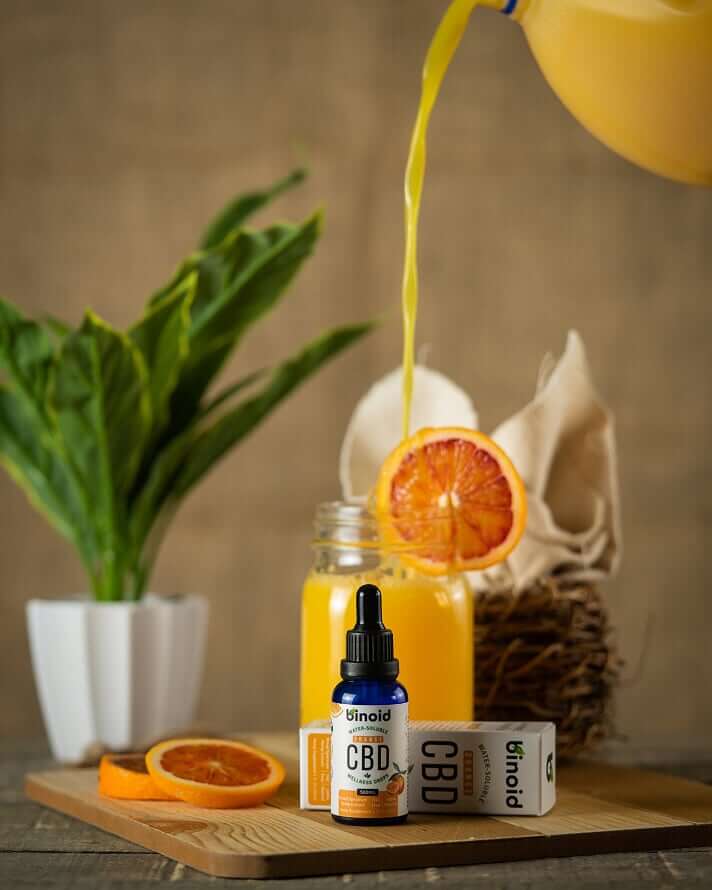
The cold, hard truth of the situation, whether we want to acknowledge it or not, is this: CBD, arguably the most lucrative product category this industry has seen in a decade, is essentially illegal to sell—at least the way we’re selling it. That’s a hard pill to swallow, but go ahead and choke it down like that 25mg full spectrum gel cap you took this morning. Don’t worry, you likely have a snowball’s chance in hell of going to jail for stocking it on your shelves. It’s not that kind of illegal. It’s the kind of illegal where the manufacturers will eventually receive warning letters from the FDA (many already have), telling them that their products cannot be sold as dietary supplements or food additives. Should they ignore the FDA’s warning and persist, they could eventually face stiff fines, or worse.
So how then, if it’s technically illegal, has it become the biggest wellness craze this side of the keto diet? First and foremost, there’s the simple matter of the strength in numbers. There are hundreds, if not thousands of players, all vying for a slice of the market. The FDA just doesn’t have the resources to go after everyone. Instead, they go after the low-hanging fruit; the companies that are most flagrantly violating their guidelines. Second, and equally important is the fact that though there is legal ambiguity now, the players in the market have made an educated bet on where the laws governing CBD are going. They are confident that when Congress added the hemp clause to the Farm Bill, they did so with the intention of allowing the CBD market to develop. Several members who were instrumental in getting the provision passed have stated as much (e.g., the amicus brief filed with the Ninth Circuit Court in support of the Hemp Industry Association in their case against the DEA). The problem is, Congress isn’t very good at, well . . . congressing. They may have intended to legalize the CBD trade through previous actions, but they didn’t quite pull it off.
Which brings us back to H.R. 5587, Congress’s potential remedy for issues previously left undone. The brilliance of this bill is in its precision. Barely three pages when printed, H.R. 5587 simply clarifies the confusion surrounding CBD and subsequently orders the USDA to conduct a study on the market barriers for hemp farmers. The clarifying language is virtually foolproof, amending the FD&C to exclude “hemp-derived cannabidiol or a hemp-derived cannabidiol-containing substance” from any restriction on compounds approved for drugs being sold as dietary supplements, which nullifies the issues created by the approval of Epidiolex. Should this bill pass, it will effectively serve as a green light for the entire CBD marketplace.
But if for some reason, it doesn’t, don’t worry too much. Hemp-derived cannabinoids aren’t going anywhere. Public opinion is far too in favor of the stuff. Grandmas and soccer moms have already bought in. The bureaucrats can’t hold back this tide.