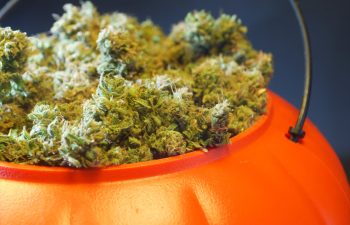

The use of delta-9-THCO and delta-8-THCO has surged among cannabis consumers, driven by their high potency levels. However, the U.S. DEA has just designated these two cannabinoids as Schedule I controlled substances, essentially making them federally illegal in the country.
Clarification was made in response to an inquiry from attorney Rod Kight, who wrote to the DEA seeking clarification on the legal status of these cannabinoids under the Controlled Substances Act (CSA). Kight, a hemp and cannabis advocate, was concerned about some companies marketing THC-O as “hemp,” even though it is not a molecule naturally produced by the plant. He was also troubled by recent evidence suggesting that THC-O may be harmful in certain circumstances.
The DEA’s response to Kight, in a letter dated February 13, indicated that delta-8-THC-O and delta-9-THC-O are not considered hemp under the CSA because they are synthetically produced and not naturally occurring in the cannabis plant.
The use of hemp-derived cannabinoids has been in a grey area since the 2018 Farm Bill, which federally legalized the cultivation of the hemp plant with a THC level below 0.3%. Delta-9-THCO and delta-8-THCO have a chemical structure and effects similar to delta-9 THC found in marijuana, which is responsible for psychoactive effects. However, because THC-O can only be obtained synthetically, it does not fall under the definition of hemp and is thus considered a controlled substance.
Aaron Smith, the CEO of the National Cannabis Industry Association, in an interview with Marijuana Moment, emphasized the need for responsible regulation of psychoactive cannabinoids, whether they are naturally occurring or synthetic. He suggested that the best way to achieve this goal is by ending national prohibition, implementing sensible federal regulations, and allowing state cannabis laws to continue operating across the country. This, he argued, would help protect public health and safety.
Cannabis advocacy agencies, such as NORML, have warned of the potential health risks associated with THC-O, particularly following a study published in the Journal of Medical Toxicology. This study raised safety concerns about the inhalation of THC-O acetate, which shares structural similarities with Vitamin-E acetate, an additive in unlicensed THC vape cartridges that was linked to the 2019-20 outbreak of EVALI lung disease. The authors of the study caution that both substances produce ketene, a highly potent lung toxicant, when heated in a vape pen and that this may be the suspected cause of EVALI.
Michelle Bodian, a partner at the law firm Vicente Sederberg told Marijuana Moment while the letter in question does not technically ban delta-8-THC-O and delta-9-THC-O, the DEA’s statement adds yet another layer of analysis to the already crowded patchwork of questions that must be answered to determine whether a hemp product is lawful.
“While the latest statement from DEA does not clarify the legal status of all novel hemp derived cannabinoids, it does clarify that DEA believes Delta-9 THCO and Delta-8 THCO are controlled substances,” Bodian said. “Hopefully, there is congressional action soon to address the legality of all hemp derived cannabinoids, so the industry is not left with a patchwork of law, regulation, policy and now, letter statements.”