




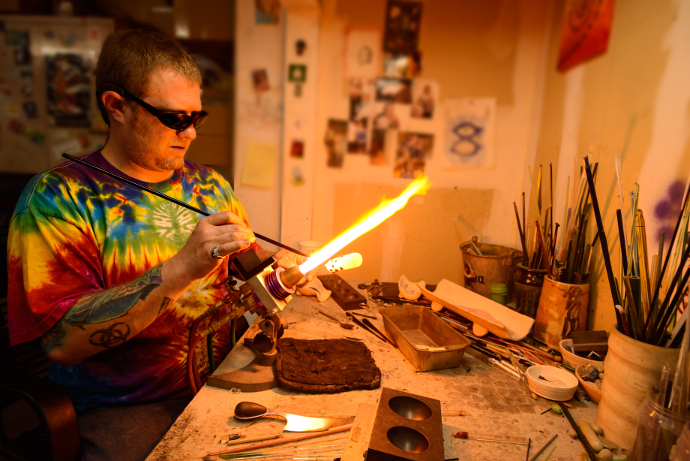
In the words of Monty Python: now for something completely different. Well, as different as things get in the ever-evolving world of glass. While most smoke shop patrons think about glass being in the form of pipes, flameworker and historian Eli Mazet is shining a spotlight on shot glasses.
“The shot glass and the pipe are best friends — both can and have been used for medicinal purposes and both have prohibition in their history,” says Mazet, who, along with being a glass artist for two decades, is the author of the book, “The Contemporary Shot Glass,” which documents the history of the shot glass in the world of glass and collectibles.
Mazet was introduced to glass blowing by his brother Josh, a former ceramics teacher at the University of Oregon, who later worked for famed pipe maker Jerome Baker. It was about this time that Operation Pipe Dream ended the careers of many glass blowers, but the brother discovered a new niche with a line of whimsical frogs, turtles, and sea creatures, marbles, pendants and ornaments. Traveling to trade show, craft fairs and galleries, Mazet noticed nobody was making glass shot glass. The reason, he discovered, is that a machine invented in 1903 could produce 17,892 glass objects a day; 243 glass bottles a minute. Glass artists figured why compete with automation, and so the only time you saw a shot glass was on salon counters in western movies or in the souvenir sections of convenience stores.
“It crazy, but nobody had ever put any design into something so simple because it didn’t have a huge function; you drink out of it and then put it away,” Mazet says. “Nobody has ever really tapped into shot glasses like they have pipes. Every design in pipe making has been done — the shot glass hasn’t been over-exploited.”
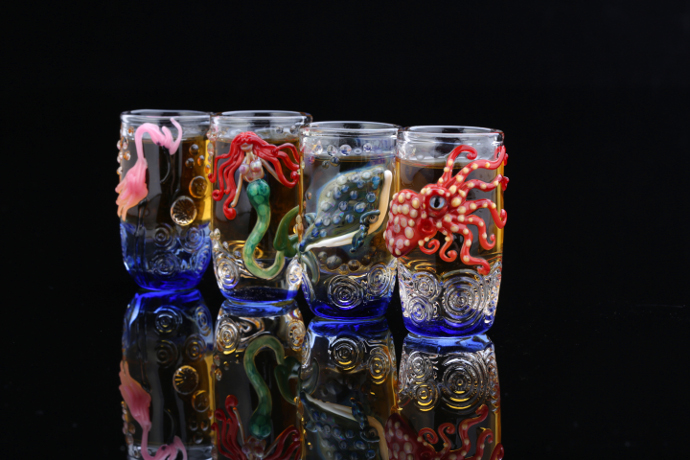
Eli made it his mission to spark a “movement in the contemporary glass community” by bringing back the handcrafted shot glass. Along with applying his artistic hand to shot glasses, he challenged top glass artists to do the same. The result was a collection of more than 100 shot glasses from the torches of Harold Cooney, Jared DeLong, Darby Holmes and more. Many are featured in Mazet’s book.
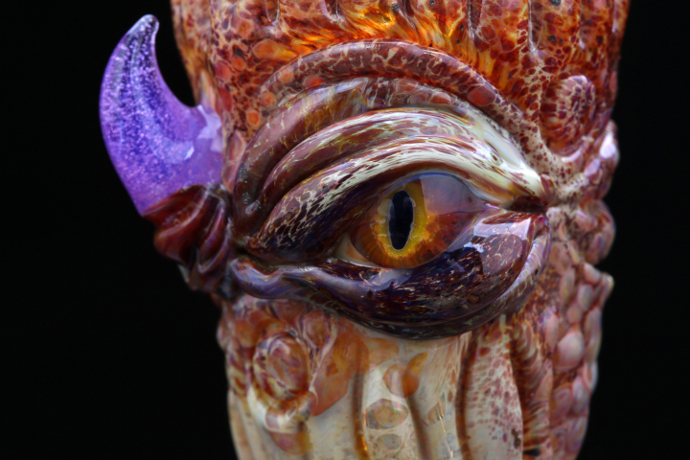
In 2017 Eli released his first video, “The American Shot Glass” in which he shares trivia on the history of the shot glass and demonstrates how to three of his signature styles in the shape of skulls, big eyeball monsters and octopus embellishments.
So how did the shot glass get its name? One legend is that cowboys in the old west would trade a bullet (or shot) for a drink of whiskey; another possibility is that pioneers would spit the buck”shot” from their dinner (still in the rabbit or qual they’d shot early in the day) into the little glass. It has also been suggested “shot” is an Americanized version of the name “Schott,” as in Otto Schott, the father of modern glass science. The most likely theory, according to Mazet, is that the short glasses simply got their name because they were used to hold an exact amount of liquor or medicine; shot also means “dose” or “small amount.”
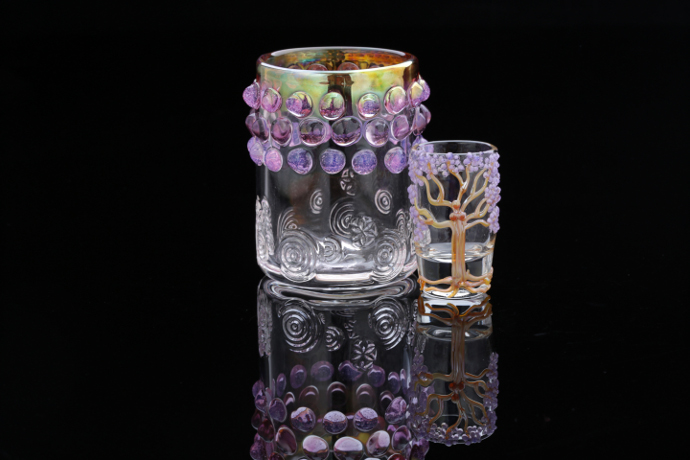
And that’s why shot glasses are a perfect fit for smoke shops. “It’s one of those ‘bad boy’ kind of things,” Mazet says. “The momentum behind the story and the movement with glass blowers creating artistic shot glasses is trickling out there and smoke shops are starting to showcase shot glasses and giving them their own spot.
“The shot glasses that artists are making today have never made been made before in the history of glass.”










