“Whatup, Youtube! We’re back here . . . we got a wonderful TKO CBD J!”
It’s an episode from the Youtube channel, Stoned Ventures. The scene consists of three young 420 enthusiasts in a parked car. They’re trying out the new 150mg CBD Pre Roll from Terp Nation, a company that, according to its website, “brings the highest quality terpene & CBD-infused products to the market.” Really, it just looks like any other joint. Apparently, it tastes like one too.
“That definitely tastes like weed,” the guy in the front passenger seat observes. He passes it to the lady behind the wheel. She takes a puff and concurs.
“It definitely does.”
Front Passenger Seat nods in vigorous agreement and looks directly into the camera.
“It kinda tastes like very shitty weed.” The words trigger an abrupt cackle of amusement from the guy in the back seat. “I know, I know,” Passenger Seat acknowledges, “I’m not expecting to get high off it . . . but it definitely tastes like shitty weed.” Later in the video, they take a closer look at what’s in it. Back Seat isn’t impressed.
 “You motherfuckers put mad seeds in this shit! I’m disappointed. AIGHT??”
But it’s not weed. It’s “industrial hemp flower,” purportedly high in CBD, but with less than 0.3% THC, available from Terp Nation in pre-rolls and loose bud sold by the eighth-ounce. Several other companies are jumping on the bandwagon as well but Terp Nation is by far the most visible thus far. It’s all made gloriously possible by Section 7606 of the Agricultural Act of 2014, AKA, the Farm Bill. A few years ago, it would have been considered marijuana. Now, it’s hemp and you can legally sell it out of your store—in plain daylight. And who can argue? It says “Legal in all 50 states” right on the packaging.
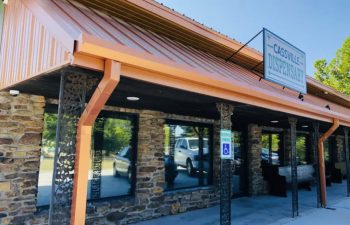
Apparently, the cops can, as two North Georgia men found out this past summer. They were arrested for carrying the line in their convenience stores.
They’ll be fine, though. Those cops obviously didn’t know about the new definition. Right?

“I don’t think we can look at it in terms of ‘the old and new’ because the current Farm Bill contradicts the Controlled Substances Act,” cautions Lenny Frieling, a Colorado lawyer who specializes in drug cases. “I think that allows the feds to say, ‘We don’t care what’s happening down the hallway. We know what’s happening here. In our office, it’s still Schedule 1. Have a nice day.’”
If anyone should know, it’s Frieling. In addition to his credentials as a lawyer, he’s a former associate judge of the city of Lafayette, Colorado, as well as a board member emeritus of the Colorado chapter of NORML. He made headlines back in 2007 when he resigned from his judgeship in protest of a new city code that sought to impose overly-harsh sentences in petty possession cases. It should be noted that he’s not giving legal advice—you have to pay for that—but he is happy to speculate.
“Now, can one go into court and argue in a number of different ways that’s simply wrong?” he ponders rhetorically. “I’m sure. I haven’t had to raise the argument yet, but it makes a hell of a good one. If I had to make up a prediction, I would say courts would rule differently depending on which court it is. I don’t think it’s one of those black and white things where most courts would agree.”
 Legally ambiguous though it may be, the product line has generated a hell of a buzz in the market and has likely reaped considerable profits for its purveyors. We say “likely,” because we reached out to Terp Nation for comment but received no response.
Meanwhile, the reaction hasn’t been as warm and fuzzy as the hemp slingers had undoubtedly hoped. Take, for instance, a recent poll conducted in a smoke shop forum on Facebook. The question to retailers: “Would you put this line on your shelf?” Of the 69 respondents, 83% responded in the negative. Three percent answered “maybe,” while 14% responded with a flat-out “yes.” One participant sarcastically added the option, “Yes, right next to the dank-ass bud I sell.” It didn’t garner any votes. The comments on the thread were even more revealing. There were a few willing to affirm their support for the product, but most responses ranged from proverbial eye-rolls to rage-fueled eviscerations.
Questionable methodology aside, can a poll of 69 retailers accurately reflect an industry of over 15,000? We can’t answer that question with authority. But for comparative reference, we can tell you that the average presidential poll surveys 1,000 likely voters out of a population of 325,000,000. By those standards, 69 out of 15,000 isn’t so bad.

For any industry veteran, it’s not hard to understand the hostility. Yes, through the right interpretation, it is arguably legal; that much has been established. But you can rest assured that most local cops aren’t passing their spare time in the library brushing up on new legislation. The bottom line is it looks like weed, it smells like weed, it tastes like weed and according to most police field kits, it tests like weed. That shouldn’t come as a surprise; field testing kits have been known to conclude the same about tea leaves and discarded tomato plants.
Even so, there will be plenty of stores willing to take the risk and put hemp flower products on their shelves. For many, it will likely prove to be a great investment. No problems; just more revenue. For others, it will be a repeat of North Georgia, regardless of the label’s “Legal in all 50 states” assertion.
“That’s not a bad idea, actually,” Frieling remarks facetiously. “We should all have ‘This isn’t marijuana’ bags.”