



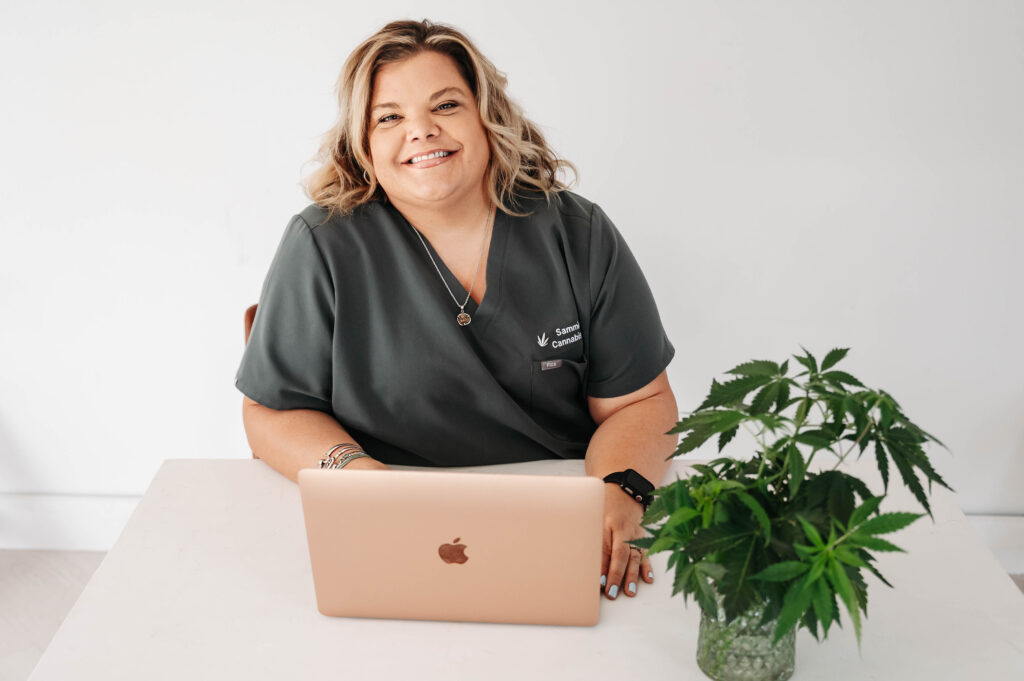
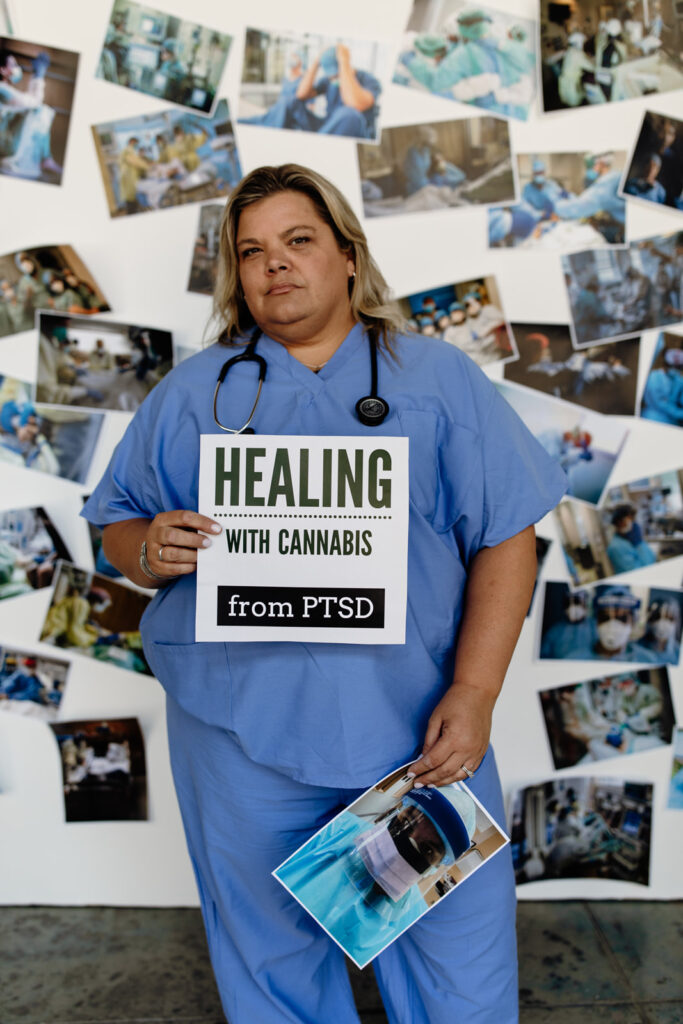
For Sammie Pyle, cannabis has been a life-changing medicine, and she wants everyone to know about it. A registered nurse with a background in critical care and travel nursing, Sammie became a frontline healthcare worker in 2020, working in COVID ICUs across the country. As a result of that work, she was diagnosed with PTSD, survivor’s guilt, and insomnia. “The doctor wanted to give me a lot of prescriptions, but I already felt numb,” she says. “I needed something to bring me back to myself. So I chose a different path: the cannabis route.”
As a registered nurse, cannabis can be a tricky and controversial subject, but Sammie needed to put her own health first. “Our healthcare system is keeping us sick—we know that,” she says. “I needed to put my health above that.” As a long-time cannabis believer, Sammie dove headfirst into the world of medical cannabis, learning all about the endocannabinoid system and how different cannabinoids interact with the brain. “The more I learned, the more I healed, and the more I realized I had to talk about it,” Sammie says.
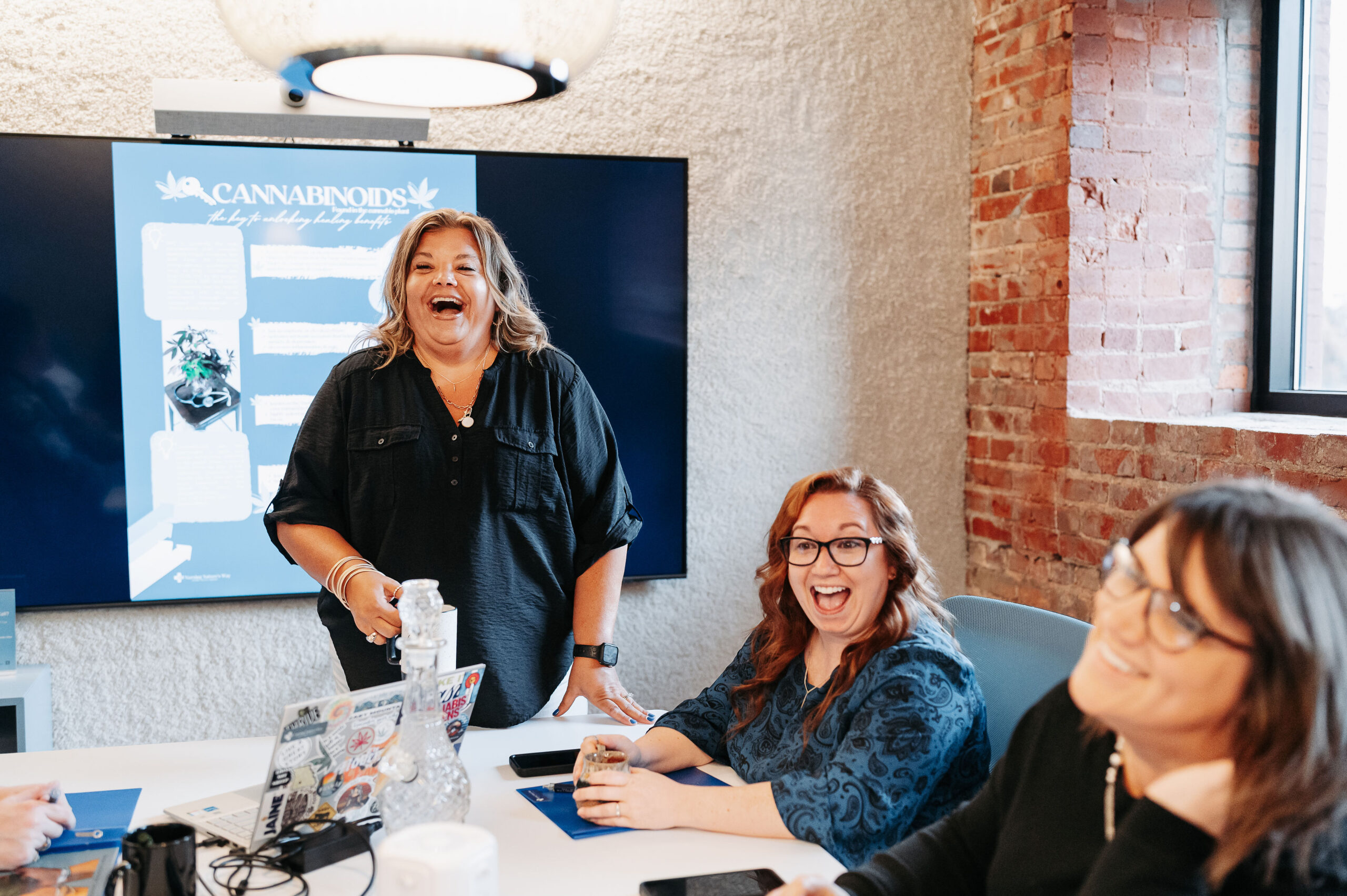
Now, she works with patients to bridge the gap between the doctor and the dispensary. She teaches a Cannabis 101 class in-person across her home state of Missouri, and she also offers it virtually. She’s distilled some of that knowledge into a booklet called “A Quick Guide to Medical Cannabis”, which is available to download on her website. “I’ve led groups at retirement communities, schools, and head shops,” Sammie says.
Now, she’s focusing on educating other nurses, helping them break the stigma around medical cannabis use and best advocate for their patients. “We’re the ones at the bedside, actually dealing with the patients,” she says. “All you’re doing is educating [them] on an available medicine.”
At work at a Level 1 trauma center, Sammie’s coworkers come to her with questions, and she loves being able to educate other medical professionals about the resources available to them. She wants nurses to know that there are organizations offering support, like the American Cannabis Nurse Association, which offers legal support, as well as the Cannabis Nurse Network and the Society for Cannabis Clinicians, to name a few. “There are foundations laid for you to be protected as you support patients,” Sammie says to her fellow nurses. “There’s a place for us in this industry.”
To counteract some of the stigma and clear up misconceptions about cannabis as medicine, Sammie makes a point to refer to the plant by its proper scientific name. It’s been challenging to reach some patients, especially older ones, but often, Sammie says, “they’re the ones who need it most. It’s been challenging, but I love the challenges and breaking barriers.”
Sammie also teaches cannabis education classes specifically geared for women dealing with hormonal issues and pregnancy. “As a woman going through hormonal changes myself, there is so much we can connect on,” she says. Speaking of women in cannabis, Sammie serves as the Health and Wellness chair and sits on the Board of Directors for We Are Jaine, a Missouri-based organization that supports women in the cannabis industry throughout the state. With We Are Jaine, Sammie has led events across Missouri to support health and wellness. “We Are Jaine is focused on social equity and how we can support each other,” Sammie explains. “Business owners, moms, budtenders, nurses… we want everyone to be supported.”
As if Sammie isn’t busy enough with her nursing job and educational work at Nursing Nature’s Way, she’s also working on some exciting projects right now. From collaborating with a Springfield-based company that offers cannabis DNA testing to help with dosing to leading cannabis education initiatives in the Caribbean through the Bermuda Cannabis Association, Sammie is equally passionate as a student and an educator, always seeking to learn more and share that knowledge with people who might benefit from it.
People have asked her if she wants to start her own line of cannabis products, and Sammie just laughs. “There are so many amazing products already out there—I don’t need to have my own,” she says. One of her favorites is Healer CBD, which not only offers a phenomenal suite of products but also has the research backing to support them. “They have a dementia regimen that has had amazing results with dementia patients,” she shares.
As Sammie talks about the endocannabinoid system and the medical basis for cannabis use, her eyes light up. “We have this whole system built into our bodies that supports us healing!” she says, and her excitement is genuine. She encourages the industry to keep medical at the forefront and continue to push for legalization, which is necessary to get even more research.
When asked where she wants to see the cannabis industry move, Sammie says more education is the baseline. “Cannabis works better when you’re educated about it,” she says. Her own cannabis journey has been incredibly empowering, and she wants other patients to have access to that same autonomy and empowerment. “One of the beautiful things about [cannabis] medicine is it gives you power back over your body,” she says. “I want my patients to understand that it gives them control back over their health. It’s not just a pill you have to take for the rest of your life. With cannabis, you have options for different medicine, different ways to take it, and different ways to learn to listen to your body better.”
You can connect with Sammie on Instagram @cannabisnursesammie and check out her website at nursingnaturesway.com.











