The Unbelievable Tales of a Highly Believable Dude
“I met Eviel Kneivel once . . .This was back in 72 . . . I was the first one to ever get him to smoke. He was a bad alcoholic . . . We went out riding . . . when we stopped, I lit one up. He said, ‘What’s that?’ I said ‘A little bit of weed.’ And he said, ‘Oh, I don’t touch that shit.’ I said, ‘Listen, buddy. This ain’t gonna give you a hangover in the morning and it’s gonna make you feel every bit as good as that whiskey.’ He said, he didn’t believe me. ‘Scared to try?’ I asked. ‘Oh, I ain’t scared of a damn thing!’ Well . . . he liked it.”
A lifelong entrepreneur now in his 70s, John Intermill isn’t short on much of anything, stories most of all. Not just any stories. These are the kinds that leave you dumbfounded, scratching your head and muttering ‘no way’ to yourself with awe-soaked amusement. It’s not that you don’t believe him. He comes across about as honest as a person could be, almost to a fault. It’s just that the stories are so . . . well . . . unbelievable. But we’ll take the unbelievable tales of a believable man over the reverse any day of the week.
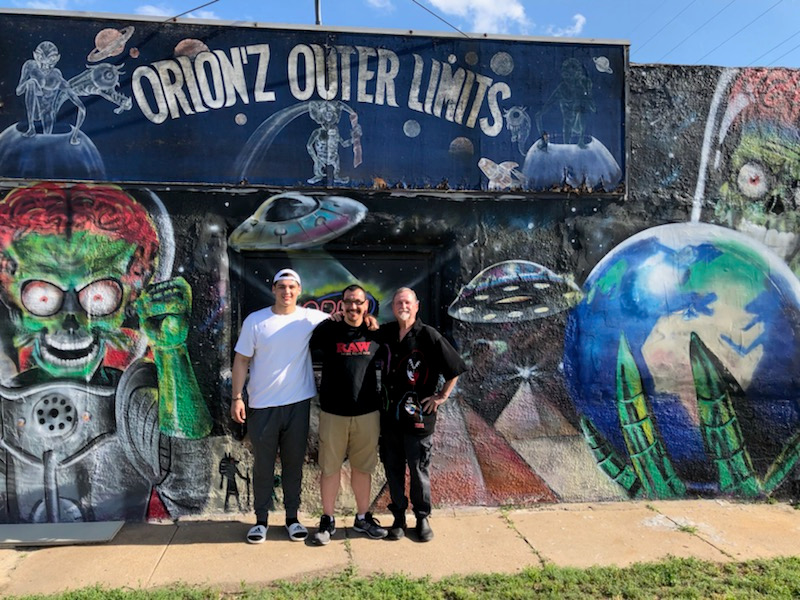
As the conversation unfolds, the anecdotes cascade out of him in rapid succession. Imagine a park bench conversation with Forrest Gump, only our protagonist is a prolifically inventive toker with that entrepreneurial spirit of American folklore wired into his DNA.
He’s been ‘in the industry’ since before there was an industry to speak of, having manufactured and sold pipes everywhere and anywhere he could since the 60s. In the early days, it was lot of travel. Load up the vehicle (first a station wagon, and later, a string of RVs) with the goods and hit the road, rubber to pavement, pedal to metal. He did it all; wholesale to stores, flea markets, roadside stands, stoner ‘Tupperware’ parties—anything he could do to make a buck and feed his family.
He eventually struck a deal to sell acrylics from Graffix, but originally, it was all stuff he’d made. The classic metal pipes made from lamp parts, home-cut acrylics, gifts and novelties—name it and he probably made and/or sold it. Once, he invented an electric hookah out of flawed porch lamps he’d picked up in a closeout deal for $.25 a pop.
Orion’z Outer Limits, the brick and mortar in Wichita, Kansas that he now runs with his son, Shawn Harrison, came later in life, relatively speaking.
“I got tired of being on the road” he recalls. “But I still had a good $10,000 in inventory of pipes and nowhere to sell them, so we opened a store.”
“We opened Orion’z on May 5, 2000,” Shawn specifies.
“We were originally going to call it ‘The Outer Limits,’” John chimes back in, “but there was a bar in town with the same name . . . Our grandson was named Orion because he was conceived under the stars, so we named it after him. Orion’z Outer Limits.”
Like John’s personal story before it, the story of Orion’z is a microcosm of the industry’s history. They’re in the background of practically every snapshot of the timeline. They survived the dark age of the 90s when merely opening a head shop meant a target on your back. They attended the very first CHAMPS. They were nearly swept up in Operation Pipe Dreams, but they fought back—and won. They asked V Syndicate for custom grinder cards before it was the company’s selling point. Legend has it that the owner of Skeye broke off from Glow after some encouraging words from John.
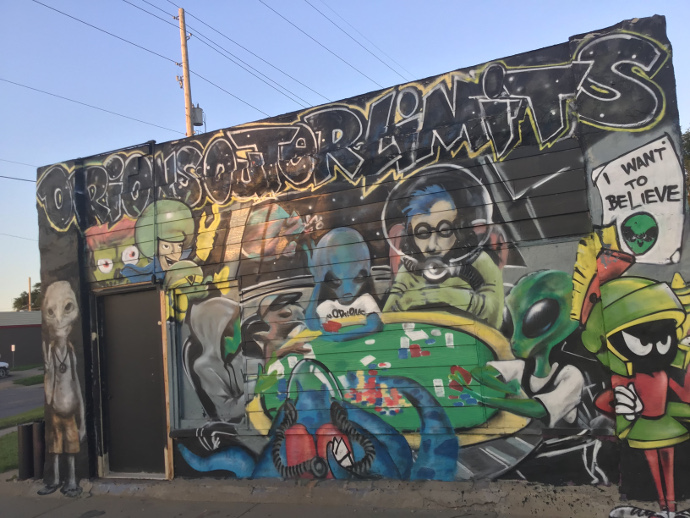
The shop is now run by a multi-generational trio: John, the patriarch, Shawn, his heir, and Orion, the grandson who is now 19 and taking an active role in the family business. To vastly understate the situation, they’re still going strong after nearly 30 years.
“We’re bulging at the seams,” John elaborates. “But we are right on a really busy corner and our rent’s right, so we’re aren’t going anywhere.” The idea of a second and maybe third store has long been on the table, but as John puts it, “We just haven’t gotten there yet.”
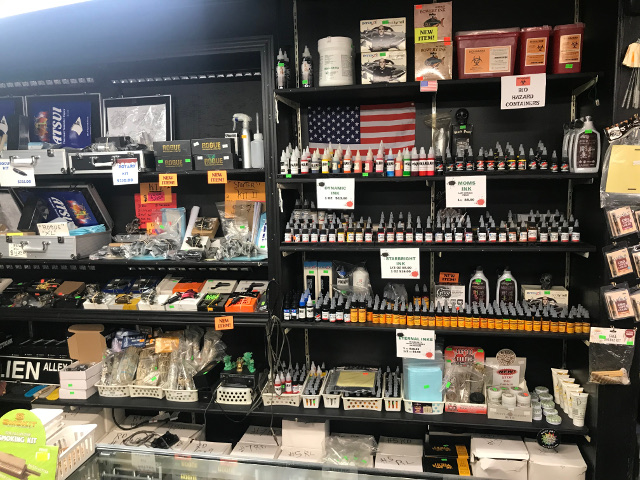
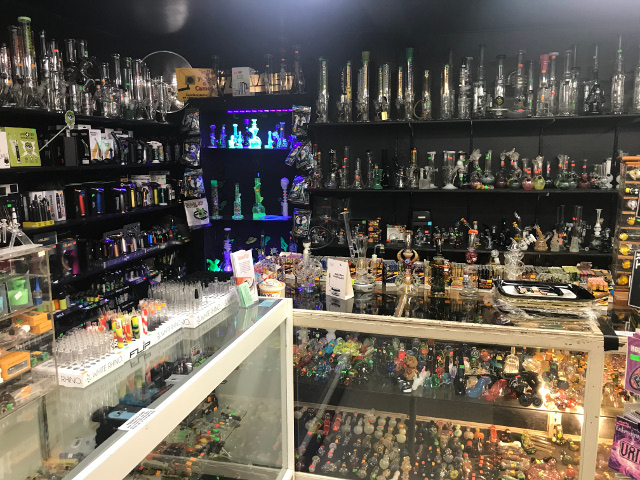
They’re bulging because they cater to everyone even close to being considered fringe with a vast array of pipes, papers, vaporizers, kratom, CBD products and even tattoo supplies.
“I’m constantly on the internet doing my research,” Shawn says. “Every night, practically . . . We get orders in on a daily basis, just trying to keep up with the latest stuff.”
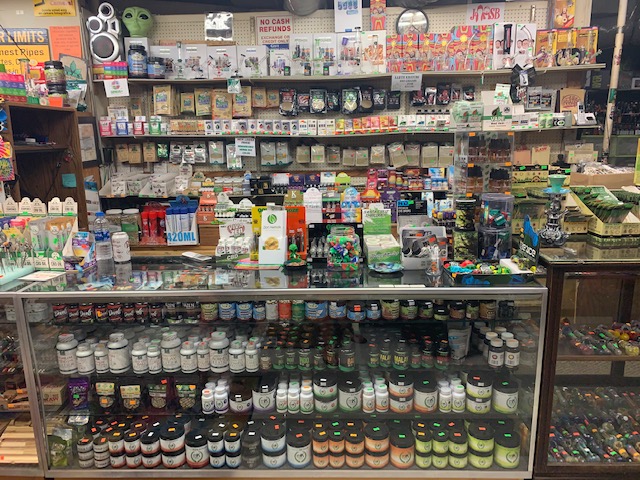
But in the end, the products are just widgets. Their true success lies within their finely-honed business instincts inherent in the self-starter.
It’s all about “Knowledge,” according to John. “Knowledge makes a big difference. Knowing what will sell and what won’t. I’ve been in business since I was a little kid. I look at items and I can tell what will sell and what won’t. And my son learned that from me. He was traveling with me . . . That’s where he learned to be a salesman. That’s an education that you can’t buy.”