




Five Retro Anti-Drug Films that are High on Hilarity
The Prelinger Archives are a vast collection of films from the United States in the 20th century, ranging from home movies to educational films, many of which have been out of the public eye for decades. Among them are a handful of some of the zaniest anti-drug propaganda ever to grace the silver screen. Here are five of our favorites.
The Terrible Truth (1951)
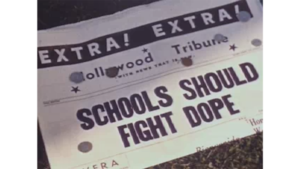
By the 1950s, anti-drug propaganda took a milder tone in an attempt to present their arguments in a more educational format, as opposed to the manic fear-mongering of earlier films on the topic. While this film might have seemed to be an improvement at the time, today’s viewers will find unintentional humor in its naivety.
The arc of the story is the tired ol’ chestnut of marijuana as a gateway drug, inevitably leading to heroin addiction and personal ruin. The actress portraying the fallen angel portrays her tumble from grace with an increasingly distressed appearance and the affectation of misogynistic behavioral stereotypes of ‘female neurosis.’ Our journey takes us from one innocent puff of the weedstuff to the cliched puritanical anxieties in just under eleven minutes.
My favorite part is a reference to Edgar Allan Poe, which somewhat insinuates his brilliance as a writer of horror, while ignoring the fact that he was high as hell while writing all of those classics.
Subject: Narcotics (1951)
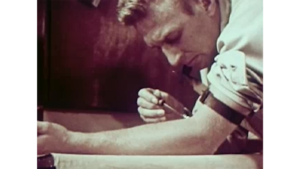
Unlike the other films on this list, this film was not intended for the general public, as it states right in the title sequence. Instead, this film targeted an audience of law enforcement officers under the guise of a factual exegesis on drug use. Its main focus is on heroin, but of course it claims that marijuana is a “stepping stone” straight to Junkie City.
The most troubling aspect of this film is how it completely dehumanizes heroin addicts by reducing them to hopeless existential failures—and even claims they would be “lucky” to “die early” of overdose or needle infection. It is no wonder that law enforcement has become an overzealous pipeline into the industrial prison complex, given the sort of “education” they have received over the past century.
Drug Abuse: The Chemical Tomb (1969)
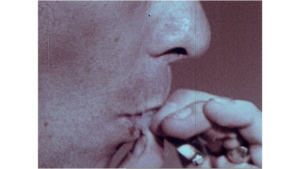
This strange film takes the stance that the youth of 1969 represent one of the most educated and compassionate generations of all time, and that they are essential towards enacting social changes to improve conditions nationally and globally, but will be incapable of doing so if they drop out of society and get high all the time. Unlike the other films on this list, this one might have somewhat of a valid point.¹
In their 2015 research article, Pharmacological Influences on the Neolithic Transition, authors Greg Wadley and Brian Hayden present a theory that systemic inequality via the structured hierarchies associated with human civilization was made possible by regular usage of drugs and alcohol. They argue that intoxication and altered cognition compromised the values and self interest of hunter gatherers, allowing them to be exploited by an emerging ruling class.
Liberal journalist John L. Potash presents a case in his 2018 film, Drugs As Weapons Against Us, that imperialists and oligarchs have used drugs as a means to compromise and exploit the world’s population for power and profit, citing Brittain’s East India Company and United States intelligence agencies. He spends a great deal of time arguing how this may have been done in the late 1960s, giving credence to The Chemical Tomb.
While our readers are likely to take the side of responsible drug use as a net positive, it is at least worth considering a different perspective. There could be some truth in both sides of the argument.
Brink of Disaster (1972)
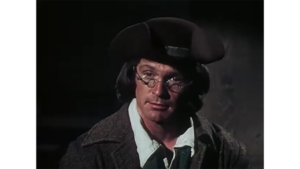
Okay, so maybe outlandish hysteria wasn’t completely eradicated in propaganda films by the early 1950s, as evidenced by this crackpot addition to our list. Brink of Disaster is over fifty years old, but somehow the message hasn’t moved a single inch among today’s evangelical conservatives. The crux of this film is that those damn liberals, most of them on drugs, have no respect or reverence for anything of importance.
The film follows a descendent of the revolution-era figure John Smith, as he sits peacefully in a library, being admonished by ghostly figures for letting those dirty hippies carry the world to hell in a handbasket. By the end of the film, the solution to the problem clear—time to put those damn demonic detriments to decency in their place with some good old-fashioned firepower, because only good guys with a guns can protect school libraries from the threat of amoral, bong-addicted commies. And also Bibles, because the Bible.
Control Your Emotions (1950)
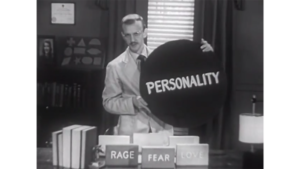
This is not a film about drug use, per se, but rather one about the importance of emotional regulation from the standpoint of clinical psychologists. While it contains many outdated models and interpretations, it is not necessarily problematic in the same way as other films on this list. I include it only because of the irony of how the profession of psychology has since become one of the largest drug pushers in history via pharmaceuticals. I wonder how many of those involved in this cinematic offering would be horrified by how their message has morphed from a reasonable plea to modulate extreme emotional responses, to a systematic chemical blitzkrieg on emotions that are being prescribed today, when existential terror has become a reasonable reaction to our increasingly regimented way of life.
¹Editor’s note: This is an excellent time to remind you that the opinions expressed in HQ are not necessarily aligned with those of the publishers.
* Wink, wink. *










