

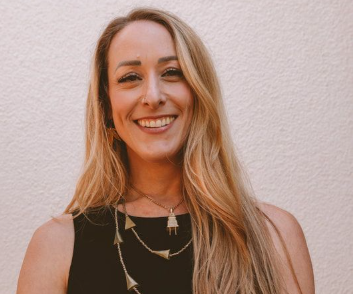
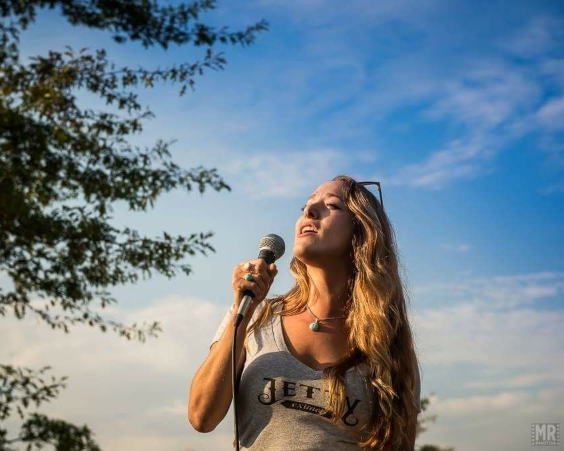
The Educator in the Room | Luna Stower: Teaching. Tending. Transforming

As a lifelong stoner, feminist, and teacher, Luna Stower knows how intersectional plant medicine can be. “I’ve been smoking, growing, and selling weed since I was in middle school, so it was never really a drug for me,” she says. When she was in college at the University of California in Santa Cruz, she began to witness the War on Drugs firsthand when the police arrested some of her fellow students for smoking weed in the woods on campus. 

“I know right from wrong,” Luna says, and she knew the peaceful students were not in the wrong here. “I come from great-grandparents who survived the Holocaust. In my family, we lived by the idea of ‘see something, say something’. [I was taught] to stand up for what I believe in.” 

This strong ethical upbringing led her to work in the prison parole system before reentering the education space as a teacher, until she left over a decade ago to work at Jetty Extracts. “I realized I could do the same kind of education that I was doing in the classroom for adults and people in need of this education about cannabis,” she says. “It does all make sense together. It is a feminist project, a human rights and education project, and a bodily autonomy project.”

Since then, she’s helped to launch incredible brands and gotten her Ganjier cannabis sommelier certification. With over two decades of experience, Luna has played a pivotal role in shaping the modern cannabis landscape, from launching and scaling multi-million dollar brands like Jetty and Ispire to leading social impact initiatives. Now, she works as the Director of Mycology & Retail Education for CHAMPS Trade Shows—the largest counterculture B2B show—to advance psychedelic education and retail strategy. “It’s the largest platform in the world for people trying to break into retail,” she says. “I’m really excited to utilize my brainpower and experience and alchemize that into something actionable that will help people.” 

As part of her work, Luna thinks a lot about what more positive commercialization can look like. In the industry, she wants to honor the long legacy of plant medicine and learn from its stewards, following in the footsteps of leaders like María Sabina, Brownie Mary, and Dennis Peron. “I want to honor their work and carry the torch forward,” she says, reminding people that the cannabis space is much more than a business opportunity but also a “huge responsibility.” She continues to be a fierce advocate for social equity, working alongside policy groups and organizations like the National Cannabis Industry Association (NCIA), the Last Prisoner Project, and the Indigenous Canna Industry Association.

She also calls herself a “plug” and a “Jewish matchmaker” for all of the connections she facilitates between people and businesses in plant medicine and activism spaces.

As an educator and storyteller, her work merges “tradition, activism, and innovation” in the cannabis and psychedelics space, drawing on her roots in mission-driven advocacy and her passion for education, social justice, and healing. “I’m an activist and educator first,” she says. “I’m a businesswoman second or third.”

Plant medicine and social justice are the undercurrents throughout Luna’s entire career. “Feminism is not a brand; it’s praxis,” Luna says. She applies this ethos in her professional life by mentoring other women in the cannabis space. One of her mentees is Leah Cerri, who runs “cool, inclusive events for women in cannabis in Northern California,” as Luna describes. Another is Denver-based Lauren Gibbs of Root for Hemp, who is advocating for land restoration, regenerative farming, and sustainable living by swapping out plastics for hemp goods. 

On being a woman in the cannabis industry, Luna reflects on how she’s seen a lot of women come into the space to do an unfair share of emotional labor, especially with the recent influx of so much unchecked venture capital money. “A lot of the downfalls of improper rollout in this industry fall on women,” Luna says. “We’re still fighting to be seen and respected as whole people.” 

Because she comes from a long line of feminists and educators, she is always supportive of more young women looking to get into the cannabis space. Even more so, she wants them to take up space in the industry and be their full selves. Luna embraces her femininity and encourages others to do the same. “Femininity is really important to rock,” she says. “It’s not something you have to tone down to be a leader. I’ve learned to embrace it as a source of power—an intuitive, nurturing, radically honest force that lets me lead with compassion and conviction.” While this is good advice for women across industries, this divine feminine connection is especially important in the cannabis space. “Plant medicine is deeply feminine in nature,” Luna reminds us. “It’s receptive; it’s transformative; it’s cyclical.”

To connect with Luna, you can find her on Instagram and LinkedIn. You can also listen to her recent conversation on the James Loud Podcast. “I am open for mentorship and want to support,” she says. “There are no stupid questions. What matters is an openness to trying to build and be in right relationship with people.” Along with being in the right relationship with the people around you, Luna encourages everyone in the plant medicine industry to do their own personal work, too. “If you’re coming into the psychedelic space and not sitting with your own demons, don’t come in. You’re coming into a sacred space unclean, and karma will come back at you. It’s a small space.”


Do you know a powerhouse woman making waves in the cannabis industry? Whether she’s leading, innovating, advocating, or inspiring, we want to hear her story! Our Women in Cannabis spotlight celebrates the trailblazers, changemakers, and unsung heroes shaping the future of the industry. Nominate someone who deserves the recognition—because their work deserves to be seen! Submit your nomination now, click here!

Recent Articles

North Carolina might save us all. A new state bill may be the industry’s best option to save itself from demise when new federal cannabinoid bans take effect in November. And it could use your support.
Hemp is often considered for the things that it is not. It is not intoxicating, it is not illegal, and it is not marijuana. However, now we are seeing a focus back to what it can be. The plant is moving into the level of wine and chocolate and becoming a movement and a culture.
It’s been several months since President Donald Trump signed an executive order to reschedule cannabis from Schedule I to Schedule III within the Controlled Substances Act (CSA). On paper, the recent executive order, entitled “Increasing Medical Marijuana and Cannabidiol Research,” is a huge step in the right direction for cannabis smokers across the country.
For years, we’ve been told that this industry is the Wild West: a place where the only law amounts to whatever the guy with the gun says. But over the last 12 months, state governments have passed a spate of new regulations that promise to swap the relative lawlessness of poor enforcement of vague rules with real law and order.
With a last name like hers, it’s only fitting that Liz Grow ended up in the cannabis industry. Born and raised in Texas, Liz returned to her home state almost a decade ago to start Grow Haus Media with her husband, producer Patrick Pope. However, her personal journey with cannabis started back in 2011.
Kunda Wellness isn’t your average CBD brand. It was founded by two Doctors of Physical Therapy who have spent their careers treating pelvic floor dysfunction and helping people reconnect with a part of their body that’s often overlooked, dismissed, or wrapped in shame.
“Winter rain Now tell me why Summers fade And roses die.” – Bob Weir, “Weather Report Suite”
For years, Jennifer Mansour felt them coming. “You can’t stop one,” she said. “As soon as I’d notice that the lights felt a little too bright, I knew I was done for. I’d tell my boss, and then I’d get in the car and pop on my sunglasses because I could feel another one coming on, and I couldn’t do a thing to stop it.”









