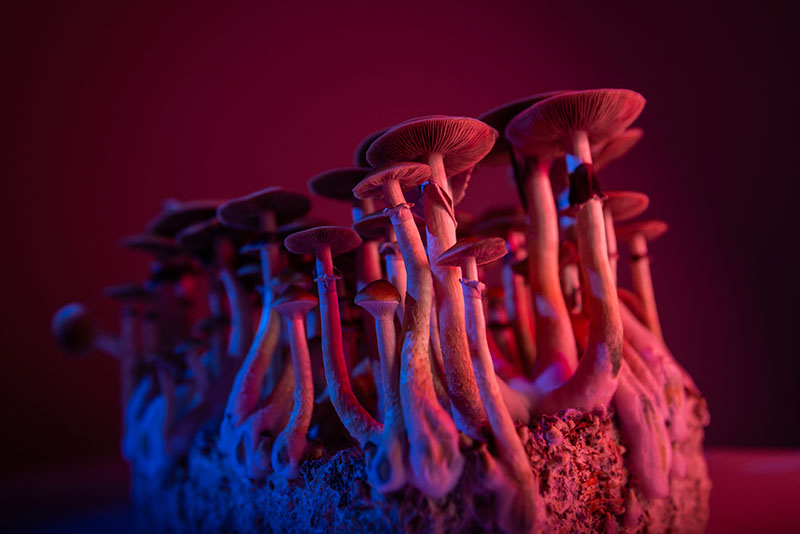
A Multi-part Deep Dive into Society’s Burgeoning Love Affair with Psychedelics and What it Means for Our Industry
Psychedelics are back in vogue. Take a minute to let that sink in and then pinch yourself to verify you’re not dreaming—or on drugs. Over the next several issues, we’ll be taking an extended look into entheogens, the benefits they offer, the movement they’ve inspired, and what it all means for smoke shops and cannabis accessory outlets.
It’s been decades in the making. It happened all at once. It’s a narrative that threads through the whole of human history.
The next wave of legalization is here. Psilocybin mushrooms are now legal in two states and somehow, any one of the three sentences in the previous paragraph could apply with a relatively equal degree of accuracy. It all depends on perspective.
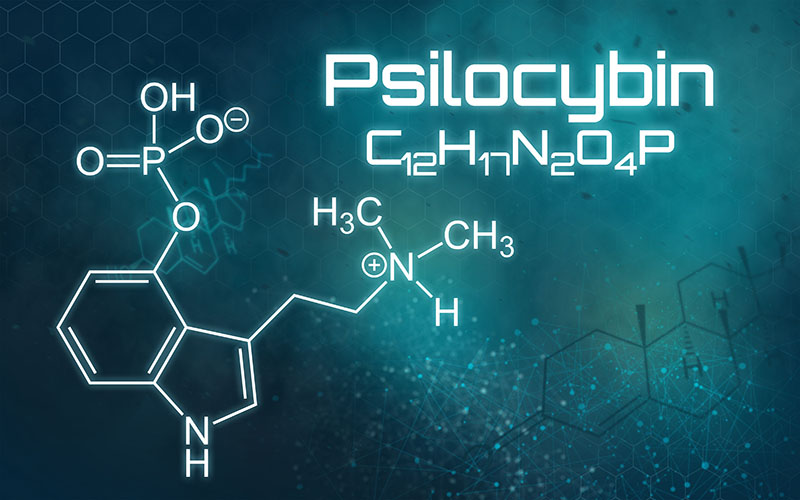
Within context of the current zeitgeist, the mere consideration of psilocybin, ayahuasca, mescaline, DMT, et al., as anything other than party favors or punchlines has been unthinkable for most Americans up until just a few years ago. To the casual observer, this groundswell of acceptance, punctuated by celebrity endorsements, underpinned by an ever-expanding catalog of scientific research, and actuated by consecutive ballot box victories, came practically out of nowhere.
But in our subterranean domain of sacred vessels and high-minded commerce, such observation isn’t so casual. We’ve staked our livelihood on the frontier of where culture is going rather than where it’s been and have thus remained attuned to the burgeoning interests of the masses.
We watched with quiet satisfaction as the concept of microdosing grew from Silicon Valley’s dirty little secret to suburbia’s edgy new remedy. We stretched our waking hours deep into the night, binging on Netflix documentaries, Joe Rogan podcasts and YouTube clips of Terrance McKenna lectures. We traced the movement all the way back to its modern roots in Timothy Leary, Albert Hoffman and Aldous Huxley and sucked up every morsel of literature, from Wolfe to Thompson, Stamets to McKenna.
And since we’ve read the literature, we also understand that this is nothing new. Western science may finally be willing to cram a mushroom into a test tube, so to speak, but entheogens have been at the center of human evolution since our ancestors first emerged from the jungles of Africa. We may never be able to fully prove Terrance McKenna’s “Stoned Ape Theory,” but the presence of psychedelic compounds in the spiritual, medicinal and metaphysical practices of ancient cultures across the world is a matter of historical fact.
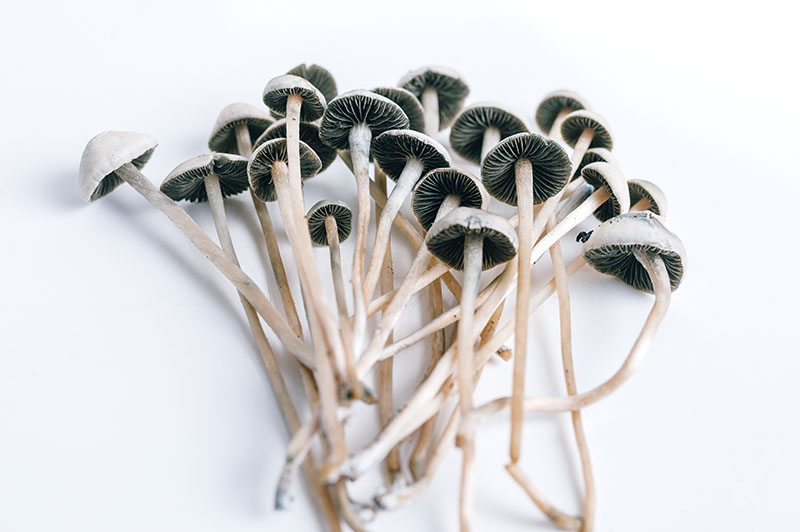
These two developments, though the most progressive to date, are in no way isolated, nor are they aberrant to the general cultural progression we are seeing across the continent. Nineteen states have introduced measures to decriminalize an ever-widening array of entheogenic compounds, while more than a dozen have put forward legislation to study potential health benefits. Multiple cities, including but not limited to Oakland, Santa Cruz, Ann Arbor, Seattle and the District of Columbia have all voted to decriminalize psychedelics to some extent. In 2018, the FDA designated psilocybin mushrooms a “Breakthrough Therapy,” an official designation that fast tracks the review of drugs that show early promise as a “substantial improvement over available therapy.”
There’s a lot to unpack.
There’s a brand-new marketplace that’s only now beginning to take shape and investors are wasting no time in carving up their respective pieces. This past August, The Motley Fool published an article listing their top recommendations for psychedelic stocks.
“Whether you call them magic mushroom stocks, ‘shroom stocks, or psilocybin stocks,” the article qualifies, “psychedelic stocks are hot right now.”
At the very top of the list is Atai Life Sciences, who are currently working on multiple treatments that utilize a variety of psychedelics, including psilocybin, ibogaine and ketamine. They are valued at $860 million. Coming in second on the list is COMPASS Pathways, who have been granted a US patent for COMP360, a psilocybin formulation for treating drug-resistant depression. Their value: $553 million.
Meanwhile, pharmaceutical companies are dumping loads of cash into psychedelic research, seizing upon studies conducted over the last decade that showed incredible promise compared to conventional treatments. For many pharma-funded researchers, the race is on to find a way to separate the therapeutic benefits of magic mushrooms from the subjective experience, i.e., the “trip.”
As cannabis industry veterans, many of us will likely find our hackles rising at the mention of the idea. We’ve been here before. We watched in consternation as the drug companies ignored our collective wisdom and tried to reduce the holistic benefits of a sacred and infinitely complex medicinal plant to a molecule that can be patented, first with Marinol, then with Epidiolex. There is more than a little validity to those instincts.
“It’s very much a biologically reductionist perspective,” says Paul Austin. Paul is the founder of The Third Wave, an entheogen-focused digital media company that has quickly established itself as leading authority in the psychedelic space. He is an author, blogger, podcast host and self-made educator—and all his work can be accessed on his website, thethirdwave.co.
“We can boil our issues and problems down to serotonin and dopamine,” he continues, “and if we can maneuver this or maneuver that, then maybe we can come up with a solution. And that’s more or less how we’ve landed on SSRIs, you know, Prozac, Zoloft, that sort of thing. And it’s been an epic failure because, the human brain—the human body—is way more complex than just these different mechanistic parts.
“In other words, the human body is not a machine. We have to look at the entire self . . . the biological, but also the emotional and the spiritual. And so, when we have these objective experiences with high doses of psychedelics, we’re essentially accessing all aspects of the self, unfolding it, bringing the subconscious, the unconscious into conscious awareness.”
He’s not the only one to hold this position. This past November, a team of researchers, two from John Hopkins University and one from Yale, published “Ethical Issues Regarding Nonsubjective Psychedelics as Standard of Care,” a research article that pointedly concurred with Paul’s assessment, albeit in more clinical language.
“After reviewing evidence regarding the subjective effects of psychedelics,” the last sentence of the abstract begins, “we raise a number of ethical concerns around the prospect of withholding such typically positive, meaningful, and therapeutic experiences from most patients.”
This concludes the first installment of our multi-part deep dive into psychedelic compounds and their emerging market potential. We’ve barely scratched the surface, so stay tuned for much, much more.
Click the link below to read the next instalment:
Coming up:
- Oregon and Colorado’s Legal Regime
- Related Market Opportunities for Smoke Shops in All 50 States
- What Can We Learn from Cannabis Legalization? Experts Answer
- Required Reading: Our Top Recommended Titles for Understanding Entheogens