



Walk into any warehouse rave, desert gathering, or rooftop after-hours in 2026, and you’ll feel it: the psychedelic underground is back, louder, weirder, and far more self-aware than its ‘60s predecessor ever imagined. But this time, it is not about dropping out, it’s about dropping in and tuning deeper.
A new generation isn’t taking psychedelics to rebel against society; they’re taking them because society feels like the illusion.
Microdosing as a Quiet Rebellion
 In a world obsessed with efficiency and “crushing it,” microdosing has become the quiet rebellion of the overstimulated. The days of people downing full tabs or chasing kaleidoscopic visions are gone. Today, those same people are slipping sub-perceptual doses into their morning routines like a wink to themselves.
It’s the underground’s form of self-liberation: a subtle rejection of burnout culture disguised as productivity. A tiny mushroom capsule becomes a covert message: I refuse to be a machine.
The Rise of the DIY Psychonaut
Forget polished retreats and glossy wellness brochures; although they are a thing and are still growing. Today’s counterculture is rolling its own psychedelic experience; literally and metaphorically.
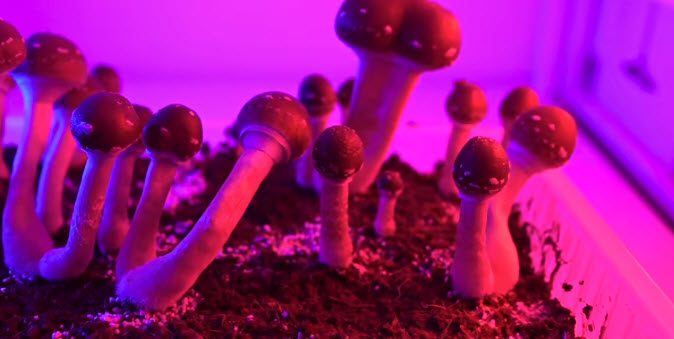
Garage growers, balcony mycologists, kitchen chemists, and herb garden psychonauts are building micro-ecosystems of autonomy. They trade spores like baseball cards, debate humidity levels in Discord channels, and post time-lapse videos of mushroom pins breaking the soil like insurgents.
Psychedelics aren’t just substances, they’re symbols of self-sufficiency. Growing your own is the new “power to the people.”
Parties With a Pulse, Not a Script
 Out in the wild—the deserts, forests, and forgotten industrial zones—psychedelic gatherings have evolved from chaotic escapades to intentional rituals wrapped in neon. There’s still hedonism, sure, but now it’s paired with collective curation.
People don’t go to these gatherings to “lose control.” They go to feel something real.
You’ll see strangers sharing fruit under sunrise skies, painters splashing UV murals like their hands are on fire, DJs weaving basslines into psychedelic wormholes, and a dozen friends lying in a circle staring at the stars as if they’re reading them.
It’s messy, luminous, and entirely outside institutional control.
Psychedelic Social Clubs: The New Underground Temples
Where psychedelics were once whispered about behind closed doors, now there are semi-secret “social clubs” in major cities — hidden basements, lofts lit by red LEDs, and reclaimed warehouses where members gather for low-dose nights, art rituals, or communal sound journeys.
They operate in the legal gray, under the radar but in plain sight. Speakeasies for the soul, if you will. The vibe isn’t corporate wellness; it’s punk-spiritual. Less “healing modalities,” more “heal yourself, but we’ll hold the flashlight.”
A Counterculture With Boundaries
 What makes this generation different from past waves is its pragmatism. The new psychedelic renegades care about set and setting, consent, purity testing, and grounding rituals. The underground has matured without losing its claws.
It rejects institutions but embraces intention.
It distrusts authority but practices accountability.
It rebels outwardly but journeys inward.
The Culture Beneath the Culture
Psychedelics have become the connective tissue of a movement that refuses to accept the world at face value. In dimly lit rooms, at renegade festivals, in shared houses where art supplies spill across tables, a new counterculture is sketching its vision of reality — bright, fluid, borderless.
Maybe that’s why psychedelics are everywhere again.
Not because people want to escape the world, but because they want to rewrite it.
Want to know more about psychedelics, how they moved from taboo to mainstream, and where the conversation is headed next? Read this article exploring the cultural shift and what it means for the future.










