Vending machines are the grab and go option for buying everything from chips and soda to healthy snacks, electronics, travel essentials, even cupcakes and pizza. It can be a very lucrative side business or full-time venture, not to mention a valuable asset to businesses that want to serve more customers, expand their product offerings, increase their market penetration, and generally draw attention to a new way of shopping.
As consumers continue to seek out convenience and speed on the go, vending machines offer an automated solution that eliminates human interaction. Additionally, with advances in technology such as touchscreens and payment like mobile wallets, many people prefer to use these automated machines rather than dealing with manual cash exchanges.
Unfortunately, smoke shops and cannabis dispensaries, because of the regulated, age-restricted products that they sell, have been left out of the nearly $10 billion vending machine market. Until now. We talked with two vending machine companies blazing trails for cannabis retailers and consumers alike.
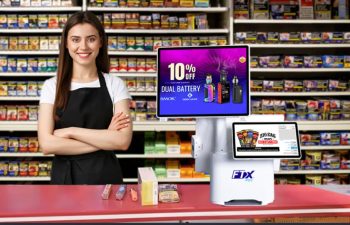
Discount Vending Store (discountvending.com) specializes in custom vending machines for all types of products. Their Our OMNI series vending machines accommodate a variety of CBD products from bath bombs to tinctures. Unlike a vending machine that “drops’’ the purchase into a bin, and can create headaches when the selection hangs up, the OMNI series is designed to safely dispense products with a state-of-the-art conveyor belt and elevator delivery system. Age verification is handled by an optional biometric face and ID scanner.
Rather than tell the owner of the machine what types and sizes of products they can sell, Discount Vending Store customizes it for their specific needs. There are also different sizes of machines available to fit into any footprint whether it be a retail location, convenience store, airport or shopping mall. The largest machine — the Omni Elite, is nearly five feet wide with a 22 inch touchscreen.
“The more we developed the concept, the more it became clear that the real value was in moving away from thinking of it as a “vending machine” and more as a kiosk or a satellite location,” says Jeff Cramer, president of Colorado-based Discount Vending Store.
“If a smoke shop is busy, and there’s a line of customers, it’s going to be quicker to buy from the kiosk.” “It makes excellent financial sense because you don’t have to hassle with finding and renting another storefront and hiring additional employees. The biggest benefit is being able to sell products 24/7,” Cramer points out.
GreenSTOP (greenstop.us) calls its vending machine the Smart Dispensary as it is specifically designed to be stocked with cannabis products, from vape pens to flower, concentrates and edibles. Customers have the option to pre order via a dedicated app, and businesses can monitor sales, inventory management, and even customer demographics through a platform that connects with their existing point of sale system.
GreenSTOP co-founder Timothy Island came up with the idea of an accessible in-and-out option after experiencing long waits at Los Angeles area dispensaries, some of which can see 500 to 1,000 customers a day.
The solution was a vending machine that takes up a minimal 31 inch footprint, but with four stations equipped with interactive touchscreens, can serve multiple customers at a time. A clerk oversees the operation by granting access after checking IDs and assisting customers when needed. Employee oversight ensures conformation to regulations.
“GreenSTOP is exciting for customers because of the convenience factor,” Island says, adding that the machine is also advantageous for businesses because it reduces overhead costs, staff training and retention challenges. . . and it accepts tips.
“Budtenders love it because it offers them the ability to upsell,” Island says. “When a customer is done at the register, the clerk can suggest they check out the GreenSTOP on their way out for products that aren’t available in the regular store.”
GreenSTOP recently launched a nationwide rollout with their vending machines at dispensaries in California, Oklahoma, and Boston, Mass.
“The industry has a ton of opportunity for early movers, and GreenSTOP is something that can be implemented right now,” Island says. “The opportunities are only going to compound as [laws and regulations around cannabis] loosen up.”