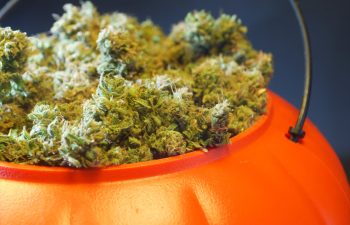
Vermont Becomes 11th State to Legalize Recreational Marijuana While Governor Voices Concerns 


In a long-awaited move, the Vermont Legislature agreed to fully legalize marijuana, becoming the 11th state to do so. The personal possession (up to one ounce) and cultivation of marijuana were legalized in Vermont in 2018, but retail sales were still illegal. The state Legislature remedied that by finally agreeing on S. 54, a bill that will finalize the legalization process in Vermont. 


Recreational sales in Vermont are not expected to begin until October 2022. 


“I am really pleased that after having introduced some of the first cannabis legalization bills over 20 years ago, we are finally achieving a tax and regulate system with some of the strictest controls on corporate ownership and added protections and resources for youth prevention,” said Vermont’s Lieutenant-Governor David Zuckerman. “This comprehensive and forward-thinking bill addresses the historical harms of the war on drugs, which disproportionately affects communities of color, including here in Vermont.” 


At the same time as S. 54 passed the Vermont Senate, its sister bill, S. 234, was approved as well. “That bill will automatically expunge the criminal records of over 10,000 people convicted of possessing two ounces or less of marijuana. The bill also decriminalizes possession of between one and two ounces of marijuana,” Zuckerman explained. 


Governor Phil Scott reserved his veto, but with reservations, saying lawmakers did move forward in a lot of areas that he had concerns about, but the new law  still isn’t exactly what he’d like to see and there are some shortcomings. 


“There is still more work to be done to ensure the health and safety of our kids and the safety of our roadways—we should heed the public health and safety lessons of tobacco and alcohol,” Scott wrote in a letter to lawmakers announcing his decision. “Further, I believe we are at a pivotal moment in our nation’s history which requires us to address systemic racism in our governmental institutions. We must take additional steps to ensure equity is a foundational principle in a new market.” 


Recent Articles

North Carolina might save us all. A new state bill may be the industry’s best option to save itself from demise when new federal cannabinoid bans take effect in November. And it could use your support.
Hemp is often considered for the things that it is not. It is not intoxicating, it is not illegal, and it is not marijuana. However, now we are seeing a focus back to what it can be. The plant is moving into the level of wine and chocolate and becoming a movement and a culture.
It’s been several months since President Donald Trump signed an executive order to reschedule cannabis from Schedule I to Schedule III within the Controlled Substances Act (CSA). On paper, the recent executive order, entitled “Increasing Medical Marijuana and Cannabidiol Research,” is a huge step in the right direction for cannabis smokers across the country.
For years, we’ve been told that this industry is the Wild West: a place where the only law amounts to whatever the guy with the gun says. But over the last 12 months, state governments have passed a spate of new regulations that promise to swap the relative lawlessness of poor enforcement of vague rules with real law and order.
With a last name like hers, it’s only fitting that Liz Grow ended up in the cannabis industry. Born and raised in Texas, Liz returned to her home state almost a decade ago to start Grow Haus Media with her husband, producer Patrick Pope. However, her personal journey with cannabis started back in 2011.
Kunda Wellness isn’t your average CBD brand. It was founded by two Doctors of Physical Therapy who have spent their careers treating pelvic floor dysfunction and helping people reconnect with a part of their body that’s often overlooked, dismissed, or wrapped in shame.
“Winter rain Now tell me why Summers fade And roses die.” – Bob Weir, “Weather Report Suite”
For years, Jennifer Mansour felt them coming. “You can’t stop one,” she said. “As soon as I’d notice that the lights felt a little too bright, I knew I was done for. I’d tell my boss, and then I’d get in the car and pop on my sunglasses because I could feel another one coming on, and I couldn’t do a thing to stop it.”