 There’s no shortage of people seeking CBD. In fact, awareness of CBD jumped from 47% in 2018 to 70% in 2019, according to a Nutrition Business Journal survey, and according to according to the Hemp Business Journal, global CBD market will grow to $2.1 billion in consumer sales by 2020.
With those kinds of numbers backing its popularity, CBD should sell itself. But as with any product category, there’s more to selling it in a retail environment than simply grouping products together and creating eye catching displays. With that in mind, here are two tips for making your CBD section stand out so that you can make more sales.
Focus on Educating the Consumer
As is often the case in new markets, most consumers will need to be educated about the legality, effectiveness and uses of CBD. It’s still a no-no to promote the health and wellness benefits of CBD with anything other than anecdotal evidence, having literature available from a trustworthy source is essential. Project CBD has brochures you can easily download and print out to have on hand.
Brand-provided literature is important because people like taking stuff home with them whether or not they buy the product. Brochures are mobile and give customers the chance to become more familiar with the product on their own terms. Don’t forget to staple one of your store business cards to any marketing material you hand out.
Lock It Up
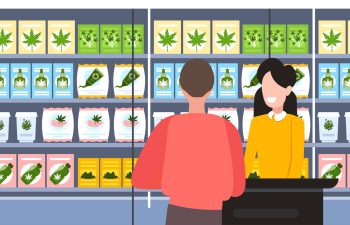
Visit any store, whether its electronics or makeup, and you’ll find the best stuff in a locked showcase. The reasoning is two-fold. A customer can’t just walk right up and pluck the product off the shelf. That’s a big plus for CBD products that are often high-value items in small containers, making them east targets ideal shoplifters. Some people might be dissuaded from a purchase that requires in-store help, but for those that are truly interested in the product, the situation gives store employees the opportunity to engage, educate and even up-sell.
There’s no shortage of people seeking CBD. In fact, awareness of CBD jumped from 47% in 2018 to 70% in 2019, according to a Nutrition Business Journal survey, and according to according to the Hemp Business Journal, global CBD market will grow to $2.1 billion in consumer sales by 2020.
With those kinds of numbers backing its popularity, CBD should sell itself. But as with any product category, there’s more to selling it in a retail environment than simply grouping products together and creating eye catching displays. With that in mind, here are two tips for making your CBD section stand out so that you can make more sales.
Focus on Educating the Consumer
As is often the case in new markets, most consumers will need to be educated about the legality, effectiveness and uses of CBD. It’s still a no-no to promote the health and wellness benefits of CBD with anything other than anecdotal evidence, having literature available from a trustworthy source is essential. Project CBD has brochures you can easily download and print out to have on hand.
Brand-provided literature is important because people like taking stuff home with them whether or not they buy the product. Brochures are mobile and give customers the chance to become more familiar with the product on their own terms. Don’t forget to staple one of your store business cards to any marketing material you hand out.
Lock It Up
Visit any store, whether its electronics or makeup, and you’ll find the best stuff in a locked showcase. The reasoning is two-fold. A customer can’t just walk right up and pluck the product off the shelf. That’s a big plus for CBD products that are often high-value items in small containers, making them east targets ideal shoplifters. Some people might be dissuaded from a purchase that requires in-store help, but for those that are truly interested in the product, the situation gives store employees the opportunity to engage, educate and even up-sell.  There’s no shortage of people seeking CBD. In fact, awareness of CBD jumped from 47% in 2018 to 70% in 2019, according to a Nutrition Business Journal survey, and according to according to the Hemp Business Journal, global CBD market will grow to $2.1 billion in consumer sales by 2020.
With those kinds of numbers backing its popularity, CBD should sell itself. But as with any product category, there’s more to selling it in a retail environment than simply grouping products together and creating eye catching displays. With that in mind, here are two tips for making your CBD section stand out so that you can make more sales.
Focus on Educating the Consumer
As is often the case in new markets, most consumers will need to be educated about the legality, effectiveness and uses of CBD. It’s still a no-no to promote the health and wellness benefits of CBD with anything other than anecdotal evidence, having literature available from a trustworthy source is essential. Project CBD has brochures you can easily download and print out to have on hand.
Brand-provided literature is important because people like taking stuff home with them whether or not they buy the product. Brochures are mobile and give customers the chance to become more familiar with the product on their own terms. Don’t forget to staple one of your store business cards to any marketing material you hand out.
Lock It Up
Visit any store, whether its electronics or makeup, and you’ll find the best stuff in a locked showcase. The reasoning is two-fold. A customer can’t just walk right up and pluck the product off the shelf. That’s a big plus for CBD products that are often high-value items in small containers, making them east targets ideal shoplifters. Some people might be dissuaded from a purchase that requires in-store help, but for those that are truly interested in the product, the situation gives store employees the opportunity to engage, educate and even up-sell.
There’s no shortage of people seeking CBD. In fact, awareness of CBD jumped from 47% in 2018 to 70% in 2019, according to a Nutrition Business Journal survey, and according to according to the Hemp Business Journal, global CBD market will grow to $2.1 billion in consumer sales by 2020.
With those kinds of numbers backing its popularity, CBD should sell itself. But as with any product category, there’s more to selling it in a retail environment than simply grouping products together and creating eye catching displays. With that in mind, here are two tips for making your CBD section stand out so that you can make more sales.
Focus on Educating the Consumer
As is often the case in new markets, most consumers will need to be educated about the legality, effectiveness and uses of CBD. It’s still a no-no to promote the health and wellness benefits of CBD with anything other than anecdotal evidence, having literature available from a trustworthy source is essential. Project CBD has brochures you can easily download and print out to have on hand.
Brand-provided literature is important because people like taking stuff home with them whether or not they buy the product. Brochures are mobile and give customers the chance to become more familiar with the product on their own terms. Don’t forget to staple one of your store business cards to any marketing material you hand out.
Lock It Up
Visit any store, whether its electronics or makeup, and you’ll find the best stuff in a locked showcase. The reasoning is two-fold. A customer can’t just walk right up and pluck the product off the shelf. That’s a big plus for CBD products that are often high-value items in small containers, making them east targets ideal shoplifters. Some people might be dissuaded from a purchase that requires in-store help, but for those that are truly interested in the product, the situation gives store employees the opportunity to engage, educate and even up-sell.