For thousands of years, humanity has devised methods to isolate, concentrate, and, in most cases, improve on nature. The Egyptians and Chinese, for example, were developing processes three thousand years ago to make everything from plant essences and perfume to booze. Granted, those processes were far more primitive than what we have today, but the underlying concept was the same. This seeming alchemy was significantly improved by the time you and I came around.

This basic chemical process is called extraction, which sometimes makes use of things like evaporation and condensation. I learned all about those processes in Mr. Moscowitz’s seventh grade science class when I used a procedure in an eighth grade textbook to distill wood alcohol from an inert wooden source (tongue depressors). Then I tried to distill nitric acid from hydrochloric acid and almost ended up in the hospital with chemical burns. The teachers didn’t know what to do with me. Luckily, I discovered Bob Dylan that next summer.
But I digress, back to the topic at hand.
Grain alcohol is often extracted from fermented alcohol products. Examples we know are wine into brandy, sour mash into whiskey and agave juice into tequila, thus improving the potency of the final product. Gasoline is likewise distilled from petroleum in a complex set of commercial processes, and clean potable water can be obtained from salinized seawater using extraction techniques. Similar processes are now being used to create high potency cannabis products.
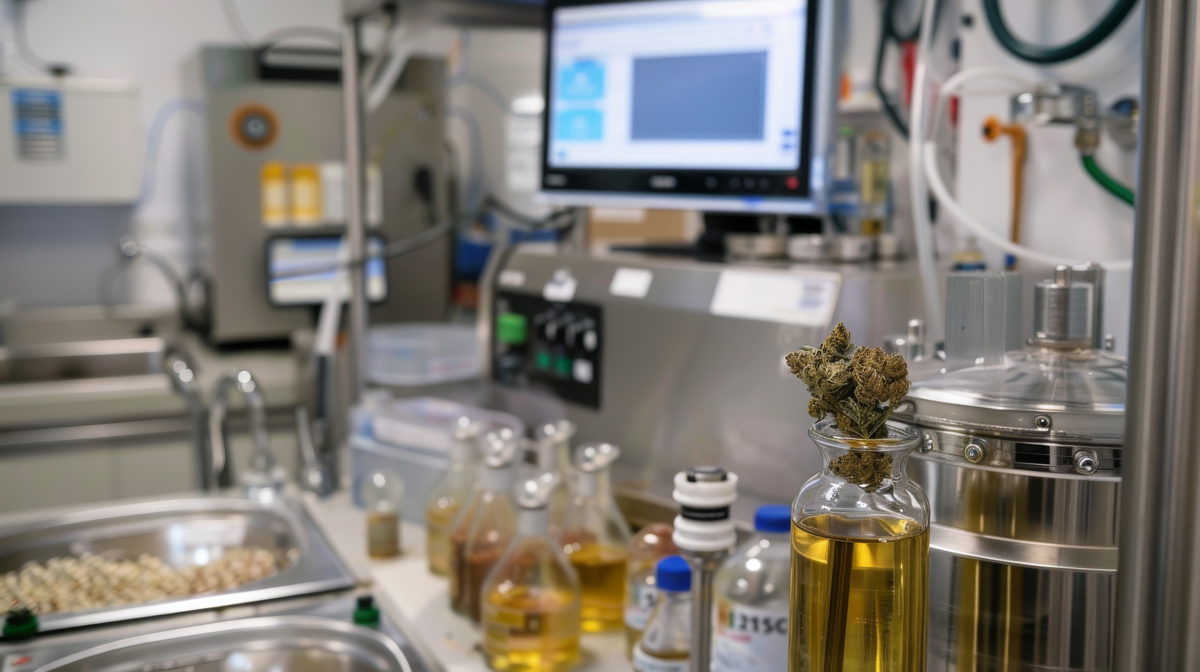
The recent push toward legalization as well as constantly improving techniques have meant a proliferation of processes and products created to fine-tune cannabis’ natural potency. These extracts are an important part of the cannabis space—arguably the most important—and there are many types from which consumers can choose. Here’s an overview of what’s available and how each is made.
Generally speaking, there are two main types of cannabis extracts: solvent and non-solvent (or solventless).

By most accounts, solvent extraction is the most common method. Even ol’ Uncle Sammy has weighed in, reporting that “Using flammable solvents, such as butane, propane, ether or alcohol, is popular because it produces high THC levels, longer-lasting effects, and it’s relatively inexpensive.” Keep in mind, though, that said Uncle also spent 70(ish) years claiming that cannabis was a deadly, addictive drug, so maybe take “his” input with a grain of salt.
Be that as it may, that snippet was accurate. As the name suggests, solvent extractions are made using chemical solvents to separate the desired cannabinoids, terpenes, and other compounds from the cannabis plant.
Meanwhile, solventless extractions are the methods used in the cannabis industry to extract cannabinoids, terpenes, and other compounds from the cannabis plant without the use of chemical solvents. These methods rely on mechanical processes, pressure, heat, or ice to separate the resinous compounds from the plant material, resulting in a more “natural” concentrate that some consumers prefer due to the absence of residual solvents.
It all sounds so complicated, but the truth is cannabis extracts of different types are easy to explain if you go to the source. Nestled in the piney forests of Northern California, Delta Separations is an industry leader in cannabis separation technology. One of the company’s goals is industry education, and to that effect, they’ve recently produced “The Ultimate Guide to Cannabis Oil Extraction,” a comprehensive look at the methods and effects of such products. The guide is easy to access and keeps both retailers and consumers in mind with clear, concise language.
In a nutshell, this is what they who dwell in the legendary Humboldt County have to say about extracts and concentrates. Solvent-based extractions produce mostly extracts such as live resin, shatter, wax, and vape oils, according to the technicians at Delta.

Types of Solvent-Based Cannabis Extraction
Supercritical CO₂ extraction is classified as a solvent-based process because it uses CO₂ in a supercritical state (where it behaves like both a liquid and a gas) to dissolve cannabinoids and terpenes. However, CO₂ is non-toxic, and it leaves no harmful chemical residue in the final product. Because of this, many consider it a “clean” or “non-solvent-like” extraction method, making it popular for producing pure and safe cannabis extracts. While it is technically a solvent process, its reputation for cleanliness often leads to the misconception that it is solventless. So, we list it under solvent-based methods with a notable exception.
Hydrocarbon extraction is a process that uses solvents like butane or propane to separate cannabinoids and terpenes from the cannabis plant. It’s favored for producing potent concentrates such as shatter, crumble, and live resin while maintaining the integrity of the plant’s compounds. While hydrocarbon extraction often results in high-potency products, its yield may vary depending on the strain and the technique used. Concerns about residual solvent contamination and the highly flammable nature of hydrocarbons cause distrust among some consumers. If not properly purged, these solvents can leave harmful residues in the final product, posing potential health risks.
Ethanol extraction has long been used in botanical extraction, boasting a strong safety record. Ethanol is particularly effective with fat-soluble molecules, like THC and other cannabinoids, making it ideal for isolating these compounds in cannabis products such as vape cartridge oil, gel caps, edibles, tinctures, and topicals. Additionally, ethanol extraction can be performed at room temperature or in cold conditions, with cold ethanol extraction often used to minimize the extraction of undesirable compounds like chlorophyll. One of the most popular examples of ethanol extraction is Rick Simpson Oil (RSO), which uses ethanol or isopropyl alcohol to create a highly concentrated, full-spectrum oil known for its potency and use in medicinal applications, especially for treating serious conditions like cancer.
Fat-based extraction is a method that has been used in kitchens for decades, particularly for making classic pot brownies and other cannabis edibles. This method involves using fats like butter, coconut oil, or olive oil to extract cannabinoids from cannabis by gently heating the plant material in the fat. Cannabinoids like THC are fat-soluble, meaning they bind well to these oils and butters. While fat-based extraction is popular for its simplicity and safety, it is less efficient at extracting cannabinoids compared to other methods like ethanol or hydrocarbon extraction. However, it remains a go-to for homemade edibles, tinctures, and topicals due to its natural ingredients and lack of chemical residue.
Solventless extraction methods are less common, but arguably just as impressive in producing high potency cannabis extracts. These methods maintain the integrity of the plant’s natural compounds and are favored by consumers looking for clean, additive-free products.
Types of Solventless-Based Cannabis Extractions
Solventless extraction methods are less common, but arguably just as impressive in producing high potency cannabis extracts. These methods maintain the integrity of the plant’s natural compounds and are favored by consumers looking for clean, additive-free products.
Rosin-Pressed Extraction. This method uses a heated hydraulic press to compress cannabis flower, hash, or kief, producing a solventless extract known as rosin. Rosin is popular for its purity and potency, retaining the full cannabinoid and terpene profile. This process can be done at various scales, from home presses to industrial equipment.
Ice Water Extraction (Bubble Hash). Cannabis is submerged in ice water and mechanically agitated to freeze and break off trichomes. The mixture is filtered through mesh screens, and the trichomes are collected and dried, resulting in bubble hash. This method produces a potent concentrate without the use of solvents, preserving a full-spectrum cannabinoid and terpene profile.
Dry Sifting. This method has been used for centuries to produce cannabis concentrates, making it one of the oldest solventless extraction techniques. Dry sifting involves mechanically separating trichomes from cannabis plant material using fine mesh screens. The result is kief, a versatile product that can be pressed into hash or used directly. While simple, this method can be labor-intensive and produces a concentrate that’s less refined than other solventless methods, but it remains popular for its ease and historical significance.
Science and industry are continuously evolving to find new ways of improving cannabis extraction, driving the development of more efficient and potent methods. One of the newer techniques being explored is microwave-assisted extraction (MAE), which has shown promise in speeding up solvent-based extractions by using microwave radiation to quickly and evenly heat the cannabis and solvent. While this method offers potential for reducing processing time and energy costs, concerns remain about the heat’s impact on delicate cannabinoids and terpenes. These essential compounds could break down under excessive heat, affecting the potency and quality of the final product. Researchers are working to refine this process, carefully controlling temperatures to protect the integrity of these valuable components.
As cannabis legalization continues to expand, so too will innovation in extraction methods. From traditional techniques to cutting-edge technologies like MAE, the future of cannabis extraction looks bright. With a focus on improving both the efficiency of production and the safety of the products, consumers can look forward to even higher-quality, consistent, and potent cannabis experiences in the coming years.