




Since the mid-‘60s, when head shops first emerged in San Francisco’s Haight-Ashbury, these outlets have offered more than pipes and papers. They served as cultural hubs, havens for freaks, dissidents, and the marginalized, where interactions mattered as much as transactions. But as prohibition recedes, the original vision of community-oriented spaces has often given way to glorified convenience stores—efficient, profit-driven retail machines. While this model works for some, the rise of online shopping makes it crucial for brick-and-mortars to offer more than transactions once again. Initially, we planned to detail the benefits of creating welcoming spaces that encourage lingering, along with tips to make it happen. Instead, after speaking with Tony Williamson of Aficionados in August, Georgia, we decided to let him paint the picture for you.
For nearly two decades, Aficionados owner Tony Williamson has offered Augusta, Georgia, more than a retail experience. His smoke shop, located in the heart of downtown, has evolved into a hub for those who don’t fit in elsewhere. Whether it’s creatives, outcasts, or anyone seeking a space to breathe, Aficionados has become a go-to destination for connection and community. Tony’s guiding philosophy is simple: “I’m in the people business, not the profit business.”
Aficionados attracts a wide range of visitors with its eclectic offerings, including craft beer, a walk-in humidor, and an extensive selection of smoking accessories. But its true draw is the space itself, which Tony has intentionally designed as a welcoming environment for all. “Sometimes people need a place to go just to get away,” he says. “Sometimes people need to be able to have an opportunity to explore things in their life that makes them happy, like art, music, socializing within an industry.”

Tony believes the shop’s success stems from its role as a community hub. “You’d be surprised at how many people don’t have an opportunity to meet like-minded people except for a place like ours,” he says. The shop has hosted everything from study sessions to film editing and music production. “Even though we’ve morphed into different things over the years, we’ve always had a lounge or a space for people to relax, unwind, catch up on work, study for school, listen to audiobooks, edit music . . . whatever it is they’re into.”

Embracing the Misfits
Tony acknowledges that Aficionados appeals to the “weirdos” of Augusta, a group he’s more than happy to welcome. “I’m fine with being the person who helps maintain a culture within a community,” he says. For Tony, creating an inclusive space doesn’t require him to personally embody the lifestyle it supports. “A lot of people look at me and they’re like, ‘Well, you don’t smoke.’ I don’t have to smoke in order to support the industry or to support the culture.’”
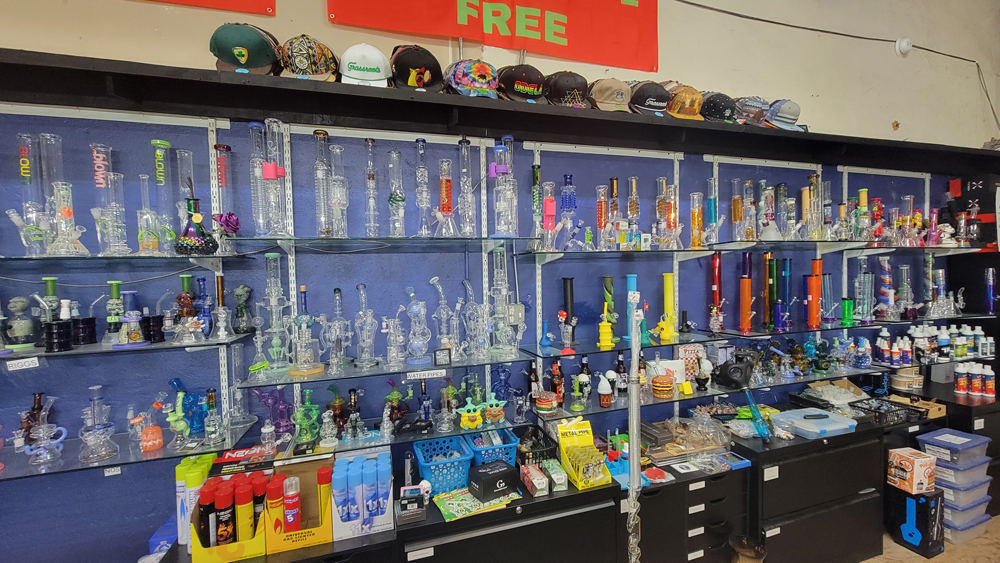
The shop’s reputation as a gathering place is no accident. From the beginning, Tony has invested in fostering a community. “I personally feel a lot of smoke shops fail simply because they’re opening with the idea that they’re going to make a ton of money, but they don’t understand the culture or support it,” he says. By staying focused on people rather than profit, Tony has created a space where patrons feel free to be themselves.
Navigating Challenges and Staying Inclusive
Running a gathering space for diverse groups comes with challenges which Tony faces head-on. “There’s always a possibility that somebody finds a safe haven here…and another customer that walks through might represent a different group of people, and then they have some conflict there,” he says. However, he credits his patrons for understanding the value of Aficionados. “I think they understand that, hey, if a big problem is caused here, we may not have this place to come to.”
Tony is also unbothered by visitors who linger without making purchases. “Just because somebody doesn’t spend money today doesn’t mean they won’t do it tomorrow,” he says. Many of his most devoted patrons started as regulars who spent time at the shop without buying much. But what if all they do is hang out? “Those people become employees,” Tony says with a laugh.
Even setbacks like theft haven’t dampened Tony’s optimism. Drawing on advice from his great-grandfather, he says, “There’s 5% of the people out there [who] are jerks. And if you do fair and honest business with the 95% of the good people that are out there, they’ll make up for the 5% of the jerks.”
Experimenting to Stay Fresh
Tony attributes much of Aficionados’ longevity to his willingness to innovate, which he explained to us when we featured his shop back in 2020. “I use my marketing budget for what I call an ‘enterprise budget,’” he told us then. “Instead of investing in publications or social media, I try different concepts within the footprint of the store, which creates the newness. People like new, they like different. Some of it sticks, and some of it doesn’t, but it generates activity, and activity breeds more activity.”

Throughout the decades, Aficionados has reinvented itself many times, from an internet café to a hookah lounge, a pool hall, and even a vegan restaurant. While not all concepts have endured, Tony sees value in every experiment. “You’ve got to plan that far ahead,” he says. “I’m watching people walk through the doors with 18-, 19-, and 20-year-old kids that their parents are introducing me to.”
Looking to the Future
For many, Aficionados is a cornerstone of Augusta’s downtown scene, and that’s with intention. By prioritizing relationships over revenue, he’s built a shop that thrives as both a retail space and a community anchor. “Being in the people business guarantees a place in the industry no matter what your focus is,” he says.
Aficionados continues to draw a diverse crowd of outcasts, creatives, and locals looking for a space to belong. Whether it’s visitors stopping by to edit films, discover local art, or simply connect with others, the shop offers them what they need most: a sense of acceptance. “Sometimes people just need a place to go,” he says. At Aficionados, they’ve found exactly that.











