CBN: A Natural Sleep Aid?
Cannabinol, also known as CBN, is being widely used as an all-natural sleep aid. CBN is gaining a lot of attention as an all-natural sleep aid compared to the majority of sleep supplements on the market, which are synthetic.It is the result of Delta-9 THC aging into its final molecular form. As the molecule ages and degrades, so do the psychoactive effects; meaning that, unlike its precursor THC, CBN will not produce a euphoric high. Instead, all of the energy that the THC molecule expends to create its psychoactive effect is converted into a sedative and tranquil user experience. THC and CBN may look very similar on a molecular level, but their effects differ tremendously.
How Does THC Degrade to CBN?
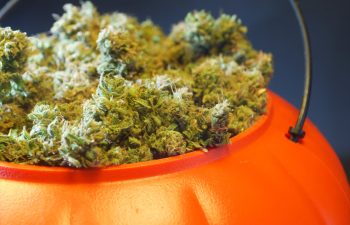
CBN is created over time when THC ages. There are four catalysts that support the degradation of THC into CBN. These four factors are exposure to light, heat, air, and time. This means that a portion of the THC present in cannabis flower and concentrates will eventually degrade into CBN, especially if stored improperly. Examples of improper cannabis storage that can facilitate this chemical reaction include leaving cannabis in a jar with excess free space, exposing it to oxidation, storing it in a clear or non-light-resistant container, and keeping it somewhere warm or with a lot of temperature fluctuations, like in a vehicle. Avoiding these forms of careless storage will preserve the THC in cannabis biomass or extracts for as long as possible. Even with proper storage, some level of conversion is inevitable because there is one factor completely out of our control—time.
Why is CBN Sedative?
Users commonly report CBN as being incredibly sedative, inducing a calm and tranquil mindset. This makes CBN the perfect choice for people struggling to fall asleep or stay asleep throughout the night. CBN is believed to be non-psychoactive, with only a fraction of the psychoactive effects of its precursor molecule THC. Being non-psychoactive is essential for CBN’s role in supporting sleep because it is crucial to avoid anything that is mentally stimulating when trying to quiet and calm your mind. While more research needs to be done, there is extensive anecdotal evidence to support the benefits of CBN for sleep.
CBN interacts with the endocannabinoid system, which plays a crucial role in regulating sleep, mood, and relaxation. By binding to cannabinoid receptors, CBN may promote calming effects. Research suggests that CBN may enhance sedation. Animal studies have indicated that CBN can prolong sleep time and reduce wakefulness, indicating its potential as a natural sedative.
The Benefits of CBD and CBN vs. THC and CBN
CBN may work synergistically with other cannabinoids, such as THC and CBD, to enhance its sedative effects. This phenomenon is known as the “entourage effect,” where the combined effects of cannabinoids can be more significant than their individual effects. THC in low levels can help boost the effectiveness of CBN and promote sleep, but it is important for most people to avoid psychoactive and potent levels of THC for sleep because it is believed to suppress stage 4-5 NREM sleep, which is where restful sleep happens and where dreaming occurs. One theory for why THC can inhibit sleep is that it engages with dopamine receptors, causing a flood of endorphins that can stimulate the mind. While THC may help many people sleep, many THC users report waking up from a long sleep without feeling well-rested, experiencing groggy or tiring effects that can linger into the next day.
I believe that CBD and CBN are the perfect blend for supporting sleep. CBD is calming and relaxing, which helps quiet the mind and supports a relaxed headspace for sleeping. CBD also boosts the effectiveness of CBN through the entourage effect, as mentioned earlier. By combining CBD and CBN, the consumer does not need any THC and requires lower levels of CBN, which is the sedative molecule. It is important to take smaller doses of CBN, usually in the realm of 5-10 mg per serving depending on the consumer, so that the sedative effects wear off by the morning. This is why the CBN gummies and CBN tinctures that we make at Yin Yang Infusions contain a 4:1 ratio of CBD to CBN. The goal is for the CBD to help quiet and calm the mind and for the CBN to carry the consumer gently into slumber without requiring as large a dose.
CBN Tincture vs. CBN Gummies
There are a variety of reasons why CBN tinctures are generally superior to CBN gummies for supporting sleep, but both play important roles. CBN tinctures are more effective and require lower doses than gummies or edible products because a tincture is nearly 2X more bioavailable than a gummy or edible. The best form of consumption for a CBN tincture is putting the desired dose under your tongue and leaving it for 1-2 minutes to absorb into the bloodstream. This form of consumption is known as “sublingual.” The MCT oil carries the cannabinoids through the bloodstream under the tongue, passing through the blood-brain barrier for almost immediate effects in 5-20 minutes. By comparison, CBN gummies are chewed, swallowed, and need to be digested, which is why they take about 45 minutes to 1 hour to kick in.
Because CBN gummies have a longer onset, the effects also last longer than a tincture, making the gummy more extended release by comparison. CBN Tinctures have a faster onset; it is fair to theorize that CBN tinctures are more helpful for falling asleep, while CBN gummies might be more effective for staying asleep. Depending on your individual needs and sleep goals, one may be preferable over the other, or both may play useful roles.