If you wanna know about curb appeal, just ask Jay Steinberg; he knows all about the subject. With more than thirty years as an innovator in the head shop and gift shop industry, Steinberg’s one of my go-to guys when it comes to answering questions about what’s what in the land of glassware, tapestries, decals, custom hippie clothing, and Grateful Dead paraphernalia.
Steinberg began his professional journey nearly 45 years ago, and to hear him tell it, the whole process of succeeding in the smoke shop and gift shop industry sounds mythic. At the same time, for the veterans among us, his story is all too familiar.
“Before I moved to Albuquerque [in 1994], I lived in Nashville. I discovered the Grateful Dead and other touring bands and became fascinated with the open markets selling various types of merchandise in the parking lots. I thought that would be a great way to get into sales. I started going to rock shows and vending in those parking lots. Then, I opened up a business with my brother; it was a head shop called Stone Mountain. Eventually, we had locations in multiple cities in Kentucky, Ohio, and Tennessee. When I decided to go out on my own after a few years, I moved to Albuquerque. I have family here. In 1994, I opened Birdland, a hippie store, in the middle of one of Albuquerque’s busiest retail areas, Nob Hill.”
Now, in case you readers are wondering, this is where the concept of curb appeal comes in, a concept that, when activated, grew Jay’s business and brought success to his entrepreneurial endeavors.
“Many people in town know Birdland because of the VW Microbus in the main window and the big cartoon bird flashing a peace sign at the shop entrance; he’s the birdman of Birdland! Let me tell you, curb appeal is everything. People all over, in town and on the internet, know about the VW bus. I think that was one of the big things that helped me generate business while we were in Nob Hill. Now that we’re located near the University, in the heart of the student neighborhood, I’ve made sure to paint my building vibrantly . . . it becomes something people are curious about and just that beautiful paint job gets customers into my shop.”
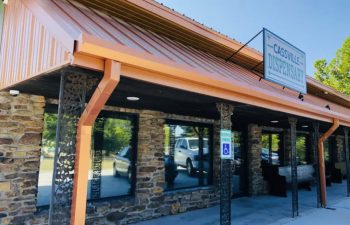
Steinberg has some advice about curb appeal for those of us thinking about starting up or improving just about any retail location. “Make your place pop. Influence people on the street or in their cars so that they want to visit—they want to walk in.”


The academic literature suggests that Steinberg is on the right track when it comes to curb appeal. Lauren Skinner Beitelspacher, a researcher at the School of Business at Portland State University, writes that curb appeal can raise local awareness of your business, boost sales, and help raise the market value of your business property, concluding that “In the context of retail real estate, curb appeal represents the general attractiveness of a store as viewed from the sidewalk or parking lot that is expected to affect consumer patronage decisions and consequently property values … We find that the atmospheric and architectural dimensions have a significantly positive impact on sales. We also show that curb appeal dimensions are highly correlated with observable building features traditionally included in pricing models.”
So, what can you do to engage this potentially profitable retail model? Here are some simple steps designed to move you forward.


Billings, MT • Grand Junction, CO •
Wait Park, MN
Photo Credit: Discontent Staff
One of my stores in Billings was getting hit too often . . . so we had enough. We plated the fronts for security and art!
- Rusty Steele, Operator
Medford, OR
Photo Credit: Bobby Painter
My whole store is covered in local graffiti art. Inside and out.
- Bobby Painter, “Greeter”


Lewisburg, PA
Photo Credit: Holly Golder
I’ve been begging my landlord for years to let me tie dye the store front and he finally agreed. This is a big deal considering we’re in the ‘historical district.’
- Bobby Painter, “Greeter”
Ultimately, Steinberg’s experience leads him to believe that curb appeal is one of the most important aspects of succeeding in the gift and smoke shop space. “For me,” he says, “curb appeal is a matter of comfort appeal. I want to appeal to people who say, ‘I want to walk into a place that is appealing to the eye, where people are friendly, and you can explore the shop repeatedly, comfortably, in a relaxing, curious way. I think that’s very important. Also, you should be true to your demographic and make sure to appeal to those folks who have an affinity for or curiosity about what you’re selling. With me, it’s a hippie store; people who walk by on the way to class see the vibrant colors and see the word ‘hippie.’ Even if they don’t know what a hippie store is, they walk in, just because of the colorful environment, outside and inside.”