




West Coast Gifts: Back to the Beginning
When the first glass pipe from West Coast Gifts‘ GEAR Premium officially licensed by the Grateful Dead hits shelves this month, it will mark a complete circle in Howard Franklin’s career.
The founder of North America’s largest glass pipe designer, manufacturer, and distributor learned how to create color-changing bongs while following the Dead. Thirty years later, he’s a part of their business.
It’s the kind of career arc that doesn’t seem possible. But for a teenage jam band fan, it was the only option available.
“It was either that or work in a mall with a suit and tie for the rest of my life,” Howard recalls. “And that was not my jam. I needed to go join the circus and be on tour.”
Humble Origins
Howard’s business started with two crucial moments. The first was fated. He never had dreams of blowing intricate glass pieces. He just happened to meet a man who knew how to make pipes that would change color as they were used.
The second part was ingenious.
On his own, Howard could create only a few pipes at a time. So, he taught the technique to his road mates. They started a little company, blowing glass in the slow time between shows.
At first, they sold their wares to other Deadheads at the shows. But as their inventory piled up, Howard had a flash of inspiration. He decided he could sell excess inventory to local head shops. There were no grandiose dreams of a counter-cultural business empire. He just wanted to finance the next leg of the tour.
But being early to market isn’t a guarantee of immediate success.
Like a Chameleon
Color-changing glass derives its magic from a thin layer of transparent metal that is fumed into the glass, the reflections of which interact with light and the accumulating residue from use, creating the illusion of shifting hues. The work is common now, but in the mid-90s, it was NextGen technology—and many retailers didn’t believe their customers would pay early-adopter prices for it.
“At that time, you could get an acrylic pipe for 25 or 30 bucks,” Howard explains, “so they didn’t understand why someone would spend more on a glass pipe that’s going to break.”
Unable to make an outright sale, he convinced a few shop owners to sell his pieces on consignment, hoping he could collect payment when the tour rolled back through town.
He’d get orders for more before the circus had even pulled up stakes.
The process kept repeating. He’d leave a few samples with incredulous shop owners, who would always call back to beg for more pipes. Eventually, Howard figured out what was happening. His team didn’t just make and sell pipes; they pioneered a targeted guerilla marketing campaign.
“I was traveling across country and I’m at all these Dead shows, so we’re kind of educating everybody on what the glass is and what it does just by being in the parking lots and selling there. So, the Deadheads knew what was up, and they educated the head shop owners,” he said. “Or, if Deadheads actually were the head shop owners, they would educate the customers on what was cool and what was new. It’s all mainstream now, but it really started at these little head shops.”
It was either that or work in a mall with a suit and tie for the rest of my life. And that was not my jam. I needed to go join the circus and be on tour.
When Legends Die
For a while, life was good. Howard scratched out a living while following the Dead. A simple existence, perhaps, but it’s all he’d asked for. There was the occasional trip back to Indiana to take a few shifts at his family’s jewelry store, but most of his time was spent surfing from town to town on a wake of good music and better vibes.
Then Jerry died, and everything changed.
The band took a break from touring together, which sent Deadheads scattering across the country. Howard ended up in Humboldt County, California, where he built up his business into a respectable endeavor. Chameleon Glass company trafficked in American-made, color-changing glass pipes. Howard may not have realized the enormity of his contribution at the time, but with Chameleon, a company born simply out of his disdain for the status quo, he had built a countercultural institution that has now endured for three decades and counting.
But a relationship pulled him away. In 2001, Howard sold the company and set out for the wacky, but legendary Wreck Beach in British Columbia, Canada, a generational haven for the dissidents, bohemians, and flower children.
“I liked Wreck Beach a lot. It used to remind me a lot of how a Dead parking lot used to be,” he said of the area. “You’d see people selling well before there were dispensaries. You could get weed brownies and weed cookies or chocolate-covered mushrooms. For a long time, it was ranked as one of the top 5 clothing-optional beaches in the world.”
Unfortunately, the Canadian financial system wasn’t as welcoming to Howard as the people he met at Wreck.
What’s in a name?
Shakespearean teenagers may not believe that names carry significance, but banks do. As soon as the button-down financiers read the name “Red Eye Glass,” on Howard’s loan application, alarms blared. Even the most buttoned-down Canadian bankers got his drug reference.
Without a bank loan Howard couldn’t afford warehouse space, a fate worse than debt. But if borrowing money wasn’t an option, neither was giving up. So, he hatched a plan.
“I built a website. It was just candles and incense. And we changed our name to West Coast Gifts. Then the next bank we went to was like, ‘Yeah, we’ll give you the loan!’” he said. “It was just a way for us to fly under the radar a little bit.”
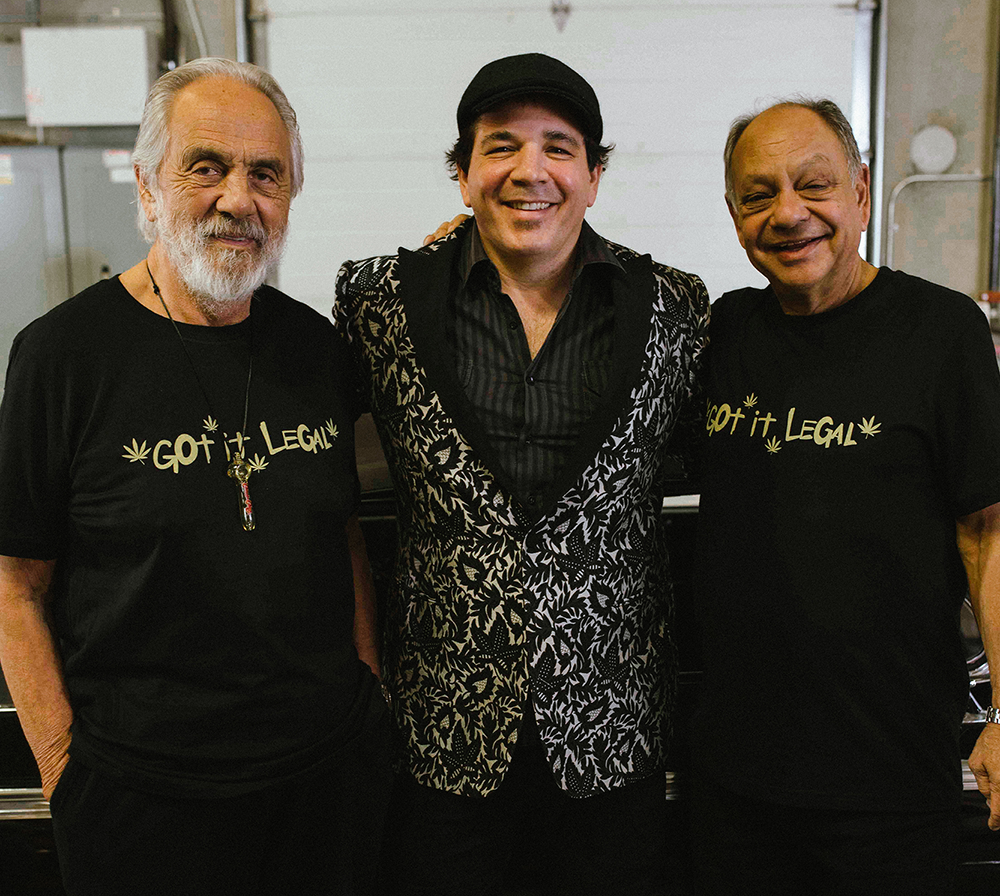
Sure, his plan might be the corporate equivalent of telling the cops your name is “John Smith,” but it worked. He secured the loan, bought a warehouse, and started his second distribution company which designs, develops and distributes multiple brands, including Gear Premium Glass, which is doing collaborations with Creature Skateboards and The Grateful Dead. They also make Red Eye Glass and Red Eye Tek, the only officially licensed Cheech & Chong Glass.
He always had a plan to change the name to something more evocative, but as the years passed, the generic name stuck.
Years later, Howard thought he should change it. But his marketing team begged him to keep the old name. It’s not a name that sounds exciting—but it’s got a great story. And if there’s one thing that following the Dead should always lead to, it’s that.













