Smokey Shays 

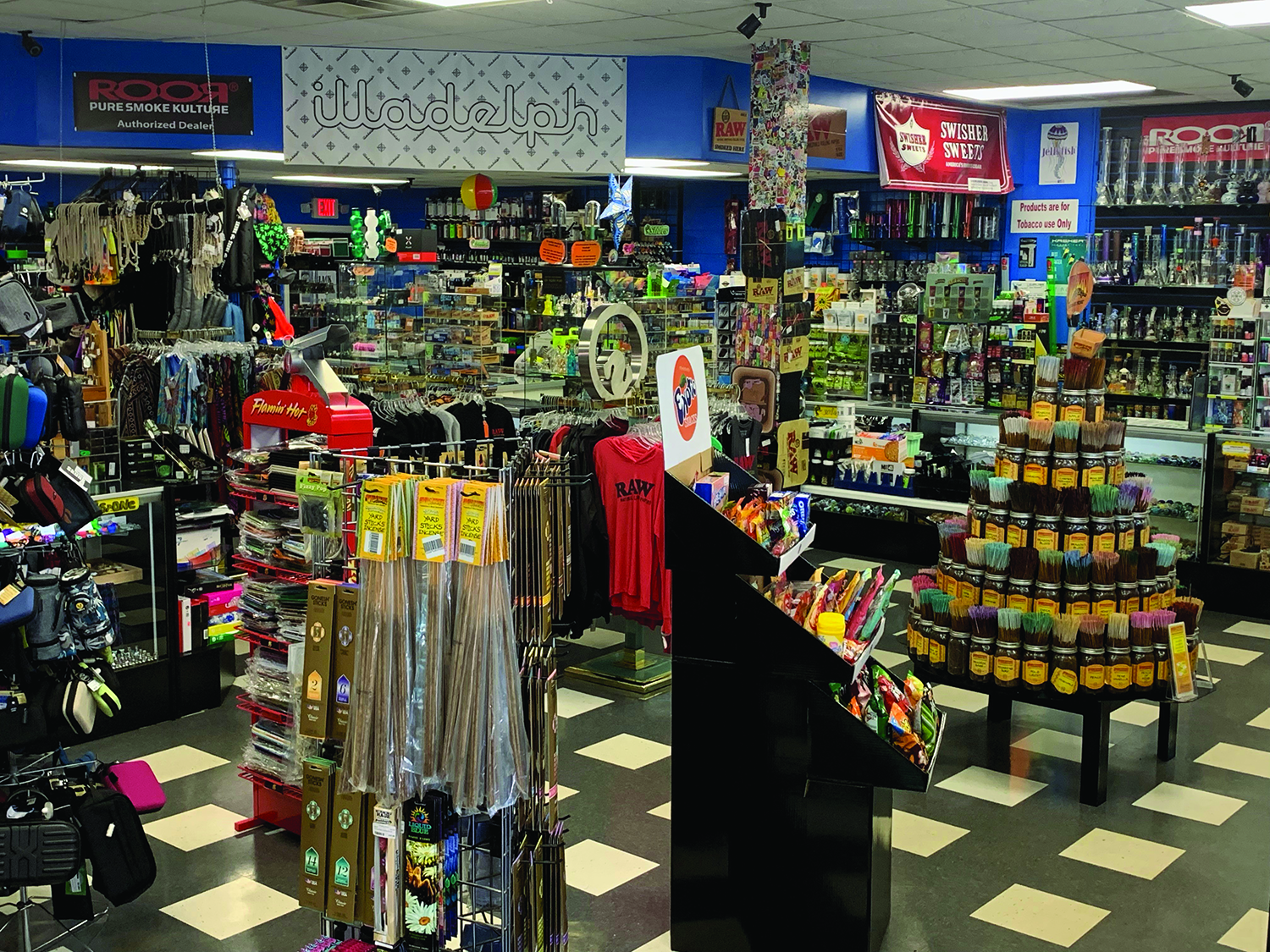
Smoke Shays Storefront

 Smokey Shays 

by Norm Bour 

Some of the more notable people in this smoke industry are known because of the size of their business. Or their visibility. Or their social media presence. 

But Shana Wilkinson, along with being known for some of those things, is also recognized because of her heart. 

I have spoken with her at Smoke Shop Events several times, but it wasn’t until I approached her to be profiled that I really got to see that.  

Wilkinson opened her Smokey Shays shops 11 years ago along with her then-boyfriend, now business partner, Matt. They knew some glassblowers and took their pipes to concerts to sell. There were no headshops in Winston-Salem (North Carolina) at that time, and they were advised to open one by their friends. They now have three, with 29 employees, and gross $4-5 M annually. 

I asked about the origin of the shop name. When she was young and potty training her Mom would say “Po-shay,” which meant “go potty.” Matt loved that story so they named the shops with that levity.  

Let’s face it…it takes a bold person to share that story! 

Her venture into headshops was not intentional, but was a byproduct of being fired from her teaching position as an art teacher for eight years. For failing a drug test. 

“I was devastated,” she confessed, since she was accused of selling weed to co-workers. She was not tenured so lost her license, benefits, and insurance, but sometimes these bad events have a happy ending. She laughed and said, “I still use some of those teaching techniques with my employees, since they can be as difficult as children!” 

Their first store’s success surprised her since they started with so little, but over the years they expanded their product mix, nurtured their customers, and the rest is now history. They were a success within the first 8-9 months and by year three they opened #2, and five years later they concluded with #3. 

Shana’s story is a textbook example of entrepreneurship 101: start small, grow when you can (or have to), then keep doing that until you need to make radical adjustments. 

She doesn’t want to make those radical adjustments, so she is happy with three shops, and does not plan to expand. “God, no!” was her response. “With 29 employees I’m right where I want to be. Instead we buy rental houses…” which took us into a whole new conversation. 

She does not specifically buy rental houses to become a landlord, but also to provide housing for her employees…at below market rents. While most similar 2/2 homes rent for $1000, she provides them for $800 to her employees. Currently they own six of these properties and one of her shop locations. 

“Rents have gone crazy over the past few years. How can my employees afford them, even at market salaries? This way I provide a stable place for them to live and it also encourages them to support our shops.” 

This is the best example of benevolence, charity and acquiring assets I have seen in a long time, a true synergistic relationship. 

As we wrapped I asked if there was any advice she could offer, and she said, “Watch your money, don’t overstock, and only buy items you know are going to sell. Don’t get into novelties or clothing until you have the extra cash flow to risk it.”

Read more about other top smoke shops in the US HERE.

Recent Articles

I went home and told my girlfriend, who, after Googling the name of the business I bought it from, told me that, yes, it was technically weed. But it was CBD. She started laughing, telling me I had been ripped off.
State-sanctioned medical and recreational cannabis programs benefit the average user in many ways. Still, they remain a double-edged sword for dispensary owners, greenhouse growers, and others who earn their living from the cannabis industry. There are plenty of profits to be had, sure, but how exactly are you expected to secure your cash or process electronic transactions when banks refuse to work with you?
Aubrey Amatelli wants to help dispensaries and cannabis retailers navigate one of the toughest parts of the industry: money. When the company she worked for right out of grad school was acquired by JPMorgan, Aubrey entered the complex world of payments and has stayed there for her entire career.
There’s a paradox to business conferences. The best ones manage to swing from buttoned down to wildly unscripted—sometimes seconds apart. For attendees, it’s the combination of personal connections and professional development that makes regular trips to conferences worthwhile. And in an industry like this one, pulling that off is harder than it looks.
Your shop is not only a smoke shop; It's also a hangout spot and a community hub. It is a place where the regulars know your staff by name, and your staff knows what the regulars need. That's the secret sauce that the big-box chains can't replicate, and it starts with who you put behind the counter. A well-staffed smoke shop is an operational strategy, but it's also a community. In lean economic times, that community is what keeps the lights on. When people feel like your shop is their spot, they don't stop coming in when money's tight. They prioritize it. It all starts with Hiring.
Dr. Macias first fell in love with science while studying at Howard University, where she completed her undergraduate studies and later earned her PhD in cellular and molecular biology. While at Howard, she became especially interested in cancer research due to personal ties. Growing up in a Creole family and predominantly Black community in Louisiana, Dr. Macias watched many women around her battle breast cancer, so at Howard, she decided to focus her research on the BRCA1 gene.
It’s almost amazing that the same institutions that brought us the 2008 financial crisis have a problem with selling glass pipes. Almost. The truth is that an industry's past sins are only held against it when the money isn’t right. Big banks were willing to risk cratering the U.S. housing market because the profits were too good to ignore. But the cannabis industry rolls a different kind of paper, so instead of a slap on the wrist, it gets a surcharge.
Smokeshop and counterculture enthusiasts enjoy discovery as part of the experience. Customers enjoy browsing. When they walk into a shop, they don't simply grab a product and leave. They look for something new. This is the main reason flyers and posters still work. Smokeshops and dispensaries are highly visual environments. You want to see bold artwork, psychedelic graphics, and street-style posters that naturally capture attention.