High Anxiety: Is the THC Too Much?
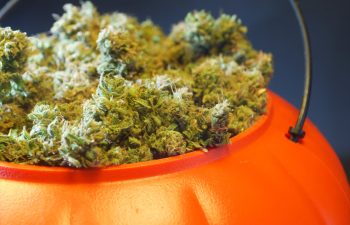
THC or tetrahydrocannabinol is the primary compound in the cannabis plant that is responsible for the psychoactive effects. For 99.999999% of our reader base, that’s not a revelation by any measure. Nonetheless, given the subject matter, it’s still a solid place to start. Over the last half-century, cannabis has been selectively bred to produce higher and higher levels of THC. Fifty years ago, the average THC percentage in cannabis flower was between 1-5%. Street terms like “brick weed” were used to describe the lower tier 1-2% THC flower that consisted of many stems, seeds, and was often brown in color. Conversely, the term “Sinsemilla” was used to describe cannabis in the 3-5% territory which was carefully grown to contain no seeds. Sinsemilla was bred by farmers in Oaxaca Mexico; the word itself translates in Spanish to—you guessed it— “no seeds.” Ever since the innovation of this seedless cannabis, growers have continued to carefully breed the plant to reach the astonishing levels we see today, as high as 20-35% Total THC.
As cannabis has been selectively modified to contain high THC, it started to become apparent that focusing only on THC production may produce a potent high but is not always ideal for a balanced and relaxing experience. We are now entering an era where people who were once daily cannabis users are now turning a blind eye to cannabis—and many of them say it’s because the plant has become too strong or causes anxiety. Many cannabis users are self-medicating to relieve anxiety and reduce stress, so the experience of having cannabis induce higher levels of anxiety is counterintuitive, to say the least. In many cases, this is occurring because THC is physically and mentally stimulating on its own. Without the presence of other cannabinoids such as CBD and CBG, paired with outlandish levels of THC, much of today’s cannabis flower is not engineered for infrequent or sensitive cannabis users.
High THC Vape Pens and Anxiety
When cannabis vape pens were first invented in 2007, it was a struggle for many cannabis producers to develop a vape oil formula that worked well in a cartridge. The problem is that most forms of cannabis extraction produce primarily THCA, the unactivated form of THC. THCA crystallizes on its own, meaning that it resolidifies to the point where it will not work in a vape pen. THCA has to be activated to THC to prevent crystallization and flow efficiently in a vape pen. It wasn’t until 2015 when cannabis distillation became mainstream and popular for two reasons: distillation creates a pure and high THC extract that consumers desire, and it activates the THC making it the ideal extract for a vape pen.
When THC distillate first came on the market, it was being sold for anywhere from $25,000 -$50,000 per kilo and it was certainly the new and hot thing in the cannabis industry. Finally, an extraction method that cleans all impurities, isolates the THC to 85%+, and is an absolute dream to use in a vape pen. The only issue is that the distillation process essentially contains only THC, removes the natural terpenes, and other natural full plant qualities. Distillation turns a Co2 or BHO cannabis extract from something that was representative of the natural profile of the cannabis plant, to an oil that contains primarily just THC. As mentioned earlier, THC on its own is mentally and physically stimulating, which is ideal for certain occasions but does not necessarily provide a relaxing feeling in all users. Cannabis manufacturers began formulating botanical essential oils to mimic the flavors and effects of cannabis, to be added to distillate vape pens for flavoring and added effects. While this certainly helps to some extent, it is no replacement for the naturally occurring cannabis terpenes and other full-spectrum qualities that a person gets from smoking traditional cannabis flower.
How to Consume Cannabis Without Feeling Anxious
If you are sensitive to THC or feel anxious after consuming distillate vape pens or a THC-heavy strain of cannabis flower, we have some potential solutions for you.
- Try low dose cannabis Nowadays you can buy edibles in person or even online in the 2.5 – 5mg of THC range which really allows a person to control their dose and have a calculated and consistent experience each time. You can also introduce CBD to your edibles to balance the effects of the THC edibles.
- If you prefer cannabis vapes, try a full spectrum live resin or live rosin vape. Something in the hybrid or indica variety is less likely to induce anxiety than a sativa strain, especially for evening time cannabis users. Make sure to ask your dispensary for live resin or live rosin vapes, and specifically not distillate vape These vapes contain full spectrum and natural cannabis extracts that are more representative of the natural cannabis plant.
- Try delta 8 THC vapes instead of traditional Delta-9 THC. Delta 8 THC vapes are less psychoactive than traditional vape pens, and commonly reported to have more calming, relaxing, and euphoric effects than traditional Delta-9 These vapes can be ordered online or purchased in certain smoke shops depending on your location.
- If you prefer smoking cannabis flower, try a strain that is high in CBD; at least a 1:10 ratio of CBD to THC. CBD balances out and counteracts the psychoactive effects of THC, providing a more balanced and less intense experience. The higher the expression of CBD vs. THC, the more balanced and relaxing the effects will be for most people. If you cannot source high CBD cannabis flower, you can mix your locally sourced THC flower with CBD hemp flower that can be easily ordered online or found in certain smoke shops.
The main takeaway is that no matter which form of cannabis you choose, you can make it a more balanced experience by introducing other cannabinoids such as CBD and CBG, or sourcing cannabis vapes that are representative of the natural cannabis plant. THC on its own is not all it’s cracked up to be and is being increasingly linked to an uptick in anxiety, paranoia, and stress in regular cannabis users.