



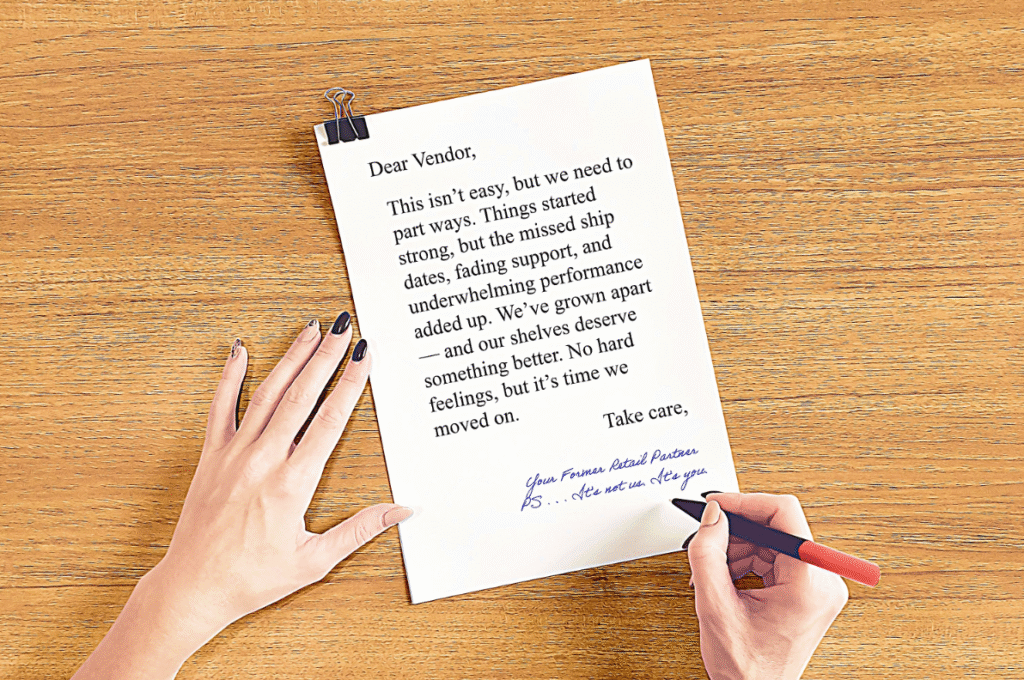
Don’t get too sentimental with your shelf space! We know breaking up is hard to do, but sometimes the thrill is gone, and it’s time to move on. It doesn’t matter how long a brand’s been riding with you or how tight you are with the sales rep. If the product doesn’t perform, or worse, if the brand loses touch with the culture, it’s dead weight. And dead weight doesn’t just slow you down; it can drown you.
As ‘Blind Loui’ – industry veteran, shop OG, and occasional anonymous truth-teller – puts it, “A brand isn’t sacred just because you’ve carried it for years. If they’re late shipping, inconsistent in quality, shifting away from your values, or just not profitable, cut it.”
Loui’s been around long enough to see the entire ecosystem change. From the backroom days of building stores out of gut instinct and Sam’s Club cigarettes to the current landscape of saturated SKUs and trend-chasing chaos, he’s watched what happens when retailers hold on too long, and how powerful it can be to let go.
The Hustle Roots of Curation
Before everything became boxed, barcoded, and backordered, inventory was a game of hustle. “My first supplier was Gator Lou, a real head out of Florida,” Loui says. “He had everything smoke shop-related… except hand-blown glass and tobacco. So we pieced it together like real hustlers. Sam’s Club for smokes. Gator Lou for core goods. Joe Rojo at HBI for rolling papers. Music City for cigars, lighters, pipe tobacco.”
In those early days, retailers weren’t spoiled with options; they had to curate by necessity. That DIY mentality carried over into buying practices. If something didn’t sell, it didn’t stay. Loyalty wasn’t blind; it was earned, and brands knew they had to bring value, not just product.
Fast forward to today, and many smoke shops find themselves on the other end of the spectrum. Their shelves are overloaded with stale SKUs, closeout bundles they didn’t ask for, and brand reps that ghost after the first PO. Loyalty is still there, but it’s become a liability.
“Everybody’s selling everything now, but nobody’s curating anything,” Loui adds. “If your margins are disappearing under random inventory, it’s probably time to trim the fat.”
The Signs Are There—You’re Just Ignoring Them
The most dangerous thing about a dying brand relationship? It rarely implodes. It just fades. Maybe the vendor starts missing ship dates. Maybe the packaging looks rushed, the colors are inconsistent, or customers start bringing stuff back because it doesn’t match the last order. Maybe it’s the silence after the invoice clears and the PO goes cold.
Or maybe it’s subtler: the brand doesn’t feel right anymore. Whether it’s an aesthetics drift, controversial stunts, a tone-deaf ad campaign, or a shift toward mass-market gimmickry, the vibe, the values, the margins – they’re all off. “The culture keeps moving,” Loui warns. “You either move with it or get buried under it.”
Some shops try to hold out. They wait for the brand to come back around. But that almost never happens. By the time you realize it’s not working, you’ve already lost money, credibility, and space that could’ve gone to something better.
Inventory That Costs You More Than You Think
The hard numbers are where it really comes into focus. That underperforming product on your shelf? It’s not just sitting there. It’s working against you. If it only moves at a discount, or only because your team pushes it hard, it’s not profitable. And if your team isn’t pushing it because they know it’s junk? Now you’ve got a product nobody wants and a staff that’s checked out on it. Double loss.
On top of that, every inch of your sales floor has a cost. Rent, lighting, labor, square footage; it all adds up. Holding onto a stale line because of nostalgia or habit is like paying rent for a roommate who never leaves their room and eats your snacks.
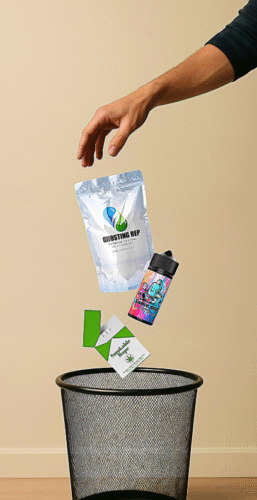
“Most counterculture shops don’t make it past 10 years,” says Loui. “If you have, it’s because you’ve evolved. You’ve had to make tough calls with vendors you liked, reps who became friends, brands that used to kill it but no longer make sense. That’s the job.”
So, How Do You Let Go the Right Way?
Once you’ve decided to cut ties, there is no ghosting allowed. This industry might be sprawling, but it’s tight-knit, and your reputation matters. If you’ve had a decent working relationship, reach out. Let your vendor know you’re moving on. Be brief, clear, and polite: ‘We’re heading in a new direction.’ ‘Our customers aren’t connecting with this line anymore.’ ‘The numbers just aren’t adding up.’
Next, burn through the inventory with purpose. Don’t let it collect dust out of guilt. Bundle it with better-selling items. Use it as a gift-with-purchase. Raffle it off at your next in-store event. Move it, don’t mourn it. And check the fine print: some vendors have return or buy-back policies for unsold inventory. If you’ve had a strong relationship with your rep, now’s the time to cash in that goodwill. “Let it go respectfully, cleanly, and with your eyes on what’s next,” Loui advises.
Sometimes, when you stop ordering, a vendor won’t even notice. In a saturated market, one shop moving on doesn’t always register. But if you’re a bigger account or long-time customer, expect a follow-up. Be ready with a calm, factual explanation. Keep a paper trail. Most reps understand – it’s not their first rodeo. And the good ones? They might come back better, more competitive, and worth a second look down the road.
“I’ve seen drivers become owners, sales reps become VPs, and glass blowers become icons,” Loui reflects. “This industry moves fast. The relationships are real, but the smart ones evolve.”
Signs It’s Time to Let Go
(Stick this on the office wall if you need to.)
✅ Products don’t sell at full price
✅ You’re fielding more customer complaints than compliments
✅ Vendor communication is weak or inconsistent
✅ Better alternatives now exist
✅ You’re buying out of habit, not demand
Brands come and go. Trends hit and fade. But your ability to adapt and to curate what works and drop what doesn’t is what keeps your shop relevant and profitable. If a brand isn’t earning its space, it’s time to clear the shelf and make room for what’s next. Trust your gut, check your numbers, and when it’s time to let go…do it like a pro.











