

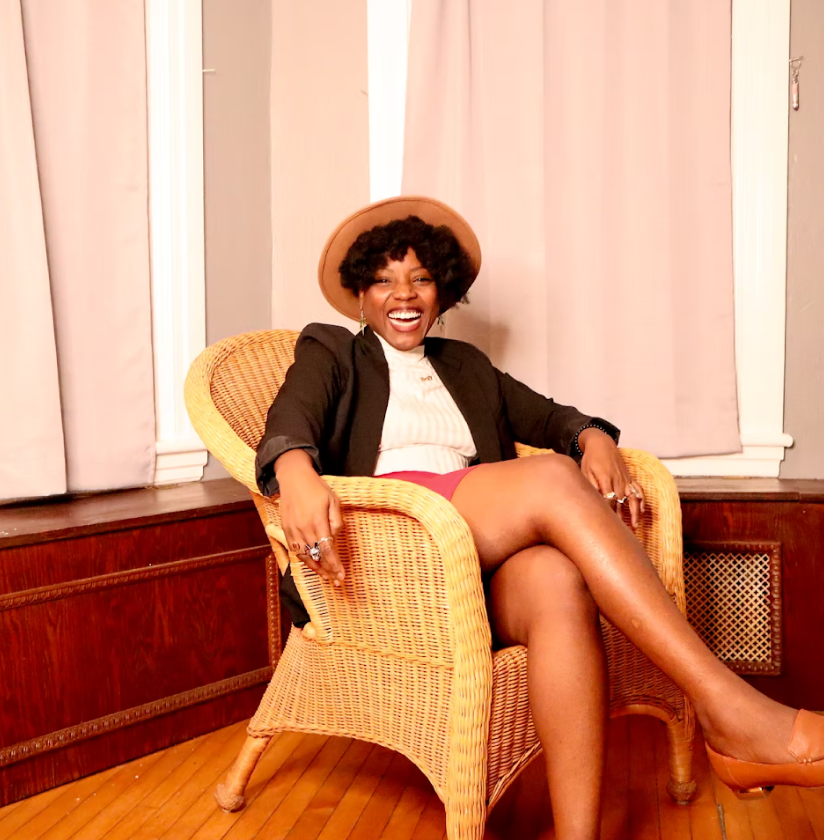
Law, Healing & Legacy | Laury Lucien’s Sacred Calling: Bringing Mindfulness and Equity to the Cannabis Space

As an attorney, professor, entrepreneur, and plant healer, Laury Lucien wears many hats. No matter her role, it’s immediately evident that Laury brings her intentionality, spirituality, and deep love of the natural world into everything she does. “I’m an attorney by training and teacher by nature,” she says, proudly bringing education and learning into every facet of her work. Whether she’s working with entrepreneurial clients or university students, she is deeply relationship-oriented and seeks to empower others by sharing both systemic knowledge and tapping into inner wisdom. 

Currently, she is a professor of cannabis law at Suffolk University Law School, where she teaches students how to be conscious attorneys who live balanced lives. Additionally, she teaches various business classes at Clark University about social responsibility and entrepreneurship, encouraging students to “bring awareness and love into everything they do, including starting their companies.” As a big-picture, systemic thinker, Laury encourages her students to engage in group economics. “Can you find ways to help other people as you expand?” she asks. 

In addition to her involvement in university education, Laury is an educator and teacher in less traditional modalities as well. Growing up in Port-au-Prince, Haiti, she learned about plant medicine from a young age. “Plants are conscious beings,” she says. “They’re very sacred. They come here with a purpose to help us heal and expand our consciousness. They’re our family.” Now, she’s coming full circle as she studies to become an “ayahuasca mama” in Putumayo, Colombia, using this powerful plant medicine to unlock spiritual awakenings and breakthroughs. Laury’s journey with ayahuasca has only reinforced her conviction that plants are here as tools to help us heal, not to be extracted for business.
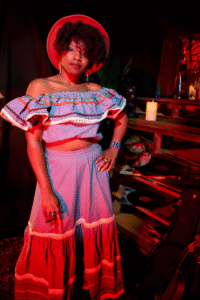
“We live in an industry that promotes overconsumption in so many ways,” Laury says. “But this is medicine—you take it until you’re well.” Despite the importance of balanced and mindful consumption, the nature of the industry and capitalism as a whole often promotes imbalance and overconsumption. When it comes to marijuana and all plant medicine, Laury encourages us all to ask ourselves why we’re consuming and what it’s doing for us. “Is it just to escape reality?” she asks. “If so, that’s totally okay, but you should understand that’s what you’re doing and work over time to integrate more balance.”

Laury hasn’t always worked in plant healing, though. In fact, after studying biology in college and then going to law school, she started her career as a corporate healthcare attorney, managing mergers and acquisitions for pharmaceutical companies. “As you can imagine, I did lots of licensing work across states,” she says. “I became very skilled at navigating heavily regulated industries.” 

It was precisely this skill that brought her into cannabis law and consulting. “Marijuana is at the intersection of the laws of nature and the laws of humans,” Laury says. “As a plant, [cannabis] is governed by the laws of nature, but human beings enact laws to regulate these natural laws.” Through this lens, she has helped a lot of cannabis entrepreneurs navigate the regulatory landscape. Her first consulting client, Lowkey Dispensary, was founded by husband-and-wife duo Jeff and Laura Similien in Dorchester, Massachusetts. In addition to selling premium cannabis products, Lowkey Dispensary also takes a social justice stance, arguing for the importance of social equity for Black and Brown communities in the cannabis space. As a system-oriented person, Laury works with her clients holistically to not only become successful business people but also to understand their role in the broader socio-political network and give back to their local communities. 
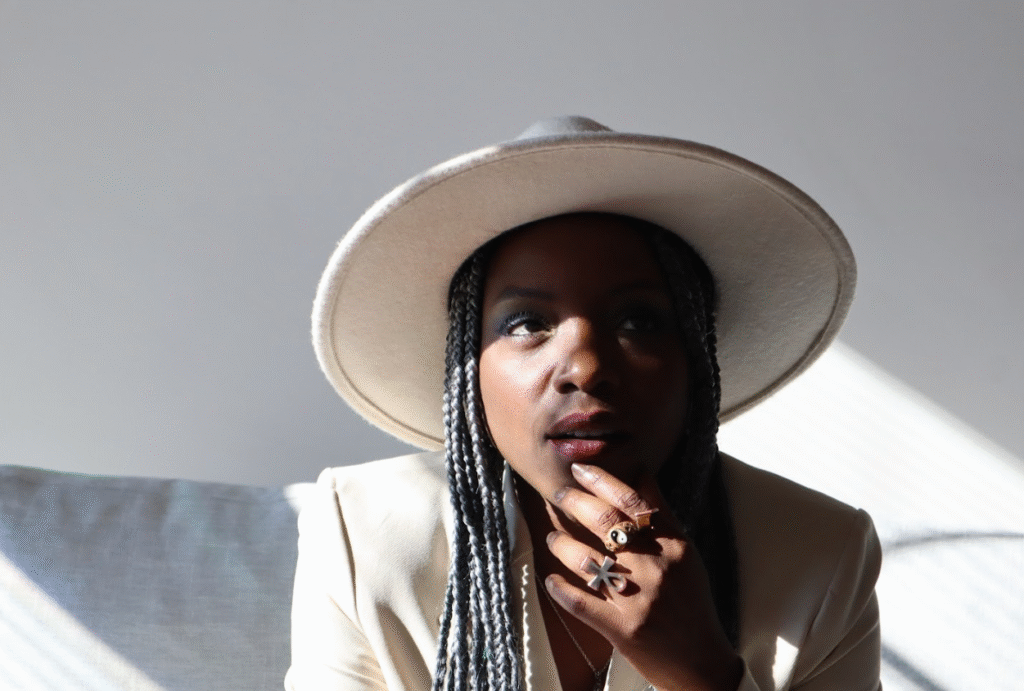
As a plant, [cannabis] is governed by the laws of nature, but human beings enact laws to regulate these natural laws.

Laury also worked with Nike John of The Heritage Club, and the Boston Heritage Fund as Nike founded her dispensary and its non-profit subsidiary that works to support safe cannabis consumption in Boston and combat the racist War on Drugs. With so many people of color—especially Black folks—still behind bars for cannabis crimes, Nike sees owning her own business in the cannabis space as a significant stride to show that Black women belong in the industry just as much as anyone else. 

Over the years, cannabis has helped Laury deal with anxiety, and lately, she’s been leaning on the tutelage of her elders to understand more of the ancestral wisdom around marijuana. In that vein, she’s working to launch an indigenous tea line with cannabis infusions for added benefits. While the products are still in research and development right now, Laury says the feedback has already been tremendously positive. 

When asked about being a Black woman in the cannabis space, Laury admits to having a mixed bag of experiences. At previous law firms, “I’ve literally had male partners scream at me,” she shares. However, she ultimately finds a lot of strength in being a woman in this industry. “There is a certain power that comes from my softness and my femininity, which allows people to feel secure and safe in my presence,” she says. “I can cut through a lot of bullshit easily in meetings and really connect with people on a soul-to-soul level. By tapping into my feminine nature, I find I’m actually able to hold tremendous power in the industry.”

In terms of what changes she wants to see in cannabis spaces, Laury returns to plants as collaborative healers. “Where I would love the industry to move is to understand how sacred these plants are,” she says. In a time where companies are looking to extract as much value as they possibly can from the plant, “it’s time that [marijuana] rejoins her position as a sacred healer.”

Do you know a powerhouse woman making waves in the cannabis industry? Whether she’s leading, innovating, advocating, or inspiring, we want to hear her story! Our Women in Cannabis spotlight celebrates the trailblazers, changemakers, and unsung heroes shaping the future of the industry. Nominate someone who deserves the recognition—because their work deserves to be seen! Submit your nomination now, click here!

Recent Articles

North Carolina might save us all. A new state bill may be the industry’s best option to save itself from demise when new federal cannabinoid bans take effect in November. And it could use your support.
Hemp is often considered for the things that it is not. It is not intoxicating, it is not illegal, and it is not marijuana. However, now we are seeing a focus back to what it can be. The plant is moving into the level of wine and chocolate and becoming a movement and a culture.
It’s been several months since President Donald Trump signed an executive order to reschedule cannabis from Schedule I to Schedule III within the Controlled Substances Act (CSA). On paper, the recent executive order, entitled “Increasing Medical Marijuana and Cannabidiol Research,” is a huge step in the right direction for cannabis smokers across the country.
For years, we’ve been told that this industry is the Wild West: a place where the only law amounts to whatever the guy with the gun says. But over the last 12 months, state governments have passed a spate of new regulations that promise to swap the relative lawlessness of poor enforcement of vague rules with real law and order.
With a last name like hers, it’s only fitting that Liz Grow ended up in the cannabis industry. Born and raised in Texas, Liz returned to her home state almost a decade ago to start Grow Haus Media with her husband, producer Patrick Pope. However, her personal journey with cannabis started back in 2011.
Kunda Wellness isn’t your average CBD brand. It was founded by two Doctors of Physical Therapy who have spent their careers treating pelvic floor dysfunction and helping people reconnect with a part of their body that’s often overlooked, dismissed, or wrapped in shame.
“Winter rain Now tell me why Summers fade And roses die.” – Bob Weir, “Weather Report Suite”
For years, Jennifer Mansour felt them coming. “You can’t stop one,” she said. “As soon as I’d notice that the lights felt a little too bright, I knew I was done for. I’d tell my boss, and then I’d get in the car and pop on my sunglasses because I could feel another one coming on, and I couldn’t do a thing to stop it.”










