Twisted Inspiration Glass
@twistedinspirationglass
When it comes to inspiration, you couldn’t ask for better than the Great Barrier Reef. Recognized as one of the Seven Natural Wonders of the World, this coral system off the coast of Queensland, Australia is home to more than 1,500 species of fish, 411 types of coral, 134 species of sharks and rays, six of the world’s seven species of marine turtles. It’s also the home of glass artist Matty Brunker — okay, Brunker doesn’t actually live in the ocean — he’s not Aquaman (although he does resemble the ruler of Atlantis a bit with his long hair and beard), but the reef is just a two-hour boat ride from his home.
“You can’t help but be swept away by its epic beauty — one truly has to see it to believe it,” Brunker says. “I am always left in awe whenever I encounter the amazing creatures and the natural beauty in which they live. I have always been drawn to the oceans of the world and will always will compelled to recreate a small slice of the beauty I have beheld.”
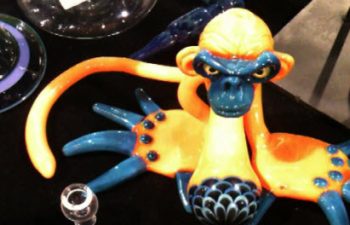
Brunker is a second-generation glassblower, originally from New Zealand, who learned the craft from his father, an ornamental glass blower in Sydney, Australia back in the seventies. Brunker has mastered a variety of styles over the past 20 years, but his focus is on functional art for the pipe culture in Australia, America and Spain.
Sharks play a big part in Brunker’s work. Tiny sharks swimming inside bubble caps, haterade hammerhead sharks, rainbow-colored sharks and sharks in action, escaping the grasp of octopus tentacles. “I do make a few bait fish for the sharks, but it’s all about the power and domineering behavior of the sharks — they have so much power and beauty.”
Along with pipes, Brunker will turn out the occasional reef or skull inspired pendant shot glass or goblet.
“The glass blowing scene in Australia is minimal and underground in the functional side due to restrictions so I tend to ship a fair a bit of my functional art abroad, although there still is a half a dozen good smoke shops here that I put stock into,” Brunker says. “There are about 20 glass blowers I know here, but not all are active all of the time because the scene is still growing which, unfortunately, makes it difficult to make a decent living.”

That’s why Brunker has a full-time gig as a long-haul truck driver. But living in paradise gives him plenty of opportunity to ride his Harley along the scenic coastline and go fishing and diving off his boat. He’s also into photography and likes to take photos of his work against Australia’s epic backdrops.
“The rewards for me are many, but if I was to pick a couple of my favorite aspects of glass blowing, I would say the therapeutic quality and the visual reward,” Brunker says. “My goal is to keep on making the art I want to make and enjoying myself in the process.”