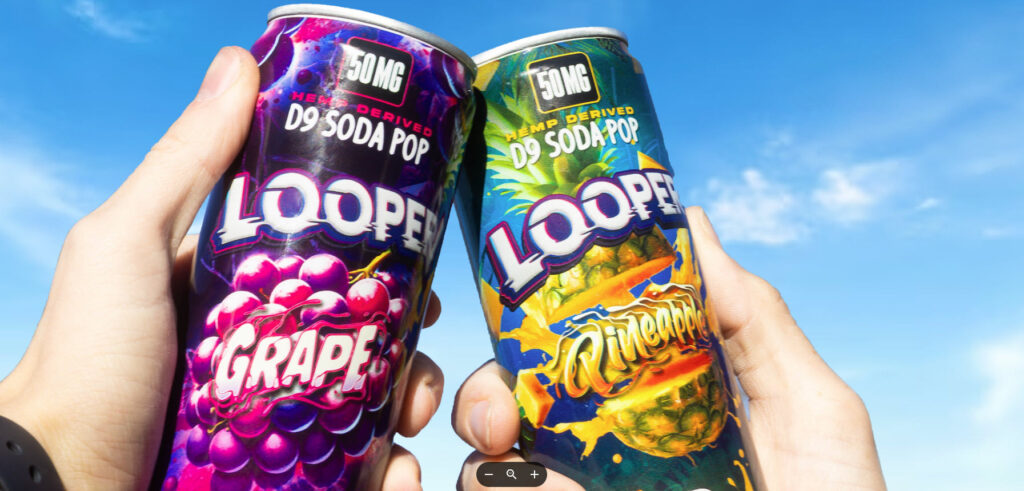
Sometimes, it’s good to be obsessed. In an industry heavy with similar products, it’s often the little things on the margins that separate great products from good ones.
At least that’s how Looper sees it. The decision makers behind the high-potency alt-cannabinoid brand pride themselves on their ability to pore over the smallest particulars.
That’s where they find an advantage.
“We obsess over the details that most people skip,” explains Looper Marketing Director Nathan Tagalag. “That means clean inputs, pure distillate with no filler or additives, rigorous testing, and packaging that actually reflects what’s inside.”
That works on two levels. Looper packages its alt-cannabinoids in charismatic boxes that emotionally evoke each product’s effects while plainly stating its contents. The unstated goal is to simplify the experience. Tagalag wants to guide customers toward Looper products because they produce deliberate results. The company thoroughly tests its wares to ensure every vape, pre-roll, extract, and soda delivers predictable, high-quality encounters.
“We think a lot about experience, how a product makes you feel, how it fits into your day, and how approachable it is,” he added. “Our audience is typically adults over 21 years of age who are curious, informed, and intentional. They’re the people who want an elevated experience without the stigma or confusion that, sadly, still exists around cannabis. And while they range from first-time explorers to seasoned users, they all care about quality, transparency, and consistency.”
The Goods
The result of that careful approach to cannabinoids came late last year, when Looper’s line of Delta 9 sodas was recognized with top honors at the 2025 High Spirit Awards.
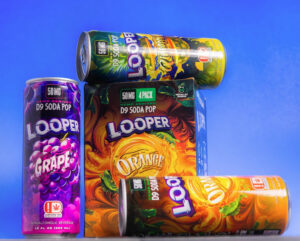 Its 50mg Pineapple, Orange, and Grape flavors took home Platinum, Gold, and Silver medals in the category of Best Infused Soda/Best Infused Beverage. The competition was created by the L.A. Spirits Awards, which typically recognizes outstanding alcoholic products. The cannabis-infused portion debuted last year in recognition of the popularity and quality of cannabis-based drinks.
“It all comes down to formulation. We don’t overload our drinks or try to mask poor inputs with sweetness. Instead, we focus on balance and clean Delta 9 dosing. We want it to taste like something you’d actually want to drink again,” Tagalag said. “This recognition was validating because it comes from people who understand both the beverage craft and cannabinoid performance.”
Building off that success, Looper launched three new flavors in March: Toka Cola, which features a more traditional soda pop taste; Diet Toka Cola; and Lemon, which goes down like Sprite.
Looper’s beverages aren’t the only products whose reputation is on the rise. Another new addition to its line, Booster Shots, has been building a reputation. Created from the same formulations as their terp-heavy vapes, Booster Shots are syringes filled with cannabinoid-infused oil that’s meant to enhance the punch of vape carts, although creative users have discovered numerous other uses.
“We’ve heard from a lot of our customers who are using this as an additive. They put it on top of their pre-roll, or they add it to their gummies or maybe a cookie or a brownie. Some even just, um, put it in their rig and just partake,” Tagalag said.
The Tobacco Pivot
Booster Shots’ popularity stems from Looper’s reputation for hard-hitting vapes. Reading online reviews about the brand’s disposables, you’d think every customer just had a religious experience. But the hype is well-earned. Before joining the counterculture industry, the team behind Looper functioned as an e-liquid company. They jumped to alt-cannabinoids after deciding the new laws governing tobacco products were too suffocating. Yet, in an ironic twist, that issue has become the core of their brand’s identity.
 “The industry definitely has matured rapidly in the last 10 years. Regulations are tightened. Consumers got smarter, and the hype phase ended,” Tagalag said. “For us, it meant doubling down on compliance, tightening our formulations, and being more disciplined operationally. Thanks to our history, we’re pretty comfortable moving around regulations.”
The lessons Looper took from its days in the tobacco vape industry taught the company to see around corners. The company’s highest priority, Tagalag said, is keeping products shelf-legal.
“Rules change fast, and enforcement isn’t always consistent; that keeps everyone on edge,” he says. “At the same time, what excites us is how sophisticated consumers have become. People are asking better questions, demanding cleaner products, and exploring cannabinoids beyond THC alone. That curiosity is pushing the industry forward, and it’s exactly the environment Looper was built for.”
Not that it’s easy. The raft of changes that happened in 2025 alone is enough to cause serious legal headaches for even the most careful cannabinoid maker. Tagalag, however, chooses to remain optimistic. He sees recent crackdowns as a step toward greater acceptance and legitimacy.
“There’s a lot of regulation and a lot of banning going on. I think the best way to come out of that is to better regulate the products, making sure they’re being manufactured in a safe environment with all the right warnings and verbiage on the packaging. We as an industry need to be fully transparent with the consumer, just to give them the assurance that these are safe products and we’re not hiding anything,” he said. “Having transparency from every brand would definitely help the industry. I think that, five years from now, that’s where we’ll be, and it will really be a good thing.”